



Hiring the right talent is already challenging. But what’s even more frustrating is when your top candidate declines the job offer after a long recruitment process. If this keeps happening, it’s not just bad luck, there’s usually a pattern behind it.
Understanding why candidates decline job offers helps organizations strengthen their hiring process, improve candidate experience, and increase offer acceptance rates.
9 Reasons Why Candidates Decline Job Offer
There are several reasons why the best candidates turn down job offers:
1. Compensation Does Not Meet Expectations
Salary and benefits remain one of the most influential factors in offer acceptance. Candidates today have better access to salary benchmarks and industry comparisons. If compensation falls below market expectations, candidates may feel undervalued even if they like the role or company.
Candidates typically evaluate compensation beyond base salary. They also consider bonuses, equity, insurance, leave policies, and long term financial growth.
2. Limited Career Growth Opportunities
Many candidates prioritize long term career progression over immediate compensation. If they cannot see a clear development path, they may view the role as a short-term stop instead of a strategic move.
Professionals, especially in high growth industries such as technology, marketing, and business development, expect structured learning opportunities and leadership development.
3. Negative Interview or Candidate Experience
The hiring journey strongly shapes a candidate’s perception of the organization. Long response times, unclear communication, or disorganized interviews can signal internal inefficiencies or lack of respect for candidates’ time.
Poor experience often creates doubt about company culture and operational quality.
4. Counteroffers From Current Employers
Counteroffers are one of the most common reasons candidates withdraw after accepting an offer. Employers may increase salaries, adjust responsibilities, or offer promotions to retain high performing employees.
Candidates often accept counteroffers due to familiarity, comfort, and reduced risk compared to transitioning to a new company.
5. Misalignment With Company Culture
Candidates increasingly prioritize workplace culture, leadership style, and team dynamics. Even if the role and salary meet expectations, cultural mismatch can influence their decision.
Red flags can include unclear communication styles, lack of diversity and inclusion, or misalignment with work values such as flexibility or collaboration.
6. Work Life Balance Concerns
Burnout awareness has changed candidate priorities significantly. Professionals now evaluate workload expectations, working hours, remote work flexibility, and mental wellness support before accepting offers.
Roles perceived as high stress or lacking flexibility often see higher rejection rates.
7. Lack of Role Clarity
Candidates may decline offers if job responsibilities feel unclear or inconsistent across interview stages. Misalignment between job descriptions and interview discussions can create uncertainty and reduce trust.
Candidates want to understand daily responsibilities, performance expectations, and success metrics before committing.
8. Recruitment Process Too Long
Extended hiring timelines increase the risk of losing candidates to competing offers. Highly skilled professionals, particularly in competitive sectors, often receive multiple opportunities simultaneously.
A slow process may signal internal inefficiencies or low hiring urgency.
9. Concerns About Company Stability or Reputation
Candidates conduct thorough research before accepting offers. Negative employer reviews, unclear financial stability, or lack of brand credibility can influence candidate confidence.
This is especially common when candidates consider joining startups or companies entering new markets.
How to Reduce Job Offer Rejections
If candidates frequently decline your job offers, consider these strategic improvements:
1. Align Expectations Early in the Hiring Process
Many offer rejections happen because compensation, job scope, or work arrangements do not match candidate expectations. Early alignment helps prevent surprises during the offer stage and builds confidence in the opportunity.
2. Improve Transparency Around Role and Career Growth
Candidates want to understand how the role contributes to their long term development. When job responsibilities or growth opportunities are unclear, candidates may hesitate to commit.
3. Deliver Competitive and Well Structured Compensation Packages
Candidates evaluate total rewards rather than base salary alone. A strong offer should clearly communicate the full value of compensation, including bonuses, benefits, flexibility policies, and professional development support.
4. Strengthen Candidate Experience Throughout the Hiring Journey
A positive hiring experience directly influences candidate decision making. Delayed responses, inconsistent communication, or complicated interview processes may reduce candidate confidence and increase the likelihood of competing offers.
5. Move Efficiently to Reduce Counteroffer Risks
Extended hiring timelines increase the chance of candidates receiving counteroffers from their current employers or alternative opportunities from competitors. Speed and clarity in decision making help maintain candidate engagement and reduce uncertainty.
6. Personalize Offers Based on Candidate Motivations
Candidates often accept offers that align with their personal and professional goals. Understanding individual motivations such as career advancement, flexibility, leadership exposure, or international experience allows employers to tailor offers more effectively.
7. Build Strong Employer Branding and Trust
Candidates increasingly evaluate company branding, leadership credibility, and workplace culture before accepting offers. Organizations that communicate their mission, business stability, and employee success stories create stronger emotional and professional connections with candidates.
8. Simplify Global Hiring to Improve Offer Confidence
When hiring across different countries, candidates may worry about employment stability, payroll reliability, and compliance with local labor regulations. These uncertainties can lead candidates to choose employers that provide clearer employment structures and stronger administrative support.
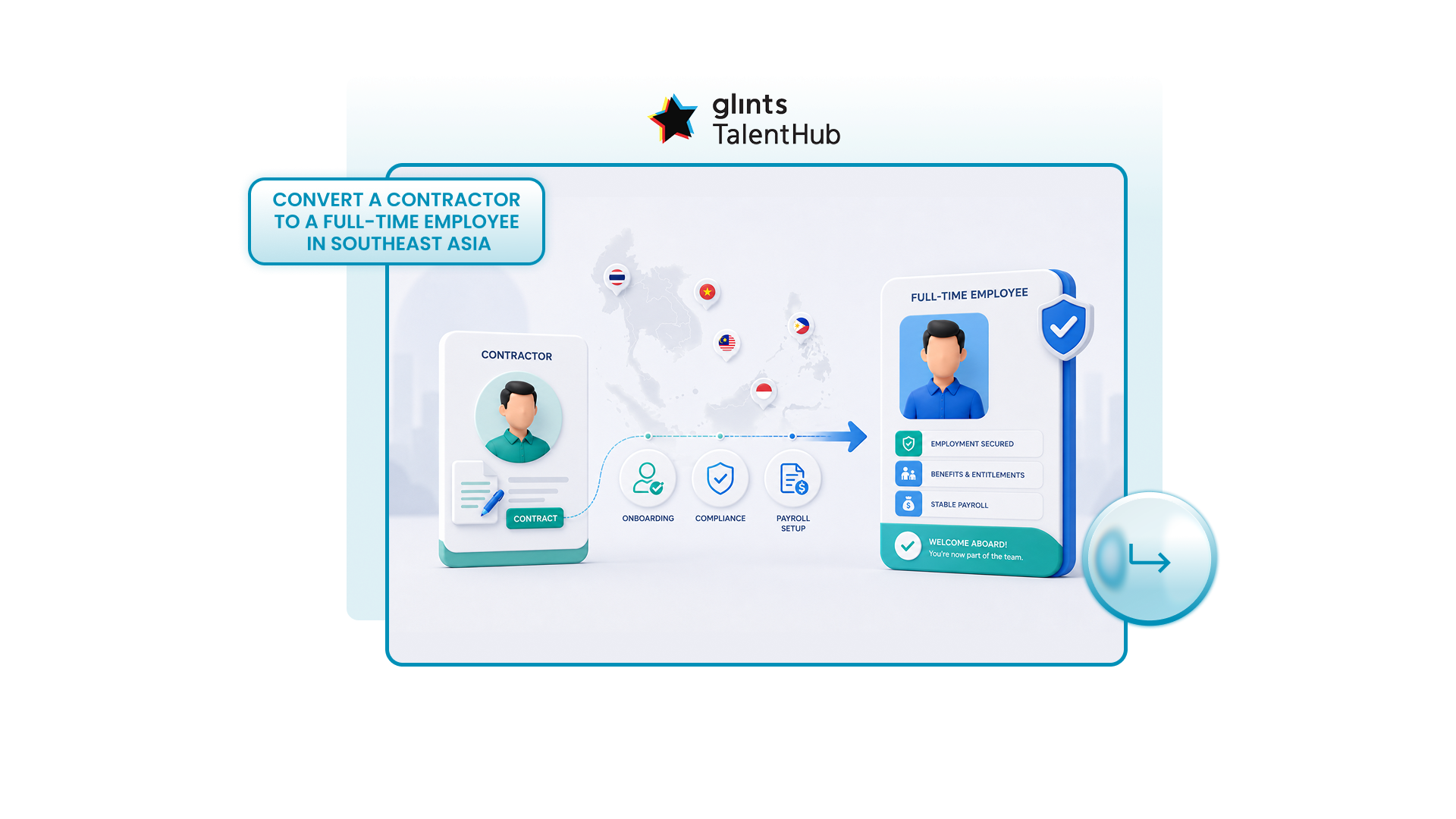
Using an Employer of Record service like Glints TalentHub helps companies present more secure and structured job offers when hiring internationally. Employers can offer compliant contracts, localized benefits, and reliable payroll support without needing to establish a local entity. This helps candidates feel confident about employment security while allowing companies to onboard talent faster and reduce hiring delays.
Conclusion
Candidates decline job offers for many reasons, but most decisions come down to clarity, trust, and long term value. Organizations that invest in transparent communication, competitive compensation, strong employer branding, and efficient hiring processes are more likely to secure top talent.
Nowadays, companies that understand candidate motivations and address them proactively gain a significant advantage in attracting and retaining high quality professionals.
This article is brought to you by Glints TalentHub. Leading companies are actively building their borderless teams in Southeast Asia, Taiwan, and beyond. However, the prospect of going borderless can be daunting due to complex regulations and cultural ambiguities. With Glints TalentHub, you’ll have a dedicated team of in-market legal, HR, and talent experts by your side at every step of the way.
Glints TalentHub offers an end-to-end, tech-enabled talent solution that encompasses talent acquisition, EOR, and talent development. We empower businesses to leverage the strengths of regional talent efficiently to build high-performing, cost-efficient teams.
Schedule a no-obligation consultation with our experts to receive a tailored proposal today!