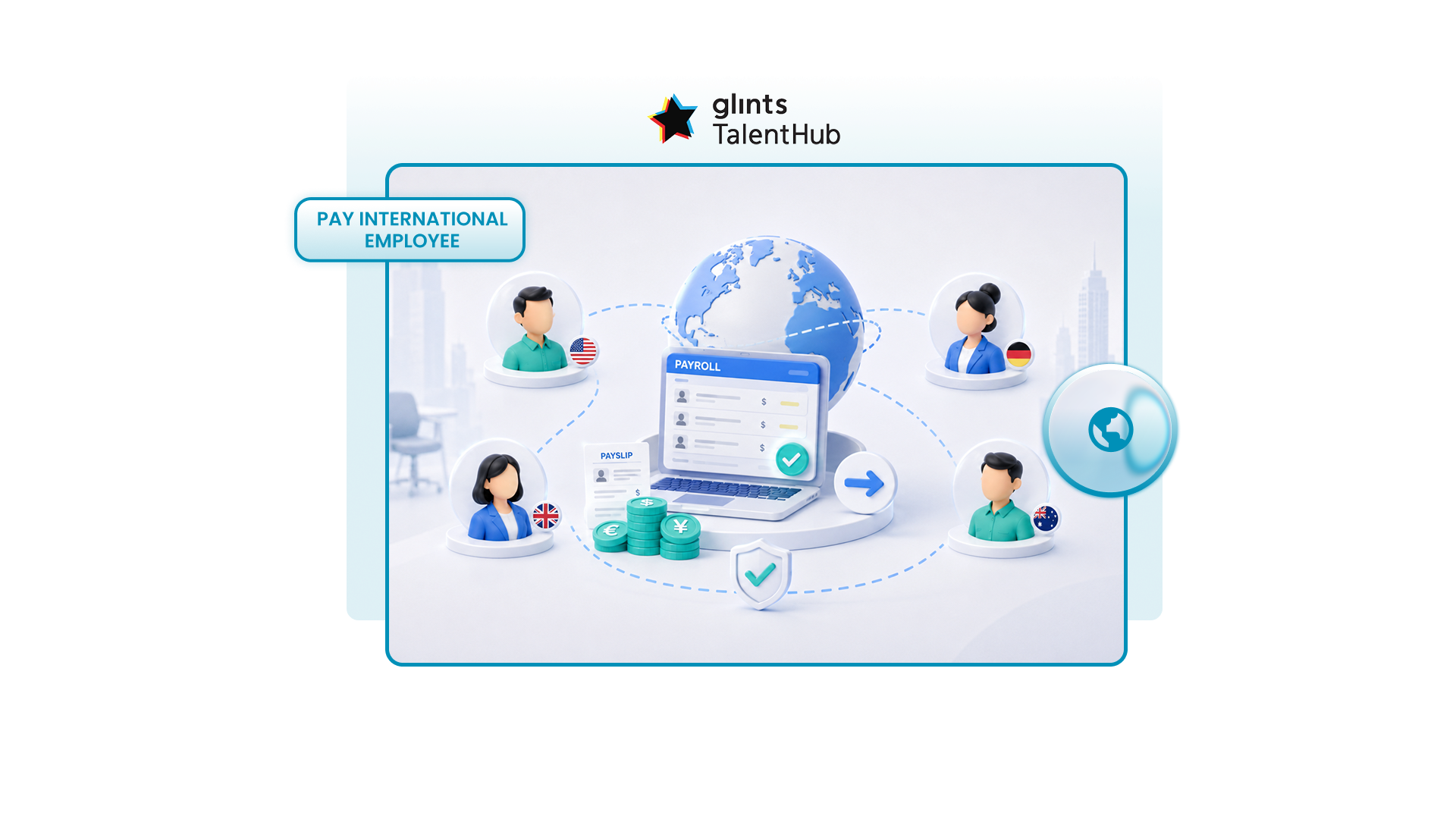




Hiring globally sounds promising, but for recruiters and employers, it often becomes a maze of problems rather than an advantage. Teams struggle with unfamiliar labor laws, slow hiring cycles caused by cross-border processes, misaligned compensation expectations, and the constant fear of making a compliance mistake. On top of that, sourcing qualified candidates in unfamiliar markets and convincing them to join can feel overwhelming without local insights.
These challenges make global recruitment time-consuming, expensive, and risky if not managed properly. Below are the most common global hiring obstacles and actionable solutions to help employers simplify international recruitment and build a compliant, high-performing global workforce.
What is Global Recruitment?
Global recruitment is the process of sourcing, assessing and hiring candidates across multiple countries.
It can involve:
- Hiring remote employees in another country
- Relocating employees to a new market
- Building a team before establishing a local entity
- Recruiting international talent for specialised roles
- Engaging contractors for overseas projects
Global recruitment covers more than candidate sourcing. Employers must also consider employment contracts, payroll, taxes, statutory benefits, worker classification, onboarding and ongoing employee management.
11 Biggest Global Recruitment Challenges in 2026
Global hiring is becoming more competitive, more regulated, and heavily influenced by shifting workforce expectations. As we move into 2026, employers face a new set of challenges that make international recruitment increasingly complex. Below are the biggest obstacles companies must prepare for:
1. Navigating Complex Employment Laws
Every country has its own labor regulations, from employee classification and mandatory benefits to tax obligations and probation periods. Misinterpreting these rules can lead to heavy fines, misclassification issues, or delays in onboarding.
How to Solve It
- Work with local HR, legal experts, or in-country partners who fully understand local compliance.
- Use an Employer of Record (EOR) model to outsource onboarding, payroll, contracts, and statutory compliance.
- Standardize internal hiring guidelines while adjusting employment terms per country.
2. Limited Talent Visibility Across Markets
Companies often struggle to reach qualified candidates in foreign markets due to differences in job boards, languages, and sourcing channels.
How to Solve It
- Localize job ads to match market expectations, language, and keywords.
- Partner with regional recruitment agencies or talent platforms with deeper market reach.
- Use data-driven talent mapping to identify where the most suitable candidates are located.
3. Cultural and Communication Barriers
Cultural differences affect work expectations, communication styles, decision-making, and even recruiting speed. Without understanding these nuances, employers risk losing candidates or hiring mismatches.
How to Solve It
- Train hiring teams for cross-cultural communication.
- Adapt the interview process to local norms (e.g., more relationship-based vs. direct questioning).
- Provide localized employer branding that resonates with each target market.
4. Slow and Expensive Global Hiring Processes
Cross-border hiring often involves long contract negotiations, local entity setup, document verification, and relocation logistics. These delays reduce competitiveness and increase costs.
How to Solve It
- Streamline your hiring workflow with automated tools for scheduling, assessments, and onboarding.
- Use an EOR solution to hire quickly without setting up a legal entity.
- Create standardized global hiring templates for contracts and assessments.
5. Global Compensation and Benefits Misalignment
Compensation expectations vary significantly across countries. Paying too low can hurt hiring success, while overpaying impacts long-term sustainability.
How to Solve It
- Conduct market-specific salary benchmarking.
- Offer flexible benefits that can be localized, such as allowances or remote-work stipends.
- Implement a global compensation framework with adjustable local tiers.
6. Ensuring Consistent Employer Branding Worldwide
Global candidates evaluate employers differently. What works in one country may not appeal to another due to cultural norms, job stability expectations, or work–life priorities.
How to Solve It
- Localize your value propositions without losing your core brand identity.
- Highlight country-specific perks, career growth opportunities, and culture fit.
- Maintain consistent messaging across all recruitment channels while tailoring tone to match local candidates’ expectations.
7. Compliance Risks When Hiring Contractors
Many companies rely on freelancers or contractors for global expansion. But misclassifying employees as contractors can lead to lawsuits, back pay obligations, and penalties.
How to Solve It
- Review contractor requirements per country and ensure clear worker classification.
- Use a third-party partner or EOR to ensure compliant contractor management.
- Keep proper contracts, documentation, and clear scopes of work.
8. Diversity, Equity, and Inclusion (DEI)
Building diverse global teams requires intentional DEI efforts. Companies must ensure fair hiring practices, remove biases, and create equal opportunities across regions.
How to Solve It
- Standardize unbiased screening processes.
- Provide diversity training for recruitment teams on inclusive communication.
- Use structured interviews to reduce bias.
9. The Rise of AI and Automation in Recruitment
Many organizations now rely on AI-powered tools for screening, sourcing, and assessment. While helpful, automation can create new challenges such as over-filtering quality candidates or introducing algorithmic bias.
How to Solve It
- Audit AI tools regularly to ensure fair and accurate filtering.
- Use automation to assist recruiters, not replace human judgment.
- Combine AI insights with manual review to maintain balance.
10. Lengthy Hiring Cycles That Cause Candidate Drop-Off
A global hiring process that drags on too long—due to multiple interview rounds, cross-border coordination, or slow internal approvals—often results in losing top candidates to faster-moving competitors.
How to Solve It
- Streamline interview stages and remove unnecessary steps.
- Set clear internal SLAs for feedback and decision-making.
- Pre-align with stakeholders to avoid approval delays.
11. Hiring Challenges During Economic Uncertainty
Economic fluctuations, whether global or regional, make hiring unpredictable. Companies may freeze hiring, shift priorities, or tighten budgets, making recruitment planning harder.
How to Solve It
- Build flexible workforce strategies, including contract or project-based talent.
- Focus on high-impact roles essential for business continuity.
- Use real-time labor market data to guide headcount decisions.
Simplify Global Recruitment and Employment With One Partner
Global hiring often becomes fragmented because talent sourcing, compliance, payroll and employee management are handled separately.
Glints TalentHub brings these functions together. You can source talent, hire employees through an Employer of Record, manage compliant contracts and process payroll with one connected partner.
With employment support across more than 150 countries, you can build international teams without establishing a local entity in every market. Explore Glints TalentHub Employer of Record services.
Final Thoughts
Hiring globally is not just about reaching more candidates. It requires thoughtful planning, market understanding, and structured processes. The payoff is significant: access to stronger skills, diverse thinking, and cost-efficient growth. With the right approach and the right partners, your global hiring strategy becomes simpler, compliance-safe, and scalable.
If you want to explore this topic further, you can dive deeper into our hiring guides to make smarter recruitment decisions.
This article is brought to you by Glints TalentHub. Leading companies are actively building their borderless teams in Southeast Asia, Taiwan, and beyond. However, the prospect of going borderless can be daunting due to complex regulations and cultural ambiguities. With Glints TalentHub, you’ll have a dedicated team of in-market legal, HR, and talent experts by your side at every step of the way.
Glints TalentHub offers an end-to-end, tech-enabled talent solution that encompasses talent acquisition, EOR, and talent development. We empower businesses to leverage the strengths of regional talent efficiently to build high-performing, cost-efficient teams.
Schedule a no-obligation consultation with our experts to receive a tailored proposal today!