



Singapore employers continue to face strong competition for specialised talent in technology, finance, healthcare, advanced manufacturing, and business growth. While overall hiring may remain selective, demand is concentrated in roles that help companies adopt AI, protect digital operations, meet regulatory requirements, and expand into new markets.
The Singapore Ministry of Manpower identifies software developers, data scientists, auditors, financial and investment advisers, nurses, strategic planning managers, and business development managers among the country’s in demand PMET occupations. At the same time, investment in AI, cloud infrastructure, automation, and sustainability is creating further demand for specialised capabilities.
For employers, understanding these high demand jobs is only the first step. Companies also need to identify the right skills, compete for limited talent, and consider wider talent markets when suitable candidates cannot be found locally.
Technology & AI-Driven Roles Remain a Top Priority
Technology and AI-driven roles continue to dominate talent demand in 2026 as organizations accelerate digital transformation. Beyond innovation, these roles are essential for scalability, security, and long-term competitiveness.
Companies are no longer hiring purely to build products, but to ensure systems are intelligent, resilient, and data-driven.
1. AI & Machine Learning Engineers
AI & Machine Learning Engineers are at the forefront of turning algorithms into real business impact. Their role extends beyond model development to optimizing performance, reducing bias, and integrating AI into existing workflows.
2. Cybersecurity Analysts
As digital systems become more interconnected, cybersecurity has become a strategic necessity rather than a technical safeguard. Cybersecurity Analysts play a critical role in protecting sensitive data, maintaining regulatory compliance, and minimizing operational risk.
3. Data Scientists
Data Scientists help organizations transform raw data into actionable insights. In 2026, their value lies not only in advanced analytics, but in their ability to connect data outcomes with business strategy.
4. Software Engineers
Software Engineers remain one of the most consistently in-demand roles as digital products continue to evolve. Their responsibilities now extend beyond coding to include system design, performance optimization, and cross-team collaboration.
5. DevOps Engineers
DevOps Engineers bridge the gap between development and operations, enabling faster and more reliable software delivery. As businesses demand continuous deployment and high system availability, this role becomes increasingly critical.
Healthcare and Wellbeing Roles Continue to Expand
An aging population, rising health awareness, and burnout from prolonged digital work have increased demand for healthcare and wellbeing professionals.
1. Healthcare Practitioners
Healthcare practitioners remain at the core of the healthcare system. In 2026, demand is increasing for professionals who can operate in both traditional clinical settings and digitally enabled healthcare environments.
Key responsibilities include diagnosing conditions, delivering treatment, and supporting preventive care initiatives. Employers are prioritizing practitioners who are adaptable, comfortable with health technology, and able to collaborate across multidisciplinary teams.
2. Care Workers
Care workers play a critical role in supporting daily health and wellbeing needs, particularly for elderly populations and individuals with long-term conditions. As life expectancy rises, the demand for care workers continues to grow across home care, assisted living, and community health services.
In 2026, care workers are increasingly valued for their ability to provide not only physical assistance but also emotional support, contributing to improved quality of life and patient outcomes.
3. Registered Nurses
Registered nurses remain one of the most in-demand healthcare roles globally. Their responsibilities have expanded beyond bedside care to include patient education, care coordination, and the use of digital health tools.
Employers are seeking registered nurses who can work in fast-changing environments, support preventive healthcare programs, and help bridge the gap between patients and healthcare systems. As healthcare delivery models evolve, registered nurses are becoming key drivers of efficiency and continuity of care.
Business & Strategy Roles Remain Essential
Despite rapid automation and AI adoption, business and strategy roles remain essential in 2026. These roles connect technology, customer needs, and commercial objectives, ensuring that innovation translates into sustainable growth.
1. Product Manager
Product Managers continue to be in high demand as businesses expand their digital products and services. In 2026, their role goes beyond feature delivery to include strategic ownership of product vision, customer value, and business impact.
Employers prioritize Product Managers who can align cross-functional teams, interpret user data, and balance short-term execution with long-term roadmap planning. Strong communication and stakeholder management skills are essential, especially in fast-scaling organizations.
2. Customer Success
Customer success roles remain critical as competition intensifies and customer expectations rise. In 2026, retaining customers is often more cost-effective than acquiring new ones, making Customer Success a key driver of recurring revenue.
Professionals in this role focus on onboarding, adoption, and long-term customer engagement. Employers value Customer Success Managers who can proactively identify risks, leverage customer insights, and collaborate with sales and product teams to improve retention and lifetime value.
3. Growth Marketing
Growth Marketing continues to evolve as data, experimentation, and automation reshape marketing functions. In 2026, Growth Marketers are expected to operate across the full funnel, from acquisition to activation and retention.
High-demand Growth Marketing professionals combine analytical thinking with creative problem-solving. Employers seek talent who can run rapid experiments, interpret performance data, and optimize growth strategies in highly competitive digital markets.
How Can Employers Secure High Demand Talent?
Competition for specialised professionals means employers may need to look beyond conventional hiring criteria and local candidate pools.
Start by separating the capabilities candidates need from their first day from the knowledge they can learn after joining. This helps prevent overly restrictive job requirements from excluding strong candidates. Skills based assessments, structured interviews, and realistic work samples can also provide better evidence of a candidate’s ability than credentials alone.
Employers can then expand their search to regional or global talent markets when the required skills are scarce locally. Before hiring across borders, consider how employment contracts, payroll, statutory contributions, benefits, tax obligations, and local labour requirements will be managed.
Build the Capabilities Your Business Needs
Singapore’s high demand roles reflect where businesses are investing for future growth. AI, data, cybersecurity, finance, healthcare, advanced manufacturing, and commercial strategy are becoming increasingly important, but competition for experienced professionals remains strong.
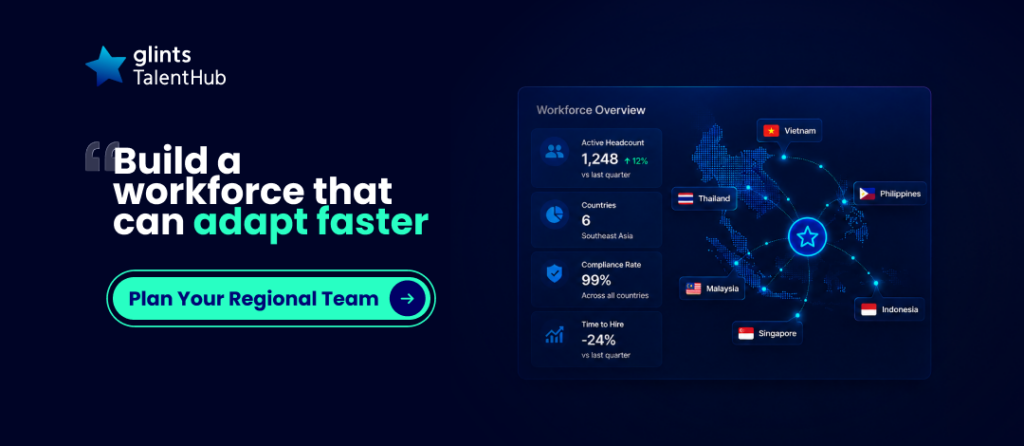
A broader talent strategy can help you reach the right capabilities without limiting your search to one market. Glints TalentHub lets you source, hire, onboard, pay, and manage professionals through one unified solution, with compliant employment support across markets.
Access the talent your business needs with Glints TalentHub.
Final Thoughts
High-demand jobs in 2026 reflect deeper changes in how work gets done. Technology, demographics, and employee expectations are reshaping talent needs across industries. Employers who understand these shifts, and align their hiring strategies accordingly, will be better equipped to thrive in an increasingly competitive labor market.
The question is no longer what jobs will be in demand, but how ready organizations are to secure the talent that matters most.