



Hiring international employees can help your company access wider talent pools, reduce hiring costs, and expand into new markets faster. But hiring across borders also comes with legal, payroll, tax, and employment compliance requirements that vary from country to country.
For many companies, setting up a local entity in every country is too costly and time consuming, especially when they are hiring their first few employees abroad or testing a new market.
The good news is that you can hire international employees without opening a local entity. Depending on your hiring needs, you can work with contractors, outsourced vendors, or an Employer of Record. This guide explains how each model works, the risks to consider, and when an EOR may be the most compliant option for long term international hiring.
Can You Hire International Employees Without a Local Entity?
Yes, companies can hire international employees without setting up a local entity by using the right hiring model. The best option depends on whether you need a project based contractor, an outsourced service provider, or a full time employee who works as part of your team.
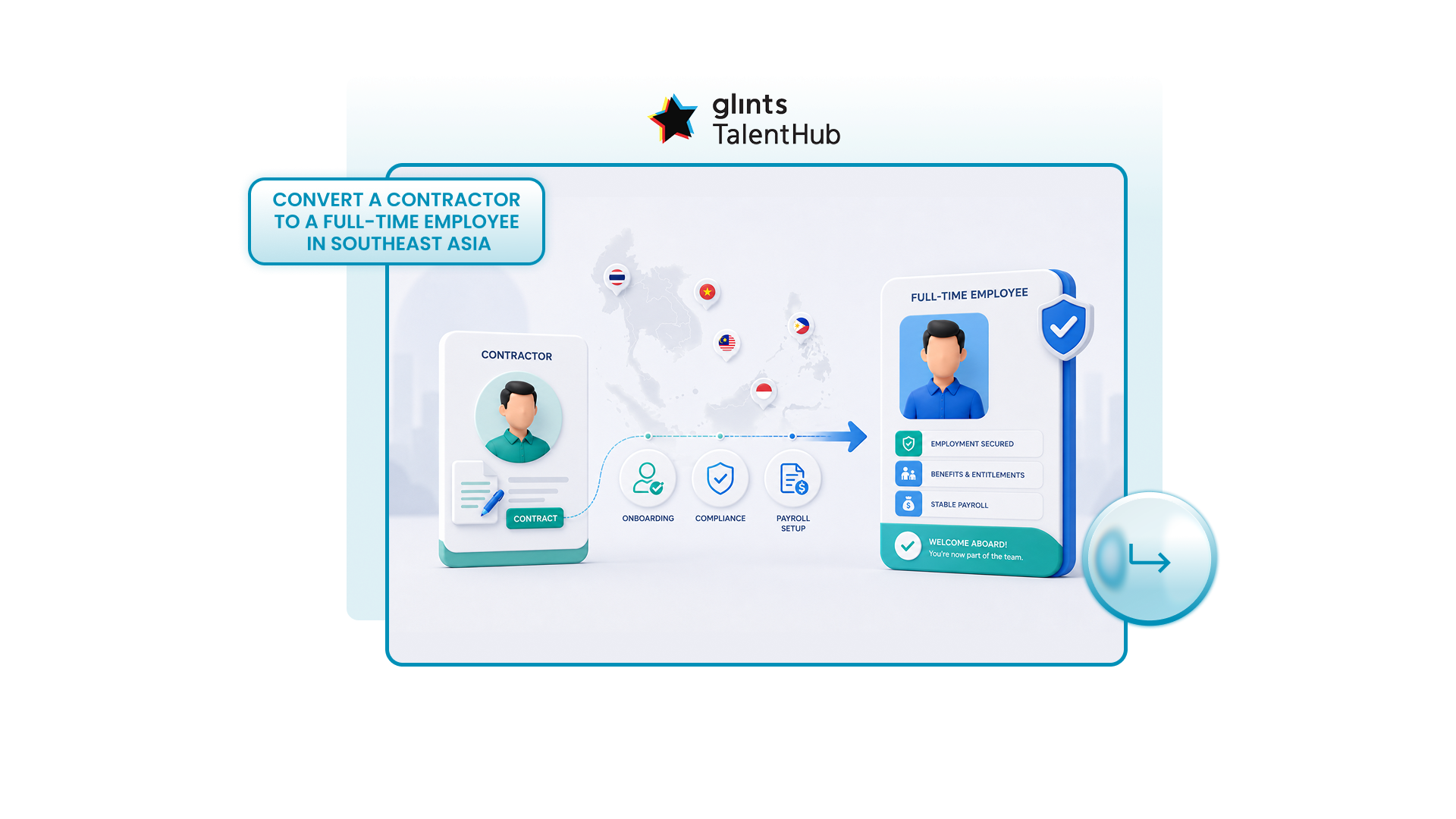
For full time international employees, an Employer of Record is usually the most compliant route. The EOR becomes the legal employer in the employee’s country and manages employment contracts, payroll, statutory benefits, tax requirements, and local labor compliance. Your company still manages the employee’s day to day work, goals, and performance.
Why Companies Hire Internationally
You are not alone exploring this path. Many companies take this approach because it offers simple access to talent and faster expansion. Here are some common reasons:
1. Access to a Wider Talent Pool
Hiring globally allows companies to reach skilled professionals who may be scarce, expensive, or highly competitive in their home market. This is especially useful for roles in technology, sales, customer support, marketing, finance, and operations, where the right talent can be difficult to find locally.
By expanding the search across countries, companies can find candidates with the right technical skills, language capabilities, industry experience, and market familiarity. This helps businesses fill key roles faster while building teams that are better matched to their growth needs.
2. Cost Efficiency and Budget Optimization
Different markets have different salary expectations, benefit requirements, and operating costs. For companies managing tight budgets or scaling carefully, international hiring can help create a more sustainable workforce strategy without lowering talent quality.
This does not mean simply hiring from lower cost markets. It means finding the right balance between skills, experience, compensation, and long term business needs. For example, a company may hire experienced regional talent in Southeast Asia to support growth while keeping overall employment costs more manageable.
3. Faster Expansion Into New Markets
Hiring local employees in a target market can help companies understand the region faster. Local team members often bring firsthand knowledge of customer behavior, business culture, language, regulations, and market expectations.
For companies that want to hire international employees but are not ready to set up a local entity, an Employer of Record can make the process more manageable. An EOR helps handle local employment contracts, payroll, statutory benefits, tax contributions, and compliance requirements, while the company continues to manage the employee’s daily work and performance.
4. Around the Clock Productivity
With teams spread across multiple time zones, companies can extend their operating hours and support customers more efficiently. This can be helpful for customer support, regional sales, technical operations, and project based teams that need faster turnaround times.
A distributed team also allows work to move forward even when the headquarters is offline. With the right communication process, handover system, and team structure, international hiring can help companies stay responsive across markets.
5. Deeper Market Insights
Local employees bring more than functional skills. They also bring cultural understanding, customer context, and practical insight into how business is done in their market.
This can help companies localize their messaging, improve customer experience, build stronger relationships, and make better market entry decisions. For businesses expanding across regions, these insights can reduce guesswork and help teams make decisions based on real local context.
6. Enhanced Innovation and Diversity
International teams bring together people with different backgrounds, working styles, and ways of solving problems. This can lead to better ideas, more balanced decision making, and stronger creativity across the organisation.
When managed well, diversity can help teams challenge assumptions, understand customers more deeply, and build solutions that work across different markets. It also gives companies a stronger foundation for regional or global growth because the team already reflects a broader range of perspectives.
Hiring Models You Can Use Without a Local Entity
There are 3 ways you can use it whenever you want to hire employees internationally:
1. Engage Independent Contractors
This is usually the first route companies explore. Contractors offer flexibility and lower costs, and you do not need to run payroll in their country. However, this option works best only when the nature of work is project based.
A contractor model becomes risky when you expect full time hours, fixed schedules, or direct management of the individual. Many countries treat those conditions as employee indicators, which could expose your business to misclassification risks.
However, contractors are not a shortcut for full time employment. If the person works like an employee, reports to your managers, follows your schedule, and depends on your company as their main source of income, local authorities may view the arrangement as employment. This can lead to back payments, penalties, tax exposure, and reputational risk.
This is important because competitor content also highlights misclassification as one of the key downsides of contractor hiring.
2. Use a Freelance or Outsourced Vendor
Another option is to work with agencies or freelancers on a commercial contract. This gives you more structure than working with individuals, but it still does not provide the stability of hiring an employee dedicated to your business.
3. Partner with an Employer of Record (EOR)
This is the most reliable and scalable method for hiring employees without creating a local entity. An Employer of Record is a trusted partner that becomes the legal employer on your behalf in a given country. They take care of compliance, payroll, statutory contributions, benefits, and ongoing employee management.
You maintain full control over the employee’s work, responsibilities, and performance. The EOR handles the local legal requirements that your company would normally be responsible for if it had its own entity.
For many scaling companies, this model makes cross border hiring fast, safe, and operationally simple.
When Should You Use an Employer of Record?
An Employer of Record is useful when your company wants to hire full time employees in another country but does not have a local entity there.
This model works especially well when you are hiring your first few employees in a new market, testing regional expansion, building remote teams, or moving quickly before entity setup makes commercial sense. It can also support companies that want to reduce the operational burden of managing local contracts, payroll, statutory benefits, tax contributions, and employment compliance across multiple countries.
For example, if your company wants to hire talent in Southeast Asia but does not have entities in Indonesia, Vietnam, Malaysia, or the Philippines, an EOR can help you onboard employees legally while your team focuses on business growth and performance.
Frequently Asked Questions About Hiring International Employees
Can a company hire international employees without a local entity?
Yes. Companies can hire international employees without a local entity by using contractors, outsourced vendors, or an Employer of Record. For full time employees, an EOR is often the most compliant option because it acts as the legal employer in the employee’s country.
What is the best way to hire international employees compliantly?
The best option depends on the working relationship. Contractors may work for project based roles, while an Employer of Record is better suited for full time employees who need compliant contracts, payroll, statutory benefits, and local employment protection.
What is the risk of hiring international contractors?
The main risk is worker misclassification. If a contractor works like an employee, local authorities may treat the arrangement as employment, which can create tax, payroll, benefits, and labor law exposure.
How does an Employer of Record help with international hiring?
An Employer of Record legally employs the worker on your behalf, manages local employment contracts, payroll, tax contributions, statutory benefits, and compliance, while your company manages the employee’s daily work and performance.
When should a company set up its own local entity instead?
A local entity may make more sense when your company plans to build a large long term team, operate commercially in the market, and manage employment directly. For early market testing or smaller teams, an EOR can be faster and more flexible.
Conclusion
Expanding globally does not have to be complicated or expensive. When you use the right hiring model, especially an Employer of Record, you get a safe and efficient way to onboard international employees without setting up local entities. Your team grows faster, your operations stay compliant, and your focus remains on building momentum in new markets.
If you are exploring international hiring across Southeast Asia, Glints TalentHub EOR gives you an end to end solution from sourcing and hiring to onboarding and managing employees. This helps you scale with confidence while keeping operations simple.
This article is brought to you by Glints TalentHub. Leading companies are actively building their borderless teams in Southeast Asia, Taiwan, and beyond. However, the prospect of going borderless can be daunting due to complex regulations and cultural ambiguities. With Glints TalentHub, you’ll have a dedicated team of in-market legal, HR, and talent experts by your side at every step of the way.
Glints TalentHub offers an end-to-end, tech-enabled talent solution that encompasses talent acquisition, EOR, and talent development. We empower businesses to leverage the strengths of regional talent efficiently to build high-performing, cost-efficient teams.
Schedule a no-obligation consultation with our experts to receive a tailored proposal today!