



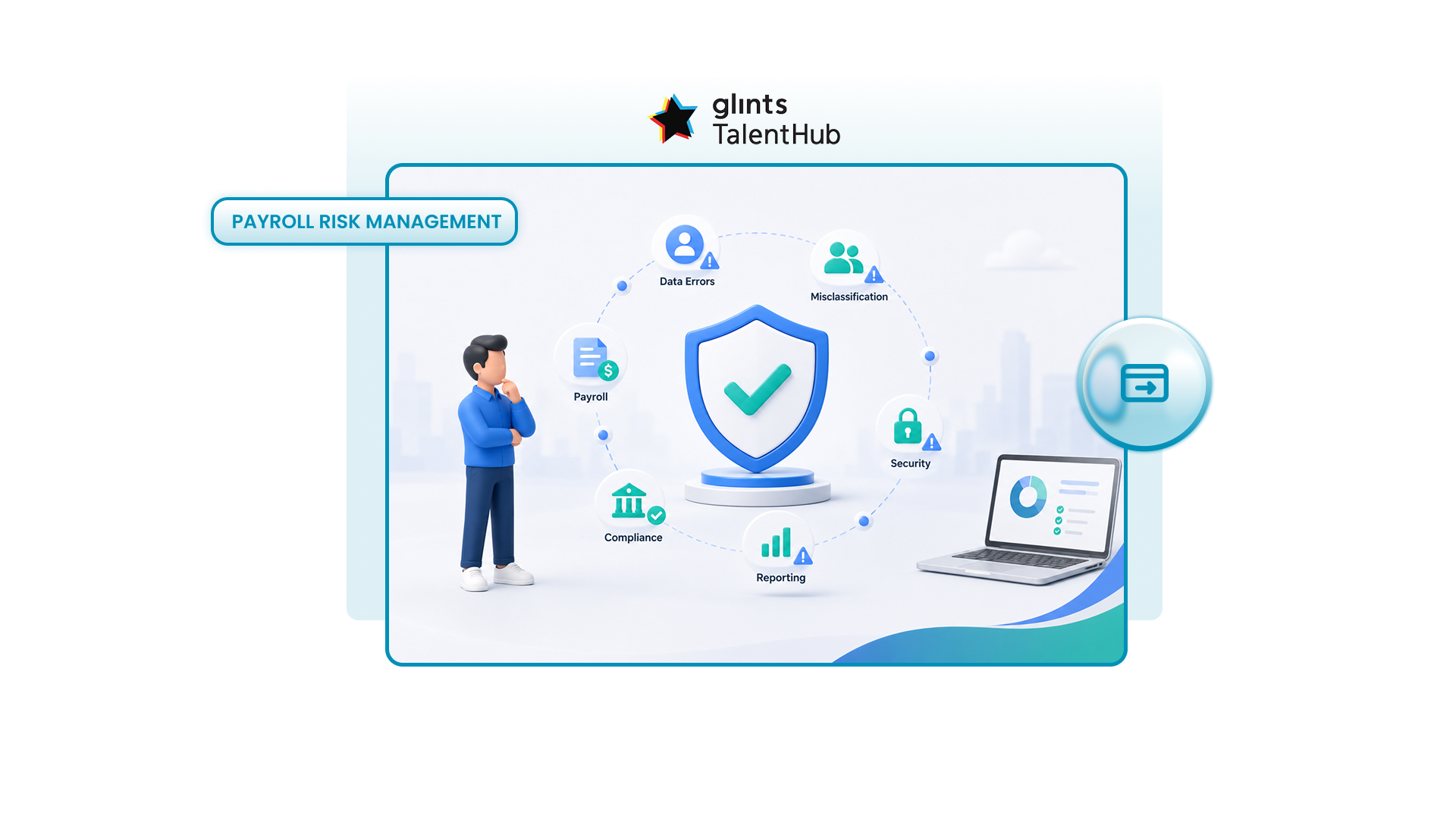
Payroll may look like a routine administrative process, but every payroll cycle involves financial, regulatory, operational and data risks.
A single mistake can result in underpaid employees, incorrect tax filings, late statutory contributions or exposed personal data. These risks become more complex when a company hires across multiple countries, since every market has its own payroll calculations, deadlines, reporting requirements and employment laws.
Payroll risk management helps employers identify these vulnerabilities before they become costly problems. It creates a structured process for paying every employee accurately, securely, compliantly and on time.
What is Payroll Risk Management?
Payroll risk management is the process of identifying, assessing, and mitigating risks that may disrupt payroll operations or cause financial, legal, and operational consequences.
These risks can come from various sources, including:
- Human errors
- Payroll fraud
- Regulatory changes
- Data security breaches
- System failures
- Misclassification of employees
- Poor internal controls
An effective payroll risk management strategy helps ensure employees are paid accurately and on time while maintaining compliance with local employment and tax regulations.
Why is Payroll Risk Management Matter for Your Business
Payroll affects both your employees and your legal obligations as an employer.
Employees depend on accurate and timely salary payments to meet their financial commitments. An incorrect payment can quickly affect morale, productivity and trust in the company.
From a business perspective, poor payroll controls can lead to:
- Financial penalties and interest
- Employee complaints or legal claims
- Overpayments and unrecovered funds
- Tax and statutory contribution errors
- Fraud and unauthorised transactions
- Data breaches
- Incorrect financial reporting
- Reputational damage
- Delayed market expansion
The risk is even greater for companies with international employees. Payroll rules that apply in one country may not apply in another.
For example, Singapore employers covered by the relevant requirements must issue itemised pay slips and maintain detailed salary records. Pay slips generally need to be provided with salary payment or within three working days of payment, according to the Ministry of Manpower.
Similar requirements may exist in other markets, but the deadlines, formats and required information can differ considerably.
Common Payroll Risks Employers Should Monitor

1. Incorrect Employee Information
Payroll depends on accurate employee data. Errors in salary, bank details, tax status or start dates can lead to incorrect payments.
Use one central employee record. Require approval for every data change.
2. Employee and Contractor Misclassification
Employees and contractors may perform similar work. However, their tax obligations and employment rights can differ.
Misclassification may result in unpaid taxes, contributions, leave or overtime. Review the actual working relationship and local laws before classifying a worker.
Consider who controls the work, provides equipment and carries financial risk. You should also check whether the worker can serve other clients.
3. Incorrect Salary Calculations
Overtime, bonuses, commissions, allowances and unpaid leave can complicate payroll. Manual calculations increase the risk of errors or missed payments.
Create clear calculation rules. Connect your payroll, attendance and leave systems where possible. Review unusual payments before approving payroll.
4. Late Salary Payments
Salary deadlines differ between countries. Weekends, public holidays, approval delays and bank processing times can also affect payment dates.
In Singapore, salaries generally must be paid within seven days after the salary period ends. Different rules may apply to overtime and final payments.
Create a payroll calendar for each country. Include approval dates, bank processing times, filing deadlines and public holidays.
5. Tax and Statutory Contribution Errors
Employers may need to manage income tax, social security, pensions, health insurance and other contributions. Errors can occur when rates or income thresholds change. Incorrect or late payments may result in penalties.
Assign someone to monitor regulatory changes in each country. Update payroll calculations before new rules take effect.
6. Inadequate Payroll Records
Payroll records show that employees were paid correctly. They also support tax filings, audits and employee disputes.
Keep contracts, pay slips, attendance records, salary approvals and proof of payment. You should also retain tax filings and final payment calculations.
Retention periods differ by country. Check the applicable local requirements.
7. Payroll Fraud
Payroll fraud can include fictitious employees, inflated hours or unauthorised bonuses. It may also involve changed bank details or payments to former employees.
The risk increases when one person controls the entire process. Separate payroll preparation, approval and payment responsibilities.
8. Payroll Data Breaches
Payroll records contain sensitive personal and financial information. Weak passwords, phishing and unsecured files can expose this data.
Limit access based on job responsibilities. Use multifactor authentication, encryption and secure file transfers. Review your payroll provider’s security practices as well.
9. Poor System Integration
Payroll often depends on data from human resources, attendance, leave and accounting systems.
Poor integration can create missing, duplicated or outdated records. Regularly check that all approved data was transferred correctly.
Automation can reduce manual work. However, every automated process still requires monitoring.
10. Regulatory Changes
Governments regularly update tax rates, minimum wages, contribution limits and reporting requirements.
These changes can be difficult to track across multiple countries. Assign a compliance owner for each market. Record every rule change, its source and its effective date.
Managing Payroll Risk Across Multiple Countries
International payroll creates additional complexity because every country may have different rules for salary periods, currencies, deductions, benefits, reporting and data protection.
Using separate vendors in each market can also fragment the process. HR may maintain one set of employee information while finance receives different reports and local providers follow different approval schedules.
The goal is not to make every country’s payroll identical. It is to create consistent control while respecting local requirements.
How an Employer of Record can reduce payroll risk
When a company hires employees in a country where it does not have a legal entity, payroll compliance can become particularly challenging.
An Employer of Record acts as the legal employer and manages local employment responsibilities such as employment contracts, payroll processing, tax withholding, statutory contributions and required employment administration.
The company still needs appropriate oversight. It should review payroll reports, approve employee changes and understand the responsibilities included in the service agreement.
Build a More Reliable International Payroll Process
Payroll risk grows when employee data, local providers and compliance responsibilities are spread across different systems and teams.
Glints TalentHub helps you hire, onboard, pay and manage employees across international markets through one coordinated solution. With local payroll and compliance support, you can reduce administrative complexity while giving employees an accurate and dependable payroll experience.
Ready to strengthen your international payroll operations? Talk to Glints TalentHub.
Conclusion
Payroll risk management is not just about avoiding payroll mistakes, it is about protecting your employees, maintaining regulatory compliance, and safeguarding your business from financial and reputational damage.
For businesses managing employees across multiple countries, partnering with a trusted global payroll or Employer of Record (EOR) provider can further simplify payroll compliance and help navigate complex local regulations. This allows companies to focus on growing their business while ensuring employees are paid accurately, securely, and on time.