


Attracting qualified candidates is only the beginning of a successful recruitment process. If candidates open your application form but leave before submitting it, your company may lose valuable talent before recruiters have a chance to review them.
Application completion rate measures how effectively your application process converts interested candidates into submitted applications. It can help you identify unnecessary friction, improve the candidate experience, and increase applicant volume without increasing recruitment advertising spend.
What is Application Completion Rate?

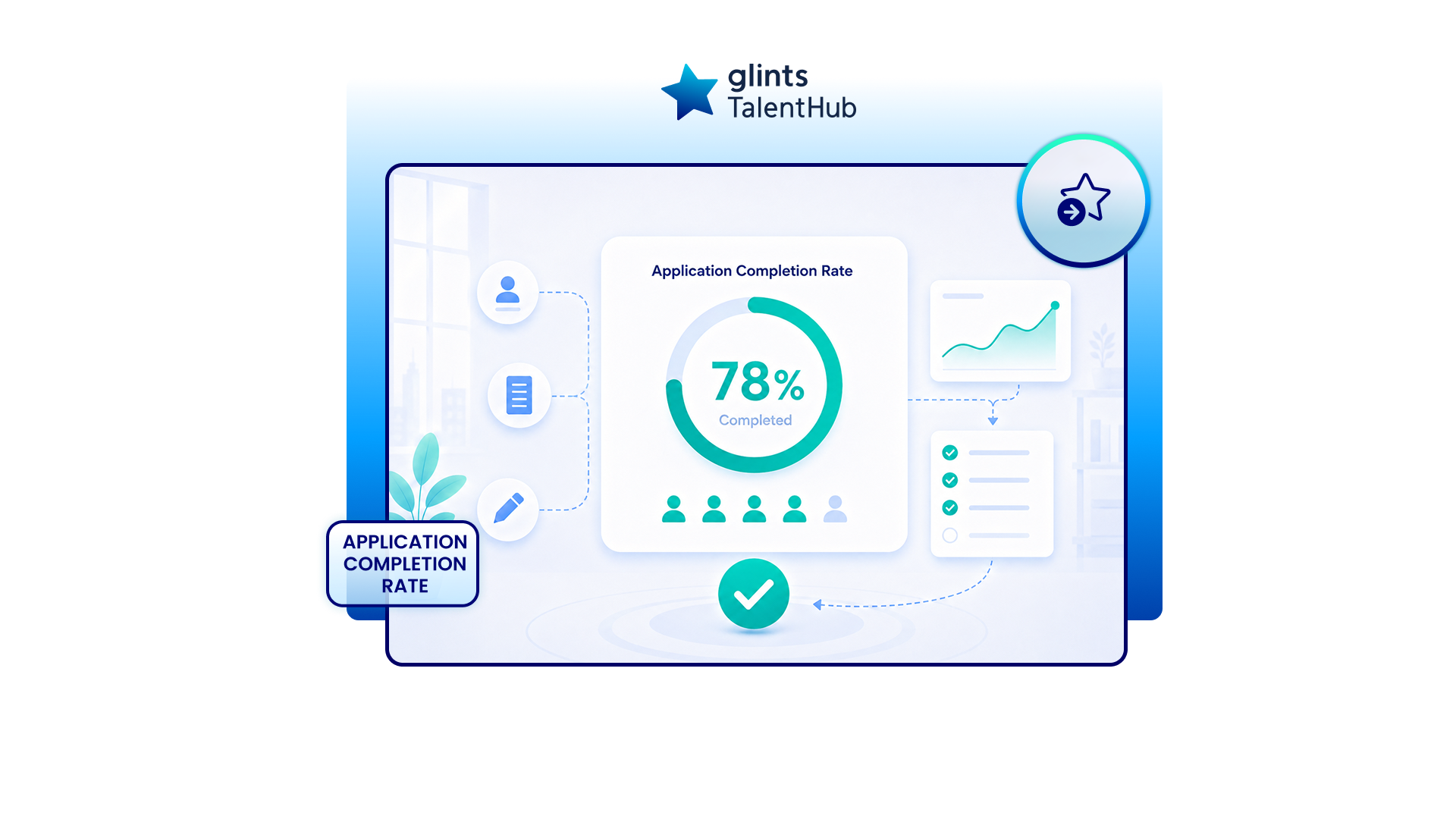
Application completion rate is the percentage of candidates who start a job application and successfully submit it.
A candidate may click a job advertisement without beginning the application. Another candidate may start entering information but leave before reaching the final submission page. Application completion rate focuses specifically on the second group by comparing completed applications with started applications.
This metric helps employers understand whether the application experience supports or discourages interested candidates.
How to Calculate Application Completion Rate
Use the following formula:
Application completion rate = Completed applications ÷ Started applications × 100
For example, imagine that 500 candidates start an application and 325 submit it.
325 ÷ 500 × 100 = 65%
The application completion rate is 65%.
This also means that 175 candidates, or 35% of those who started, left before submitting their applications.
To calculate the metric accurately, your company must clearly define what counts as an application start. This could be the moment a candidate selects the Apply button, reaches the first page of the form, or enters information into the first required field.
Using the first meaningful interaction with the form is generally more useful than counting every person who selects Apply. Some candidates may select the button only to learn more about the process and never genuinely begin an application.
Your tracking definition should remain consistent so that you can compare performance across periods, roles, locations, and recruitment channels.
Why Application Completion Rate Matters
1. It Reveals Friction in The Candidate Journey
Candidates rarely contact an employer to explain why they abandoned an application. They simply leave.
Completion data can reveal where the application process creates difficulty. If many candidates leave after reaching a particular question or page, that point may require closer review.
For example, a sharp decline at the account creation stage could indicate that candidates do not want to create another password. A decline during the employment history section may indicate that the form requests information already available in an uploaded CV.
2. It Affects The Size of Your Talent Pool
Every incomplete application represents a candidate your recruitment team cannot evaluate.
This does not mean every person who leaves would have been qualified. However, a complicated process can discourage strong candidates who have other opportunities and limited time.
Simplifying the process allows recruiters to assess more of the people who have already shown interest in the position.
3. It Influences Recruitment Costs
Companies invest in job boards, social media campaigns, employer branding, recruitment agencies, and sourcing tools to attract candidates.
When interested candidates leave during the application, part of that investment is lost. Improving completion can produce more submitted applications from the same volume of traffic, reducing the need to spend more simply to maintain applicant volume.
4. It Shapes Candidates’ Perception of The Employer
The application process is often one of a candidate’s first direct interactions with a company.
A simple and transparent experience signals respect for candidates’ time. A confusing or repetitive process can create doubts about the company’s technology, internal processes, and employee experience.
Even candidates who do not receive an offer may remember whether the process felt clear and considerate.
5. It Supports More Accurate Recruitment Planning
A company may generate high job advertisement traffic but receive relatively few completed applications. Without completion data, recruitment teams may assume that the problem is weak demand or insufficient promotion.
The actual issue may be the application experience.
What is a Good Application Completion Rate?
There is no single completion rate that applies to every employer or vacancy.
Performance can vary based on the role, seniority, industry, location, application length, device, recruitment channel, and candidate demand. A senior leadership application may reasonably require more information than an application for a high volume role.
Instead of relying only on a general benchmark, establish an internal baseline and compare similar applications.
Useful comparisons include:
- Mobile applications compared with desktop applications
- Job board traffic compared with careers page traffic
- Entry level roles compared with senior roles
- Local hiring compared with international hiring
- Applications with screening questions compared with applications without them
- Different countries or languages
- Different versions of the same form
A strong completion rate is one that improves over time without reducing the quality or relevance of submitted applications.
An extremely short form may generate more applications, but it may also increase the number of unsuitable candidates. The goal is to remove unnecessary effort while preserving the information recruiters genuinely need for the first assessment.
Application Completion Rate versus Application Conversion Rate
These two metrics are related but measure different parts of the recruitment funnel.
Application conversion rate usually compares completed applications with job page visitors or people who selected a job advertisement.
Application completion rate compares completed applications only with candidates who started applying.
For example:
- A job page receives 2,000 visitors
- 500 visitors start an application
- 325 candidates submit the application
The application conversion rate from job page visitor to submission is 16.25%.
The application completion rate is 65%.
Why Candidates Abandon Job Applications
1. The Application Requires Too Much Time
Candidates may be willing to upload a CV and answer a few relevant questions. They may be less willing to manually reenter their full employment history, education, certifications, references, and personal details.
The longer the process appears, the more likely candidates are to postpone or abandon it.
2. The Experience Does Not Work Well on Mobile Devices
Many candidates discover opportunities through mobile job boards, social platforms, and messaging applications.
Small fields, unclear buttons, difficult document uploads, or pages that require constant zooming can prevent candidates from completing the process.
Mobile performance should be treated as a central part of the application experience, not as an optional feature.
3. Candidates are Asked To Create an Account
Mandatory registration adds steps before candidates receive any value. They may need to verify an email address, create a password, accept terms, and sign in again.
Allowing candidates to apply without an account can remove a significant source of friction.
4. The Form Asks Candidates to Repeat Information
If candidates upload a CV and then have to enter the same details manually, the process can feel inefficient.
Recruiters should review every field and ask whether the information is needed before the first interview. Information required only after an offer can usually be collected later.
5. Important Job Information is Missing
Candidates may begin applying and then reconsider when they realise the salary, location, employment type, working hours, or remote work arrangement is unclear.
Transparent job descriptions help candidates make informed decisions before they enter the application process.
6. Technical Problems Interrupt The Process
Broken buttons, lost information, upload errors, session timeouts, and pages that load slowly can cause otherwise interested candidates to leave.
These issues may be difficult to identify through recruiter feedback alone. Regular testing and stage level analytics are essential.
7. Screening Questions Appear Excessive
Screening questions can help recruiters identify relevant candidates, but too many questions can make the form feel like an assessment.
Every question should support a clear hiring decision. Questions that are not used during screening should be removed or moved to a later stage.
How to Improve Application Completion Rate
1. Measure Abandonment by Application Stage
A single completion percentage tells you that candidates are leaving, but not where or why.
Track progression through key stages such as:
- Application opened
- Personal details entered
- CV uploaded
- Screening questions completed
- Application reviewed
- Application submitted
This allows your team to identify the page or field associated with the greatest decline.
2. Test The Application as a Candidate
Complete the entire process using both a computer and a mobile device.
Record how long it takes, how many fields are required, whether information is repeated, and whether instructions are clear. Test different browsers and internet speeds where possible.
Recruitment teams should repeat this test whenever the application form or applicant tracking system changes.
3. Reduce The Number of Required Fields
Start with the information recruiters need to decide whether a candidate should progress.
In many cases, this includes:
- Name and contact information
- CV or professional profile
- Location and work eligibility
- Availability
- A small number of role specific screening questions
Information for contracts, payroll, benefits, background checks, and statutory reporting can be collected after the candidate progresses.
4. Make CV Parsing Optional and Editable
CV parsing can save time when it works accurately. When it does not, candidates should be able to correct the information quickly or continue without completing every parsed field.
Do not require candidates to repair a long automatically generated profile before submitting an application.
5. Show Candidates What to Expect
Tell candidates approximately how much time the application takes and what information they will need.
A simple message such as “This application takes approximately five minutes and requires your CV” creates clearer expectations.
A progress indicator can also help candidates understand how much of the process remains.
6. Allow Candidates to Save Their Progress
Some candidates may be interrupted or need time to find a document. Saving progress allows them to return without starting again.
If this feature requires an account, consider offering a secure email link instead of requiring candidates to create and remember a password.
7. Improve The Job Description
A better application experience starts before the form.
Include clear job description about:
- Responsibilities
- Required and preferred qualifications
- Salary or compensation range where possible
- Employment type
- Work location
- Remote or hybrid arrangements
- Application stages
- Expected recruitment timeline
Candidates who understand the role are more likely to submit relevant applications.
8. Review Screening Questions
Remove questions that do not influence the initial screening decision.
Use simple formats where possible. A short selection question is usually easier to complete than a long written response.
Detailed case studies, assessments, and work samples should be reserved for candidates who have progressed to an appropriate stage.
9. Optimise Page Speed and Document Uploads
Compress unnecessary page elements and make sure the application loads reliably on slower connections.
Accept common document formats and provide clear file size requirements. If an upload fails, preserve the information the candidate has already entered.
How to Analyse Application Completion Rate
Completion rate becomes more useful when segmented.
Review the metric by:
1. Device
A large difference between desktop and mobile completion can indicate usability or upload problems.
2. Recruitment Source
Candidates from referrals, job boards, social campaigns, direct sourcing, and organic search may have different levels of intent.
3. Role
Compare positions with similar responsibilities and seniority. A technical leadership role should not automatically be compared with a high volume customer service role.
4. Location
Language, internet access, common devices, document formats, and candidate expectations can differ between markets.
5. Application Step
Stage level tracking identifies the specific question, page, or requirement associated with abandonment.
6. Candidate Quality
A higher completion rate is valuable only if the company continues to attract suitable candidates. Monitor how completed applications progress into interviews, offers, and hires.
Application Completion Rate Should not be Viewed Alone
Improving completion does not mean removing every screening requirement.
A form that accepts almost anyone may create more work for recruiters and delay responses to qualified applicants. Application completion rate should therefore be reviewed with other recruitment metrics, including:
- Qualified applicant rate
- Cost per applicant
- Cost per qualified applicant
- Interview conversion rate
- Offer acceptance rate
- Time to fill
- Source of hire
- Candidate satisfaction
Together, these metrics show whether the application process is accessible, efficient, and capable of producing suitable candidates.
Build a stronger hiring process with Glints TalentHub
Improving your application experience is only one part of building an effective recruitment process.
Glints TalentHub helps companies attract, hire, onboard, pay, and manage professionals across Southeast Asia. From accessing qualified talent to supporting compliant employment and ongoing workforce operations, you can manage more of the talent lifecycle through one partner.
Speak with Glints TalentHub to build and manage your Southeast Asian team more efficiently.
Conclusion
Application completion rate helps employers understand what happens after a candidate decides to apply.
When candidates repeatedly leave before submitting, the problem may not be a lack of talent. It may be an application process that asks for too much, takes too long, or does not function well on the devices candidates use.
Start by defining an application start, tracking abandonment at each stage, and testing the complete journey yourself. Remove fields that are not required for the first hiring decision, improve mobile usability, and make expectations clear before candidates begin.
A simpler application process can help you convert existing interest into more completed applications while creating a more positive first impression of your company.