



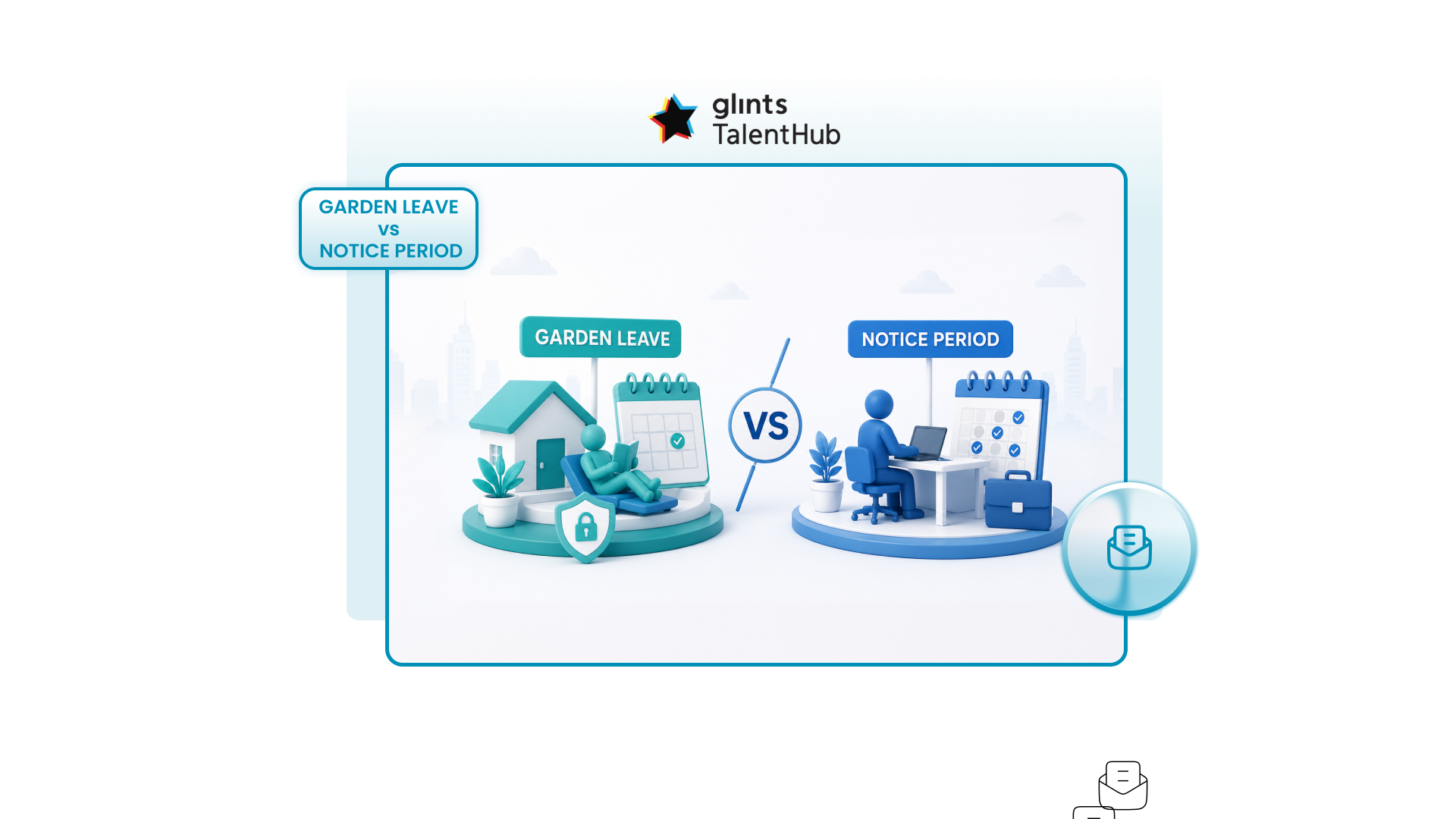
When an employee resigns or is terminated, the notice period is the time between the resignation or termination notice and the employee’s final working day. Garden leave is different. It usually happens during the notice period, where the employee remains employed and paid, but is asked not to work, contact clients, or access company systems.
For employers, understanding the difference matters because the wrong exit arrangement can create confusion around pay, confidentiality, handover, client relationships, and legal compliance. This is especially important for senior employees, sales roles, client facing teams, and employees with access to sensitive business information.
What is a Notice Period?
A notice period is the required amount of time an employee or employer must give before ending the employment relationship.
A notice period gives both sides time to prepare for the transition. For employers, this may include assigning work to other team members, finding a replacement, completing handover documents, removing system access at the right time, and preparing final salary payments.
Common notice period arrangements include:
- One week notice
- Two weeks notice
- One month notice
- Two or three months notice for senior roles
- Longer notice periods for executive, sales, technical, or leadership roles
In Singapore, if the employment contract does not specify a notice period, the required notice depends on the employee’s length of service. MOM states that the notice period ranges from one day for employees with less than 26 weeks of service to four weeks for employees with five years or more of service.
What Is Garden Leave?
Garden leave is when an employee remains employed during their notice period but is instructed not to perform work for part or all of that period.
The employee usually continues to receive salary and contractual benefits, but may be restricted from entering the workplace, accessing company systems, contacting clients, joining a competitor, or performing duties. Acas explains that garden leave may be used when an employer does not want a departing employee to access sensitive or confidential information that could be used in a new role.
An employer may ask an employee not to come to work, or to work from home or another location, during their notice period. The employee still receives the same pay and contractual benefits.
In simple terms, garden leave does not usually replace the notice period. It is a way of managing the notice period.
Garden Leave vs Notice Period: What Is the Difference?
A notice period is the required transition period before employment officially ends. Garden leave is an arrangement that can happen during that notice period.
Here is the practical difference:
Notice Period
- The employee is still employed and usually continues working.
- The employee may continue doing handover, serving clients, joining meetings, and completing remaining tasks.
- The employer continues paying salary during the notice period.
- The employee’s final employment date is usually the end of the notice period, unless both parties agree otherwise.
Garden Leave
- The employee is still employed but is usually asked not to work.
- The employee may be blocked from systems, clients, confidential files, internal meetings, and business decisions.
- The employer continues paying salary and contractual benefits during the garden leave period.
- The employee’s final employment date is usually still the end of the notice period, unless the contract or agreement says otherwise.
Example of Notice Period
An employee resigns on 1 March and has a one month notice period. Their last day of employment is 31 March.
During that month, the employee continues working as usual. They complete their handover, train another colleague, close outstanding projects, and return company property before their last day.
This is a standard notice period arrangement.
Example of Garden Leave
A senior sales manager resigns on 1 March and has a one month notice period. The employee has access to key clients, pricing information, upcoming sales proposals, and confidential account plans.
Instead of allowing the employee to continue working during the notice period, the employer places the employee on garden leave from 2 March to 31 March.
The employee remains employed and paid, but no longer attends client meetings, accesses the CRM, joins internal sales planning calls, or represents the company externally.
This is garden leave during the notice period.
When Should Employers Use a Notice Period?
A standard notice period is usually suitable when the employee can continue working without creating business risk.
Employers may use a standard notice period when:
- The employee’s role is operational and handover is important
- The employee is not moving to a direct competitor
- The employee does not have access to highly sensitive information
- The employee has ongoing work that needs to be completed
- The working relationship remains professional and stable
- The business needs the employee’s support before the final day
In many cases, a standard notice period is better for knowledge transfer. It gives the company time to document tasks, transfer client context, and reduce disruption for the team.
When Should Employers Use Garden Leave?
Garden leave is usually more useful when the business needs to protect confidential information, client relationships, commercial strategy, or internal stability.
Employers may consider garden leave when:
- The employee is joining a competitor
- The employee has access to sensitive pricing, financial, product, legal, or customer information
- The employee manages key client relationships
- The employee is in a senior leadership role
- The employee could influence other employees to leave
- The employee’s continued presence may disrupt the team
- The employee works in sales, strategy, finance, technology, recruitment, or business development
- The employer needs time to transfer accounts or remove system access carefully
Garden leave can help reduce business risk while still respecting the employee’s contractual notice period.
Is Garden Leave the Same as Paying Salary in Lieu of Notice?
No. Garden leave and salary in lieu of notice are different.
Garden leave means the employee remains employed during the notice period, continues receiving salary and benefits, but is not required to work.
Salary in lieu of notice means the employment can end earlier, with payment made instead of serving the notice period. In Singapore, MOM states that if a contract specifies a notice period, the employee must either serve the notice period or pay salary in lieu of notice when resigning.
The key difference is employment status.
Under garden leave, the employee is still employed.
Does an Employee Get Paid During Garden Leave?
Yes, in most cases, the employee should continue to receive salary and contractual benefits during garden leave because they are still employed.
Acas states that an employee on garden leave must be paid as usual during the notice period, including work benefits in their contract.
This is why garden leave can be more expensive than ending employment immediately with salary in lieu of notice. However, the cost may be justified when the employee has access to sensitive information, key clients, or strategic business plans.
Can an Employee Start a New Job During Garden Leave?
Usually, the employee should not start a new job during garden leave unless the employer allows it or the employment contract permits it.
This is because the employee is still employed by the current employer during garden leave. In Singapore, MOM also states that employees serving notice are still considered employees of their current employer and should check whether they can start work with a new employer while serving notice.
For employers, this should be clearly addressed in the employment contract. The contract should explain whether the employee can work for another employer, consult for another business, contact clients, or engage in competing activities during the notice period.
What Should Be Included in a Garden Leave Clause?
A garden leave clause should be clearly written in the employment contract. Without a clear clause, employers may face disputes if they try to restrict an employee from working during the notice period.
A strong garden leave clause should cover:
- When the company can place an employee on garden leave
- Whether garden leave can apply to part or all of the notice period
- Whether the employee must remain contactable
- Whether the employee can access company systems
- Whether the employee can contact clients, suppliers, partners, or employees
- Whether the employee can start another job during garden leave
- Whether the employee continues to receive salary and benefits
- Whether the employee must return company property immediately
- Whether confidentiality obligations continue
- Whether the employee must support handover if requested
The clearer the clause, the easier it is to manage exits consistently and fairly.
Notice Period vs Garden Leave: Which One Should Employers Choose?
Choose a standard notice period when the employee’s continued work is helpful and the business risk is low.
Choose garden leave when the employee’s continued access may expose the company to commercial, confidentiality, client, or team risk.
A simple way to decide:
- Use a normal notice period when you need handover.
- Use garden leave when you need protection.
- Use salary in lieu of notice when you need a clean and immediate exit.
The best option depends on the employment contract, local labour laws, the employee’s role, business sensitivity, and the reason for departure.
Common Employer Mistakes to Avoid
1. Using Garden Leave Without a Contract Clause
If garden leave is not clearly written in the employment contract, the employee may challenge the arrangement. Employers should include garden leave terms before they are needed.
2. Confusing Garden Leave with Termination
Garden leave does not necessarily end employment immediately. The employee usually remains employed until the notice period ends.
3. Removing Pay or Benefits During Garden Leave
Because the employee remains employed, salary and contractual benefits should usually continue during garden leave.
4. Forgetting System Access and Client Handover
Garden leave should be supported by a clear exit process. Employers should manage system access, client communication, project ownership, and company property.
5. Applying Garden Leave Inconsistently
Employers should apply garden leave based on clear business reasons, such as confidentiality, client protection, or conflict risk. It should not be used as punishment.
Need Help Managing Employee Exits Across Southeast Asia?
Managing notice periods, garden leave, final pay, contracts, and local compliance can become complex when your team is spread across different countries.
Glints TalentHub helps companies hire, onboard, manage, pay, and retain Southeast Asian professionals compliantly and at scale, so you can manage every stage of employment with more confidence.
Not sure how to structure employment terms across markets? Speak to Glints TalentHub to understand the right hiring and employment setup for your regional team.
How Garden Leave Works for Cross Border Teams
For companies hiring across multiple countries, garden leave and notice period rules may differ by market. Employment contracts, statutory notice rules, salary in lieu rules, social security treatment, and enforceability of post employment restrictions can vary.
This is especially important when companies hire remote employees across Southeast Asia. A clause that works in one country may not work the same way in another. Employers should localise employment contracts instead of copying the same template across every market.
For regional teams, employers should review:
- Local notice period requirements
- Salary in lieu rules
- Garden leave enforceability
- Final pay requirements
- Social security or CPF treatment
- Confidentiality obligations
- Restrictive covenant rules
- Local termination documentation
A compliant exit process protects both the business and the employee experience.
Final Takeaway
Garden leave and notice period are closely related, but they are not the same.
A notice period is the time before employment officially ends. Garden leave is a way to manage that period by keeping the employee employed and paid, while limiting their work duties, system access, and business contact.
For employers, the right choice depends on the level of business risk. A normal notice period supports handover. Garden leave protects sensitive information and client relationships. Salary in lieu of notice supports a faster exit when both the contract and local law allow it.
Before applying any of these options, employers should check the employment contract, document the arrangement in writing, and make sure the process follows local employment laws.