


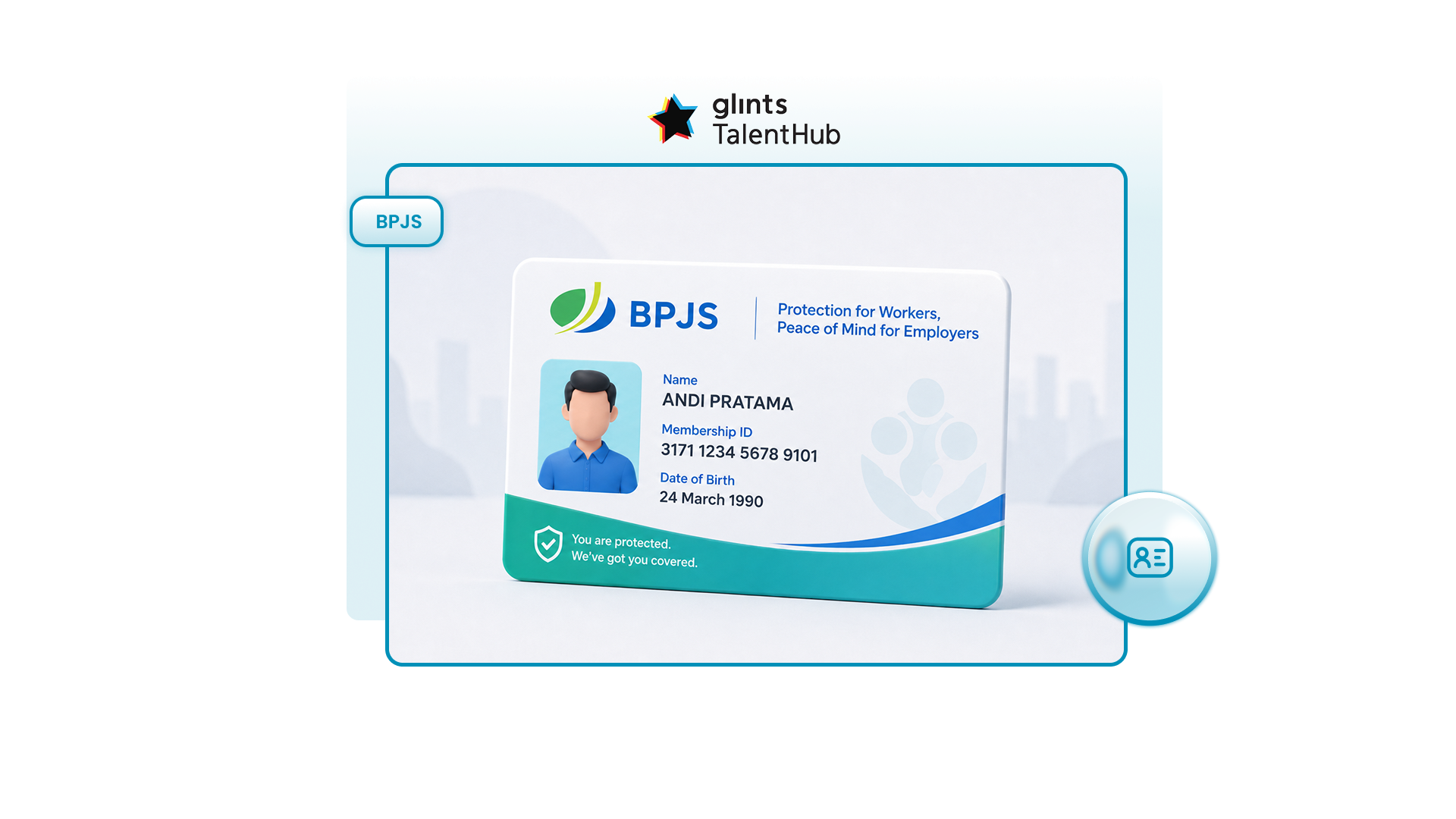
Employing people in Indonesia involves more than paying salaries. Companies must also enrol eligible employees in Indonesia’s mandatory social security programmes and calculate the required contributions correctly.
These programmes are administered by two organisations: BPJS Kesehatan, which manages national health insurance, and BPJS Ketenagakerjaan, which provides employment related social security.
For employers, BPJS compliance affects payroll calculations, employee deductions, labour costs and legal compliance. Incorrect salary reporting or late payments can expose a company to penalties and interrupt employees’ access to benefits.
This guide explains how BPJS works, the contribution rates applicable in 2026 and what employers need to manage when employing workers in Indonesia.
What is BPJS?

BPJS stands for Badan Penyelenggara Jaminan Sosial, or Social Security Administering Body.
Indonesia has two main BPJS systems:
- BPJS Kesehatan provides national health insurance through the Jaminan Kesehatan Nasional programme.
- BPJS Ketenagakerjaan provides protection related to workplace accidents, retirement, death, pensions and job loss.
Under Indonesia’s social security legislation, employers must register themselves and their eligible employees with the relevant BPJS programmes. They must also withhold the employee portion of contributions and pay both the employer and employee portions to BPJS.
Indonesia’s BPJS law also covers foreign nationals who work in Indonesia for at least six months. Indonesia’s BPJS Law requires employers to provide complete and accurate employee and family information during registration.
What is The Difference Between BPJS Kesehatan and BPJS Ketenagakerjaan?
Although both are part of Indonesia’s social security system, they cover different risks.
1. BPJS Kesehatan
BPJS Kesehatan provides access to healthcare services under Indonesia’s national health insurance programme.
Coverage generally includes:
- Primary healthcare
- Specialist treatment based on referrals
- Hospital treatment
- Maternity care
- Prescribed medicines covered by the programme
- Emergency treatment
For salaried employees, coverage generally extends to the employee, one legal spouse and up to three eligible children.
BPJS Ketenagakerjaan
BPJS Ketenagakerjaan protects workers against employment related financial risks.
Its programmes include:
- Jaminan Kecelakaan Kerja, or JKK, for workplace accidents and occupational illnesses
- Jaminan Kematian, or JKM, for death not caused by a workplace accident
- Jaminan Hari Tua, or JHT, for old age savings
- Jaminan Pensiun, or JP, for pension benefits
- Jaminan Kehilangan Pekerjaan, or JKP, for eligible employees who lose their jobs
Each programme has its own contribution structure and benefit conditions.
BPJS Kesehatan Contribution Rates in 2026
The BPJS Kesehatan contribution for private sector employees is 5% of the employee’s monthly salary.
The contribution is divided as follows:
- Employer contribution: 4%
- Employee contribution: 1%
The salary used for the calculation generally consists of basic salary and fixed allowances.
For private sector employees, the maximum salary used to calculate BPJS Kesehatan contributions is Rp12,000,000 per month. When an employee earns more than this amount, the contribution is still calculated using Rp12,000,000.
For example, an employee earning Rp15,000,000 per month would have the following BPJS Kesehatan contributions:
- Employer contribution: 4% × Rp12,000,000 = Rp480,000
- Employee contribution: 1% × Rp12,000,000 = Rp120,000
- Total monthly contribution: Rp600,000
The employer deducts the employee portion through payroll and pays the full contribution to BPJS Kesehatan.
BPJS Ketenagakerjaan Contribution Rates in 2026
Contribution rates depend on the programme and, in the case of workplace accident insurance, the company’s risk category.
1. Jaminan Kecelakaan Kerja
JKK protects employees against accidents occurring while travelling to work, performing their duties or returning home. It may also cover occupational illnesses caused by the working environment.
The employer pays the entire contribution.
The applicable rate depends on the company’s workplace risk classification:
- Very low risk: 0.24% of monthly salary
- Low risk: 0.54% of monthly salary
- Medium risk: 0.89% of monthly salary
- High risk: 1.27% of monthly salary
- Very high risk: 1.74% of monthly salary
Administrative and office based roles are commonly classified as very low risk, while industries involving construction, heavy machinery or hazardous materials may fall into higher categories. BPJS Ketenagakerjaan determines the applicable classification.
2. Jaminan Kematian
JKM provides financial benefits to an employee’s beneficiaries when the employee dies from a cause unrelated to a workplace accident.
The contribution is 0.3% of monthly salary and is fully paid by the employer.
3. Jaminan Hari Tua
JHT is an old age savings programme. Contributions accumulate in the employee’s individual account and may be claimed when the employee reaches retirement age or meets another eligible withdrawal condition.
The total contribution is 5.7% of monthly salary:
- Employer contribution: 3.7%
- Employee contribution: 2%
According to BPJS Ketenagakerjaan, the employer and employee portions are calculated from the employee’s reported monthly salary.
4. Jaminan Pensiun
JP provides monthly pension benefits to eligible participants or their beneficiaries.
The total contribution is 3%:
- Employer contribution: 2%
- Employee contribution: 1%
Unlike JHT, JP has a maximum salary basis that is adjusted periodically.
From March 2026, the maximum monthly salary used to calculate JP contributions is Rp11,086,300.
Therefore, for an employee earning more than this amount, the maximum monthly JP contribution is:
- Employer contribution: 2% × Rp11,086,300 = Rp221,726
- Employee contribution: 1% × Rp11,086,300 = Rp110,863
- Total JP contribution: Rp332,589
5. Jaminan Kehilangan Pekerjaan
JKP provides eligible employees with cash benefits, access to labour market information and job training following employment termination.
Under the revised rules introduced in 2025, the JKP contribution is 0.36% of monthly salary. It is funded through government contributions and a recomposition of other social security contributions.
Employers and employees do not normally pay an additional standalone JKP contribution. However, employers must keep employees properly registered in the qualifying BPJS Ketenagakerjaan programmes so they can access JKP benefits.
The revised 0.36% contribution is set out in Minister of Manpower Regulation No. 3 of 2025.
BPJS Contribution Example
Consider an employee who earns Rp10,000,000 per month and works in an office classified as very low risk.
Employer Contributions
- BPJS Kesehatan at 4%: Rp400,000
- JKK at 0.24%: Rp24,000
- JKM at 0.3%: Rp30,000
- JHT at 3.7%: Rp370,000
- JP at 2%: Rp200,000
The employer’s total monthly contribution is Rp1,024,000.
The employee therefore costs the employer Rp11,024,000 per month before other benefits, taxes and employment expenses are included.
Employee Deductions
- BPJS Kesehatan at 1%: Rp100,000
- JHT at 2%: Rp200,000
- JP at 1%: Rp100,000
The employee’s total BPJS deduction is Rp400,000.
This deduction must be reflected clearly in the employee’s payslip.
Are Foreign Employees Required to Join BPJS?
Foreign nationals who work in Indonesia for at least six months are generally required to participate in Indonesia’s social security programmes.
The employer is responsible for registering eligible foreign employees and paying the appropriate contributions.
This requirement can apply even when the employee already has private international health or insurance coverage. Private insurance does not automatically replace mandatory BPJS participation.
Employers should review each foreign employee’s:
- Employment start date
- Expected duration of work in Indonesia
- Work permit and immigration status
- Existing BPJS registration
- Salary and fixed allowances
- Eligible family members
The official BPJS Kesehatan participant guide confirms that foreign nationals who have worked in Indonesia for at least six months must participate in the national health insurance programme.
How Can Employers Register Employees for BPJS?
Employers must first register the company with BPJS Kesehatan and BPJS Ketenagakerjaan. Employee registrations can then be submitted through the respective employer systems.
Employers will generally need to prepare:
- The company’s business identification number
- Tax identification documents
- Company registration documents
- Employee identity information
- Family information for health insurance
- Employment start dates
- Monthly salary and fixed allowance information
- Foreign employee documentation where applicable
After registration, employers must regularly update employee information. This includes new hires, resignations, salary changes, family changes and other employment status updates.
When Must Employers Pay BPJS Contributions?
BPJS payments follow monthly deadlines.
BPJS Kesehatan contributions are generally paid no later than the 10th of each month.
BPJS Ketenagakerjaan contributions are generally paid no later than the 15th of the following month. The payment deadline is confirmed in the BPJS Ketenagakerjaan contribution regulations.
Employers should complete payroll calculations before these dates and retain proof of payment. Paying earlier also gives payroll teams time to resolve rejected payments or incorrect employee data.
What Happens If an Employer Does Not Register Its Employees?
Employers that fail to register eligible employees, submit accurate information or pay contributions may face administrative sanctions.
These sanctions can include:
- Written warnings
- Financial penalties
- Restrictions on access to certain public services
Depending on the circumstances, restricted services may affect business licences, permits and other government related approvals.
Employers may also become responsible for benefits that an employee should have received if the employee was not properly registered.
Late or inaccurate contributions can create additional problems. Employees may discover that their membership is inactive when they need medical treatment or attempt to claim employment related benefits.
Common BPJS Compliance Mistakes
1. Reporting The Wrong Salary
Some employers calculate contributions using basic salary while excluding fixed allowances that should form part of the calculation basis.
Payroll teams should identify which compensation components are fixed and confirm how they should be treated for each programme.
2. Missing Salary Ceilings
BPJS Kesehatan and JP have different maximum salary bases. Applying one ceiling to every programme can lead to incorrect contributions.
3. Registering Employees Late
Waiting until an employee completes probation can create a compliance gap. BPJS registration should be treated as part of the onboarding process.
4. Failing to Update Employee Data
Salary changes, resignations and family changes must be reflected in the relevant systems. Outdated records can result in incorrect deductions or continuing contributions for former employees.
5. Assuming Private Insurance Replaces BPJS
Companies may offer private medical insurance as an additional employee benefit. However, private insurance generally does not remove the employer’s statutory BPJS obligations.
6. Using The Wrong JKK Risk Category
The JKK rate must reflect the company’s recognised workplace risk classification. Applying a lower rate without confirmation may create underpayments.
BPJS Compliance Checklist for Employers
Employers can reduce payroll and compliance risks by completing the following checks every month:
- Register every eligible employee promptly
- Confirm the correct salary and fixed allowances
- Apply the correct contribution rates and salary ceilings
- Verify the company’s JKK risk category
- Deduct only the employee portion from payroll
- Pay the employer and employee portions before the deadlines
- Report salary and employment changes promptly
- Maintain contribution reports and payment receipts
- Reconcile BPJS records against the payroll register
- Inform employees about their contributions and benefits
Managing BPJS When You Do Not Have an Indonesian Entity
A company normally needs an appropriate local employment structure to employ workers and fulfil payroll, tax and BPJS obligations in Indonesia.
Establishing an entity may not be practical when you are testing the market or hiring only a small team. An Employer of Record in Indonesia can become the employee’s legal employer in Indonesia while your company manages their day to day work.
The Employer of Record can support:
- Compliant employment contracts
- Employee onboarding
- Monthly payroll
- BPJS registration and contributions
- Income tax withholding
- Statutory reporting
- Employee exits
With Glints TalentHub, you can employ and manage professionals in Indonesia without handling every local payroll and compliance requirement internally.
Looking to build a team in Indonesia? Talk to Glints TalentHub about managing employment, payroll and BPJS compliance through one partner.
Frequently asked questions about BPJS
Is BPJS mandatory for employees in Indonesia?
Yes. Employers are generally required to register eligible employees with BPJS Kesehatan and BPJS Ketenagakerjaan according to the applicable participation rules.
Who pays BPJS contributions?
Both employers and employees contribute to BPJS Kesehatan, JHT and JP. The employer fully funds JKK and JKM. The employer deducts the employee portion through payroll and sends the total contribution to BPJS.
Can an employer deduct all BPJS contributions from an employee’s salary?
No. Only the contribution portions legally assigned to the employee should be deducted. The employer must pay its own statutory portions.
Does BPJS apply during probation?
Employees should not automatically be excluded merely because they are serving probation. If an employment relationship exists and the worker meets the participation requirements, the employer should assess and complete registration accordingly.
Does private health insurance replace BPJS Kesehatan?
Generally, no. Private insurance can complement BPJS Kesehatan, but it does not normally replace mandatory national health insurance participation.
What is the BPJS Kesehatan salary ceiling?
For private sector salaried employees, the maximum monthly salary basis is Rp12,000,000.
What is the JP salary ceiling in 2026?
From March 2026, the maximum salary used to calculate Jaminan Pensiun contributions is Rp11,086,300 per month.
Does BPJS apply to foreign employees?
Foreign nationals who have worked in Indonesia for at least six months are generally required to participate. Employers should confirm the programmes applicable to each foreign employee because participation requirements can differ by programme.
Can private insurance replace BPJS Kesehatan?
No. Private medical insurance can supplement BPJS Kesehatan, but it does not normally replace mandatory participation.
Conclusion
BPJS is a central part of employing people compliantly in Indonesia. Employers must register eligible workers, calculate contributions using the correct salary basis, deduct the employee portions and submit payments on time.
Because BPJS Kesehatan and BPJS Ketenagakerjaan use different rates and salary ceilings, payroll calculations require careful monthly review. Companies should also monitor regulatory updates, particularly annual adjustments to the JP salary ceiling.
Accurate BPJS management protects employees while helping your business avoid penalties, benefit interruptions and unexpected employment costs.