


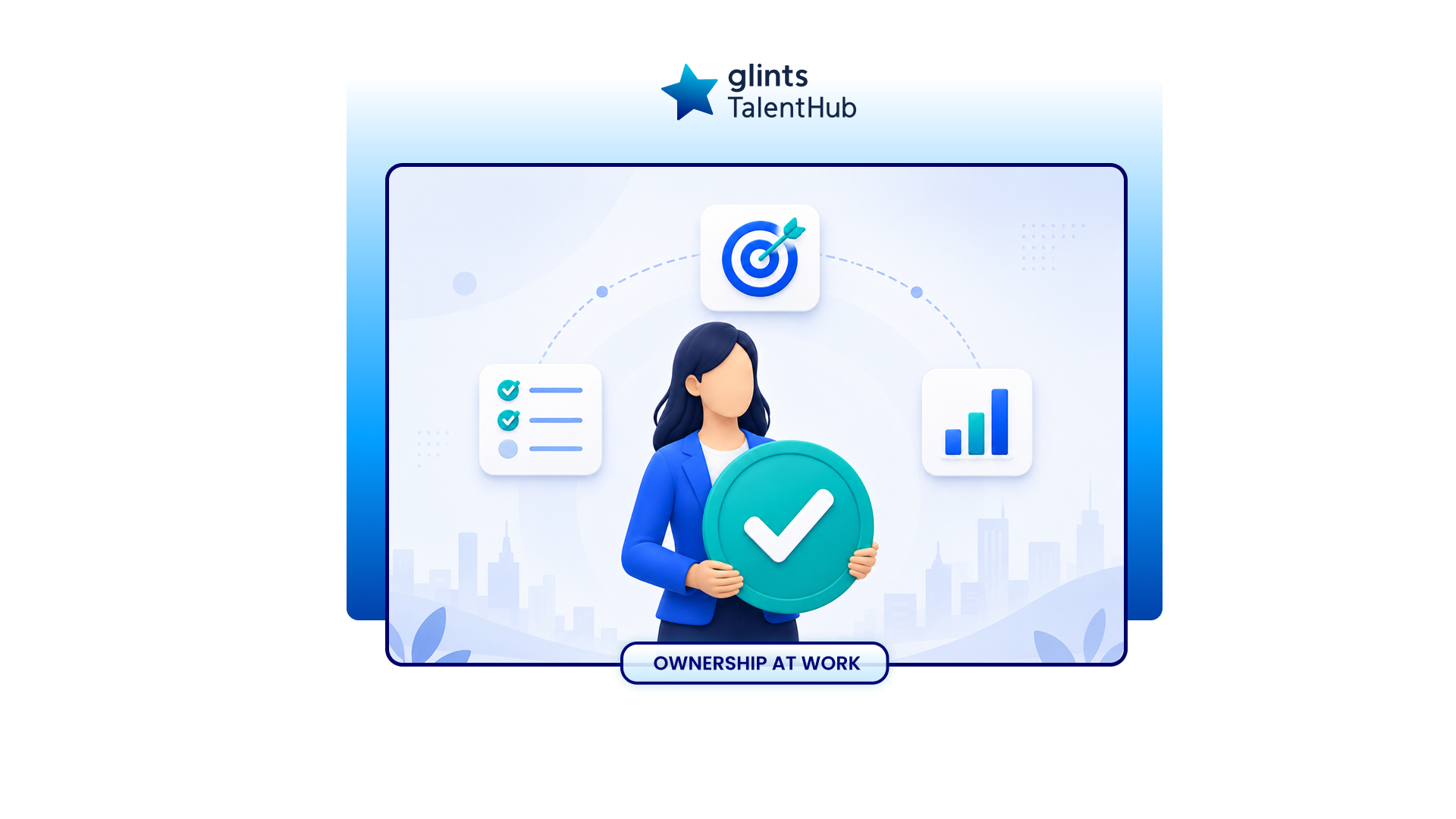
Ownership at work is the mindset of taking responsibility for an outcome, making thoughtful decisions, and following through until the work creates the intended result.
Employees who demonstrate ownership do not simply ask, “What was I told to do?” They also consider, “What needs to happen for this to succeed?”
For employers, a strong sense of ownership can lead to better execution, faster problem solving, and more reliable collaboration. However, ownership cannot be created by asking employees to work harder or take on unlimited responsibility. It develops when people have clear expectations, appropriate authority, reliable support, and confidence that their contributions matter.
This guide explains what ownership at work means, what it looks like in practice, and how employers can encourage it across their teams.
What Is Ownership at Work?
Ownership at work is the willingness to take responsibility for a task, decision, project, or result from beginning to completion.
An employee with a strong ownership mindset understands what success looks like, takes initiative, communicates progress, addresses problems, and remains accountable for the final outcome.
Ownership may include:
- Understanding the purpose behind the work
- Taking initiative without waiting for detailed instructions
- Making decisions within an agreed area of authority
- Identifying risks before they become larger problems
- Communicating delays or challenges early
- Following through on commitments
- Learning from mistakes and improving the process
Ownership does not mean that an employee must solve every problem alone. Asking for support, involving the right stakeholders, and escalating issues at the appropriate time are also signs of responsible ownership.
Ownership Versus Accountability at Work
Ownership and accountability are closely connected, but they are not exactly the same.
Accountability means being answerable for a responsibility or result. Ownership describes the broader mindset and behaviour an employee brings to that responsibility.
For example, an employee may be accountable for submitting a monthly performance report. They demonstrate ownership when they also check the accuracy of the data, explain important changes, raise potential concerns, and suggest appropriate next steps.
In simple terms, accountability defines who is responsible. Ownership shapes how that person approaches the responsibility.
A healthy workplace needs both. Clear accountability prevents confusion, while ownership encourages employees to think beyond basic task completion.
Why Is Ownership Important in the Workplace?
A culture of ownership can improve how people make decisions, solve problems, and work together.
1. It Supports Faster Problem Solving
Employees who feel ownership are more likely to investigate a problem and propose a solution. They do not automatically wait for a manager to provide every answer.
This can reduce unnecessary delays and help teams respond more effectively when conditions change.
2. It Improves The Quality of Work
When employees understand that they own an outcome, they are more likely to check details, consider the wider impact, and complete the work properly.
The focus shifts from finishing an activity to producing a useful result.
3. It Creates Clearer Accountability
Ownership helps employees understand where their responsibilities begin and end. This reduces situations where important tasks are overlooked because everyone assumes someone else will handle them.
4. It Builds Trust Within Teams
Managers are more likely to trust employees who communicate clearly, keep their commitments, and raise concerns early.
Employees are also more likely to trust colleagues who consistently follow through on shared responsibilities.
5. It Encourages Professional Growth
Taking ownership gives employees opportunities to develop judgement, communication, leadership, and problem solving skills.
Employees learn to evaluate options and manage consequences rather than relying entirely on instructions from managers.
6. It Strengthens Business Performance
When ownership is encouraged across a business, decisions can happen closer to the work. Teams can respond more quickly to customer needs, operational issues, and new opportunities.
What Does Ownership at Work Look Like?
Ownership can appear differently depending on the role, level of seniority, and type of work.
Example 1: Managing a project delay
An employee notices that a project milestone is likely to be delayed.
Without ownership, the employee may remain silent until the deadline is missed.
With ownership, the employee informs relevant stakeholders, explains the cause, assesses the impact, and proposes a revised plan.
Example 2: Responding to a customer issue
A customer reports a recurring service problem.
An employee demonstrating ownership does more than resolve the immediate complaint. They document the issue, identify the likely cause, involve the appropriate team, and follow up with the customer.
Example 3: Improving an inefficient process
An employee notices that a repeated administrative task takes unnecessary time.
Instead of accepting the inefficiency, they gather examples, suggest a simpler process, and discuss the idea with the process owner.
Example 4: Recovering from a mistake
An employee sends a report containing incorrect information.
Ownership means acknowledging the error promptly, correcting the report, informing affected stakeholders, and improving the review process to reduce the chance of recurrence.
Example 5: Collaborating across teams
A project requires support from several departments.
The project owner confirms responsibilities, follows up on dependencies, shares updates, and keeps the project moving. They do not assume that assigning a task means the result will automatically be delivered.
Characteristics of Employees Who Take Ownership
Employees who consistently demonstrate ownership often share several behaviours.
They seek clarity
They confirm objectives, priorities, deadlines, and decision authority before beginning important work.
They focus on outcomes
They understand that completing a task is not always the same as achieving the desired result.
They communicate early
They share progress and raise risks before a situation becomes difficult to manage.
They take thoughtful initiative
They act independently when appropriate while recognising when consultation or approval is required.
They accept responsibility
They acknowledge mistakes and focus on correcting them rather than assigning blame.
They follow through
They track commitments and make sure important details do not disappear after a meeting or handover.
They look for improvements
They consider how systems, processes, and ways of working could become more effective.
Why Employees May Avoid Taking Ownership
A lack of ownership is not always caused by poor motivation. Workplace conditions can discourage even capable employees from taking initiative.
Common causes include:
1. Unclear Responsibilities
Employees may hesitate when they do not know who owns a decision or how their work connects to the larger objective.
2. Micromanagement
If managers regularly override decisions or control every detail, employees may learn that independent thinking is neither trusted nor useful.
3. Fear of Failure
Employees are less likely to take initiative when honest mistakes lead to embarrassment, blame, or disproportionate consequences.
4. Limited Authority
An employee cannot fully own an outcome if every small decision requires approval from several people.
5. Conflicting Priorities
Ownership becomes difficult when employees receive competing requests from different stakeholders without a clear way to prioritise them.
6. Insufficient Resources
People may understand what needs to be done but lack the time, tools, information, or staffing required to complete it.
7. Lack of Recognition
Employees may disengage when additional initiative is consistently ignored or treated as an unlimited source of extra labour.
Before concluding that employees lack ownership, employers should examine whether the working environment allows ownership to develop.
A structured employee recognition program can reinforce ownership by acknowledging employees who take initiative, communicate risks, and follow through on commitments.
How to Build Ownership at Work
Ownership grows through daily management practices. Employers can encourage it through the following actions.
1. Define the Desired Outcome
Explain what the employee is expected to achieve, why it matters, and how success will be evaluated.
A clear outcome gives employees a destination while allowing them to contribute ideas about how to reach it.
2. Clarify Roles and Responsibilities
Each project should have a clearly identified owner. Supporting roles, approval responsibilities, and important dependencies should also be documented.
Clear ownership reduces duplicated effort and prevents important work from being overlooked.
3. Give Employees Appropriate Authority
Responsibility should be matched with decision authority.
Managers should define which decisions employees can make independently, which decisions require consultation, and which decisions require formal approval.
4. Provide The Necessary Resources
Employees need access to accurate information, suitable tools, realistic timelines, and relevant expertise.
Assigning responsibility without providing resources creates frustration rather than ownership.
5. Encourage Employees to Propose Solutions
When an employee raises a problem, managers can ask questions such as:
“What do you think is causing this?”
“What options have you considered?”
“What support would help you move forward?”
These questions encourage independent thinking while keeping support available.
6. Model Ownership as a Leader
Managers should demonstrate the same behaviours they expect from employees.
This includes keeping commitments, communicating changes, admitting mistakes, providing context, and taking responsibility for team conditions.
Employees notice when leaders ask for ownership but do not practise it themselves.
How Managers Can Discuss Ownership With Employees
Telling an employee to “show more ownership” is rarely useful because it does not explain which behaviour needs to change.
Feedback should identify a specific situation, its impact, and the preferred behaviour.
For example:
“When the delivery date became uncertain, the team only learned about the issue after the deadline had passed. For future projects, please raise delivery risks as soon as you identify them and propose the next step you recommend.”
This is clearer than saying:
“You need to be more proactive.”
Managers can also use regular questions to reinforce ownership:
- What outcome are you responsible for?
- What is the next action?
- What could prevent progress?
- Which decisions can you make independently?
- Where do you need support?
- Who needs to be informed?
- What have you learned from this project?
These conversations make ownership practical and observable.
How to Measure Ownership at Work
Ownership should be evaluated through consistent behaviour and results rather than personality.
Useful indicators may include:
- Whether commitments are completed reliably
- How early risks and delays are communicated
- Whether employees propose practical solutions
- How well projects are coordinated across teams
- Whether mistakes lead to process improvements
- How effectively employees make decisions within their authority
- Whether stakeholders receive timely updates
- Whether the work achieves the intended outcome
These indicators should be interpreted in context. A missed outcome does not automatically mean that an employee lacked ownership. External constraints, shifting priorities, and resource limitations may also affect the result.
How to Encourage Ownership in Remote and Distributed Teams
Ownership is especially important when teams work across different offices, countries, or time zones.
Remote employees have fewer opportunities to clarify expectations through informal conversations. This makes written communication and clear processes essential.
Employers can support ownership in distributed teams by:
- Documenting responsibilities and expected results
- Recording important decisions in an accessible location
- Establishing clear communication channels
- Agreeing on response expectations
- Creating transparent project timelines
- Giving employees sufficient local context
- Scheduling purposeful progress discussions
- Avoiding unnecessary meetings when written updates are sufficient
Cultural and communication differences should also be considered. Some employees may be less comfortable openly challenging a senior colleague or proposing an alternative approach. Managers can create space for participation by asking for input directly and responding respectfully.
Build Teams That Take Responsibility for Results
Ownership at work develops when people understand what they are responsible for and feel trusted to act.
Employers can strengthen ownership by defining clear outcomes, matching responsibility with authority, providing adequate support, and responding constructively when challenges arise.
The goal is not to create a workplace where employees carry every burden alone. It is to build a culture where people make thoughtful decisions, communicate openly, and take responsibility for moving work forward.
As companies expand into new markets, establishing this culture can become more complex. Different employment requirements, local expectations, and distributed working arrangements can affect how teams are hired, onboarded, paid, and supported.
Glints TalentHub helps companies attract, hire, onboard, pay, and retain professionals across Southeast Asia through one unified talent operations solution. With recruitment and Employer of Record support in one place, you can build capable local teams while managing employment responsibilities compliantly.
Conclusion
Ownership at work is not simply about completing assigned tasks. It means understanding the desired outcome, taking initiative, communicating openly, and accepting responsibility for decisions and results.
To build a strong culture of ownership, employers must provide clear expectations, appropriate authority, reliable support, and a safe environment for employees to learn from mistakes. When people feel trusted and understand how their work contributes to the business, they are more likely to solve problems, follow through on commitments, and deliver meaningful results.