


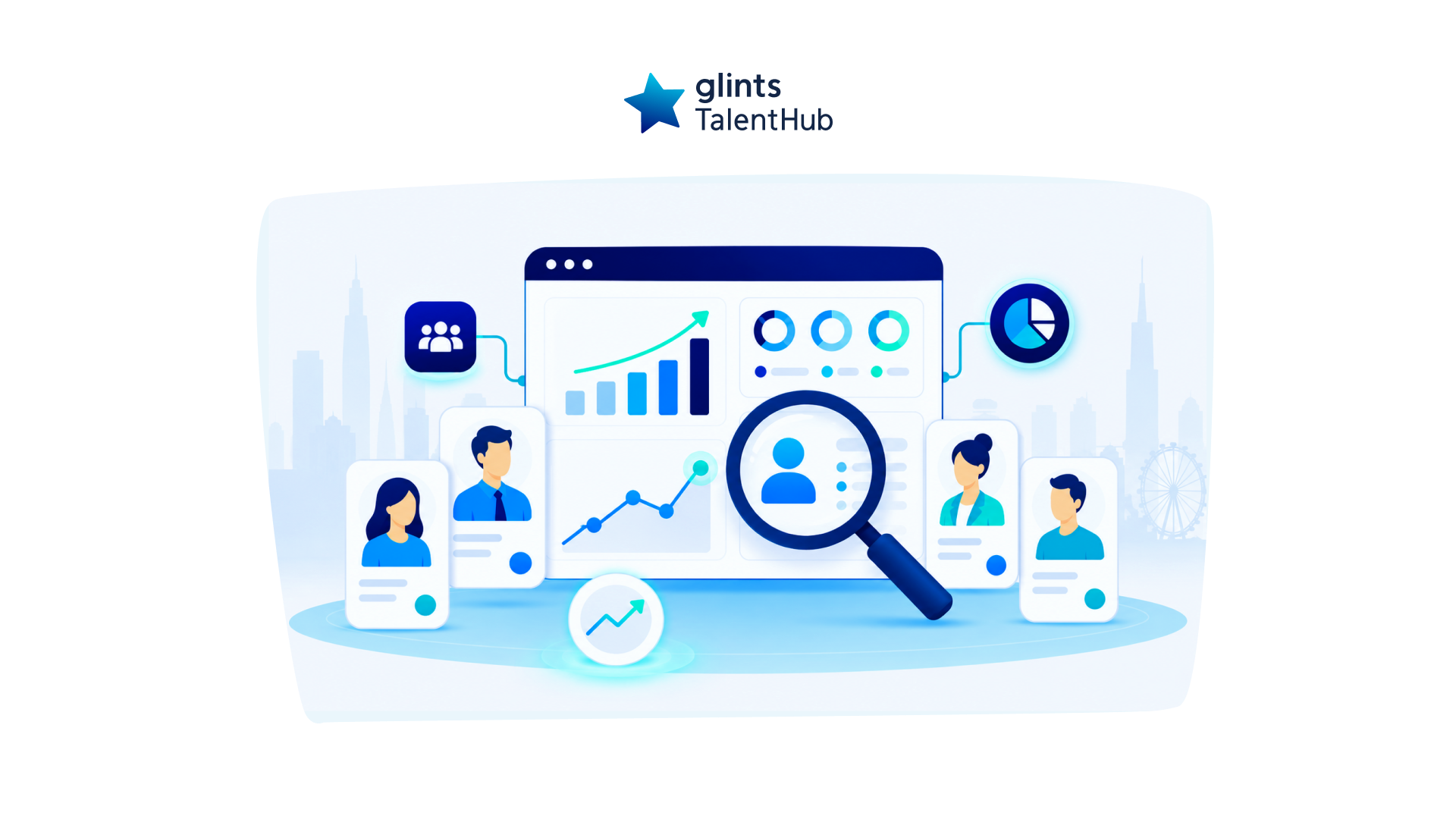
People analytics helps companies make better workforce decisions using reliable employee data.
Instead of relying only on assumptions, HR teams can examine patterns across recruitment, performance, engagement, compensation and employee retention. These insights can help leaders understand what is happening in their workforce, why it is happening and what action they should take.
However, effective people analytics requires more than an HR dashboard. Companies need accurate data, clear business questions and responsible data practices. Without these foundations, analytics can produce misleading conclusions or create unnecessary privacy risks.
This guide explains how people analytics works, the metrics companies can track and how to introduce it effectively.
What is People Analytics?
People analytics is the practice of collecting and analysing workforce data to solve business and employee related problems.
The Chartered Institute of Personnel and Development defines people analytics as analysing data about people to solve business problems. It may also be called HR analytics, talent analytics or workforce analytics.
For example, a company experiencing high employee turnover could analyse resignation rates, manager feedback, compensation, tenure and engagement scores. The findings might reveal that resignations are concentrated in specific teams or happen shortly after a certain point in the employee journey.
Why is People Analytics Important?
Every workforce decision has a potential impact on cost, productivity and employee experience. People analytics gives leaders stronger evidence for making those decisions.
1. Improve Workforce Planning
Workforce data helps a company understand whether it has enough employees and capabilities to meet future business needs.
Leaders can identify:
- Teams with capacity constraints
- Roles that may become difficult to fill
- Skills that are missing from the workforce
- Locations with stronger talent availability
- Positions that may need succession plans
These insights help the company act before a talent shortage affects business performance.
2. Make Recruitment More Effective
Recruitment analytics can show which channels deliver suitable candidates, how long positions take to fill and where candidates leave the recruitment process.
For example, a company might receive many applications from a job board but find that very few candidates reach the interview stage. Another channel may produce fewer applications but a much higher number of successful appointments.
The company can use this information to allocate its recruitment budget more effectively.
3. Understand Employee Turnover
A turnover figure only shows how many employees have left. People analytics helps companies investigate the reasons behind that figure.
Analysis might show that turnover is higher among:
- Employees with less than one year of service
- People working under certain managers
- Employees in specific locations
- Roles with limited career progression
- Employees whose compensation is below the market range
This allows the company to develop a more focused retention strategy.
4. Strengthen Employee Engagement
Engagement survey results become more useful when they are connected with other workforce information.
A company could compare engagement scores with absenteeism, internal mobility, manager changes and turnover. This can help identify which workplace conditions are associated with stronger employee experiences.
5. Support Fairer Decisions
Structured analysis can help reveal differences in recruitment, compensation, promotion and performance outcomes across employee groups.
Companies can use these insights to investigate whether policies are being applied consistently. However, the data must be interpreted carefully. A difference between groups does not automatically explain why the difference exists.
6. Measure The Impact of HR Programmes
People analytics helps HR teams demonstrate whether an initiative has produced a meaningful result.
After introducing a manager training programme, for example, a company could examine changes in:
- Team engagement
- Employee turnover
- Absenteeism
- Performance ratings
- Internal promotions
The analysis should compare relevant periods and consider other factors that may have influenced the result.
People Analytics and HR Analytics: What is The Difference?
People analytics and HR analytics are often used interchangeably. Both involve using employee data to improve decisions.
HR analytics usually focuses on the performance of HR activities, such as recruitment cost, training participation and payroll accuracy.
People analytics can have a broader focus. It connects workforce information with business outcomes such as revenue, productivity, customer satisfaction and operational performance.
Workforce analytics is another related term. It often focuses on patterns across the overall workforce and may be closely connected with workforce planning.
The terminology matters less than the purpose. The analysis should answer a meaningful question and lead to an appropriate action.
The Four Types of People Analytics
Companies can use people analytics at different levels of complexity.
1. Descriptive Analytics
Descriptive analytics explains what has happened.
Examples include:
- How many employees resigned last quarter?
- What was the average time to fill a position?
- Which department recorded the highest absence rate?
This is often the starting point for an HR dashboard.
2. Diagnostic Analytics
Diagnostic analytics investigates why something happened.
For example, if turnover increased, the company might analyse changes in workload, management, compensation, engagement and career progression.
This analysis can identify relationships between different factors. However, a relationship does not always prove that one factor caused the other.
3. Predictive Analytics
Predictive analytics uses historical patterns to estimate what may happen in the future.
A company might forecast:
- Future staffing requirements
- Potential employee turnover
- Skills likely to be in demand
- Recruitment demand by department
Predictions should inform human judgement rather than replace it. Historical data can contain gaps and biases that affect the result.
4. Prescriptive Analytics
Prescriptive analytics suggests possible actions based on the available evidence.
For example, the analysis might indicate that increasing internal mobility opportunities could improve retention among employees in certain roles.
The recommendation should still be reviewed by HR, legal and business leaders before implementation.
Important People Analytics Metrics
The right metrics depend on the business question. Tracking every available data point can make reporting complicated without improving decisions.
1. Recruitment Metrics
Common recruitment metrics include:
- Time to fill
- Time to appointment
- Cost per appointment
- Offer acceptance rate
- Application completion rate
- Candidate conversion rate
- Source effectiveness
- Quality of appointment
- New employee turnover
- Candidate satisfaction
2. Retention Metrics
Useful retention metrics include:
- Overall turnover rate
- Voluntary turnover rate
- Regrettable turnover rate
- Retention rate
- Turnover during the first year
- Average employee tenure
- Turnover by department, role or location
- Internal mobility rate
3. Engagement and Wellbeing Metrics
These may include:
- Employee engagement score
- Survey participation rate
- Employee recommendation score
- Absenteeism rate
- Average number of leave days
- Employee relations cases
- Workload indicators
Sensitive wellbeing information requires particularly careful handling and should only be collected when there is a clear, lawful and appropriate reason.
4. Performance and Development Metrics
Companies may examine:
- Performance rating distribution
- Goal completion rate
- Training participation
- Training completion rate
- Skills assessment results
- Promotion rate
- Internal appointment rate
- Time to productivity
- Succession plan coverage
5. Compensation Metrics
Important compensation measures can include:
- Total workforce cost
- Compensation by role and location
- Salary position against market benchmarks
- Pay differences between employee groups
- Overtime cost
- Benefits participation
- Payroll error rate
- Compensation changes following promotion
Practical Examples of People Analytics
Example 1: Reducing early employee turnover
A company notices that many employees leave within their first six months.
The HR team analyses recruitment sources, onboarding completion, manager check ins, employee feedback and resignation reasons. The data shows that early turnover is concentrated among employees who did not receive a structured onboarding plan.
The company introduces clearer onboarding milestones and scheduled manager conversations. It then monitors retention among subsequent employee groups to evaluate the impact.
Example 2: Improving recruitment efficiency
A company is spending more on recruitment but filling fewer roles.
An analysis shows that one sourcing channel produces a high application volume but few suitable candidates. Another channel produces fewer applications but a stronger interview and acceptance rate.
The company reallocates part of its budget to the channel delivering stronger results and continues monitoring candidate quality.
Example 3: Identifying a management issue
Engagement scores have declined in one department while other departments remain stable.
The company compares engagement, turnover, absence and employee relations data. It also reviews anonymous employee comments and conducts structured interviews.
The findings suggest that unclear priorities and inconsistent feedback are affecting the team. The company provides management support and establishes clearer team processes.
Example 4: Planning international workforce growth
A company wants to expand into new markets but does not know where the required talent is available.
It compares talent supply, compensation expectations, skills availability, recruitment timelines and employment requirements across several countries.
The company can then decide where to build teams and which employment model is most suitable for each market.
How to Develop a People Analytics Strategy
Step 1: Begin with a business question
Start with a specific problem rather than starting with the data.
A useful question might be:
“What factors are contributing to higher turnover among software engineers during their first year?”
This is more actionable than asking for a general turnover report.
Step 2: Define the decision
Identify who will use the findings and what decision they need to make.
If no decision or action can follow from the analysis, the project may not be worth prioritising.
Step 3: Identify the required data
Determine which information is genuinely necessary to answer the question.
For turnover analysis, this might include:
- Role
- Location
- Tenure
- Compensation range
- Manager
- Promotion history
- Engagement results
- Reason for leaving
Avoid collecting personal information simply because it may be useful later.
Step 4: Improve data quality
People analytics depends on consistent and accurate information.
Common data issues include:
- Duplicate employee records
- Missing resignation reasons
- Inconsistent role names
- Outdated salary information
- Different definitions across departments
- Records stored in separate systems
Create clear definitions for every metric and assign responsibility for maintaining each source.
Step 5: Analyse the information
Use an appropriate method based on the question and available data. This could range from a simple comparison to statistical modelling.
Segmenting data by department, location, role or tenure can reveal patterns hidden within company averages.
Be careful with very small groups. Reporting their results could expose individual employees or produce unreliable conclusions.
Step 6: Add human context
Data can identify a pattern, but it may not explain the full employee experience.
Combine quantitative information with interviews, focus groups, survey comments and feedback from managers. This helps validate the findings and prevents the company from acting on an incomplete interpretation.
Step 7: Turn insights into action
Present the findings in simple business terms.
A useful recommendation should explain:
- What the analysis found
- Why the finding matters
- What action is recommended
- Who is responsible
- How success will be measured
Step 8: Evaluate the result
Measure what happens after an action is introduced.
Where possible, compare the result with a relevant previous period or another employee group. Continue monitoring for unintended outcomes.
Common People’s Analytics Challenges
1. Fragmented Workforce Data
Employee information may be stored across recruitment, payroll, performance and workforce management systems. Different formats and definitions make analysis difficult.
A central source of reliable employee records can improve consistency.
2. Poor Data Quality
Missing or inaccurate data can create misleading findings. Before developing advanced models, companies should establish reliable data entry, validation and ownership processes.
3. Lack of Analytical Capabilities
HR teams do not always need specialist data scientists to begin. Basic reporting and careful analysis can answer many valuable questions.
More advanced capabilities can be introduced as the questions become more complex.
4. Confusing Correlation With Causation
Two factors moving together does not prove that one caused the other.
For example, employees who complete more training may perform better. This does not necessarily mean the training caused the improvement. High performing employees may simply be more likely to participate.
5. Bias in Data and Models
Historical workforce data may reflect earlier inequalities or inconsistent decisions. A model trained on this information can repeat or strengthen those patterns.
Companies should test results across employee groups, review the variables used and maintain human oversight for important decisions.
6. Employee Trust
People analytics can damage trust if employees do not understand what is being collected or how it will be used.
The purpose, scope and safeguards should be communicated clearly. Data should not be repurposed for unrelated decisions without an appropriate review.
Privacy and Ethical Considerations
Workforce data may include personal, financial, demographic, health and performance information. Companies must protect this information throughout its lifecycle.
The appropriate requirements depend on the countries where employees work and where their data is processed.
Responsible practices include:
- Collect only necessary information
- Establish a lawful purpose for processing
- Limit access to authorised people
- Use aggregated or anonymous data where possible
- Set retention and deletion periods
- Protect information with suitable security controls
- Review analytics for potential bias
- Explain how employee data is used
- Provide a process for correcting inaccurate information
- Complete an impact assessment for higher risk activities when required
The OECD recommends strong privacy and confidentiality safeguards when organisations integrate detailed workforce information. The Information Commissioner’s Office also advises employers to balance business interests with employee rights and use the least intrusive method available.
People analytics should support employees as well as business performance. It should not become a form of unnecessary surveillance.
People Analytics Best Practices
To improve the quality and credibility of workforce insights:
- Focus on business questions, not dashboard volume
- Use consistent definitions across the company
- Combine people data with relevant business information
- Segment results carefully to uncover meaningful patterns
- Protect confidentiality when reporting small groups
- Validate findings with employee feedback
- Review models for possible bias
- Keep people involved in important decisions
- Explain limitations and uncertainty
- Measure the outcome of every major intervention
Build and Manage Your Southeast Asian Workforce With Better Visibility
Workforce insights are only valuable when they lead to effective action.
Glints TalentHub helps companies source, hire, onboard, pay and retain Southeast Asian professionals through one unified talent operations solution. You can gain clearer workforce visibility while managing local employment requirements, payroll and ongoing employee support across the region.
Explore Glints TalentHub to build and manage your Southeast Asian team compliantly and at scale.
Conclusion
People analytics turns workforce information into practical insight. It can help companies improve recruitment, strengthen retention, plan future capabilities and understand whether HR programmes are delivering meaningful results.
Successful analytics begins with a clear business question. It also depends on accurate data, appropriate human context and responsible privacy practices.
Companies do not need to begin with complex predictive models. A focused question, a small set of reliable metrics and a clear action plan can already produce valuable results.