


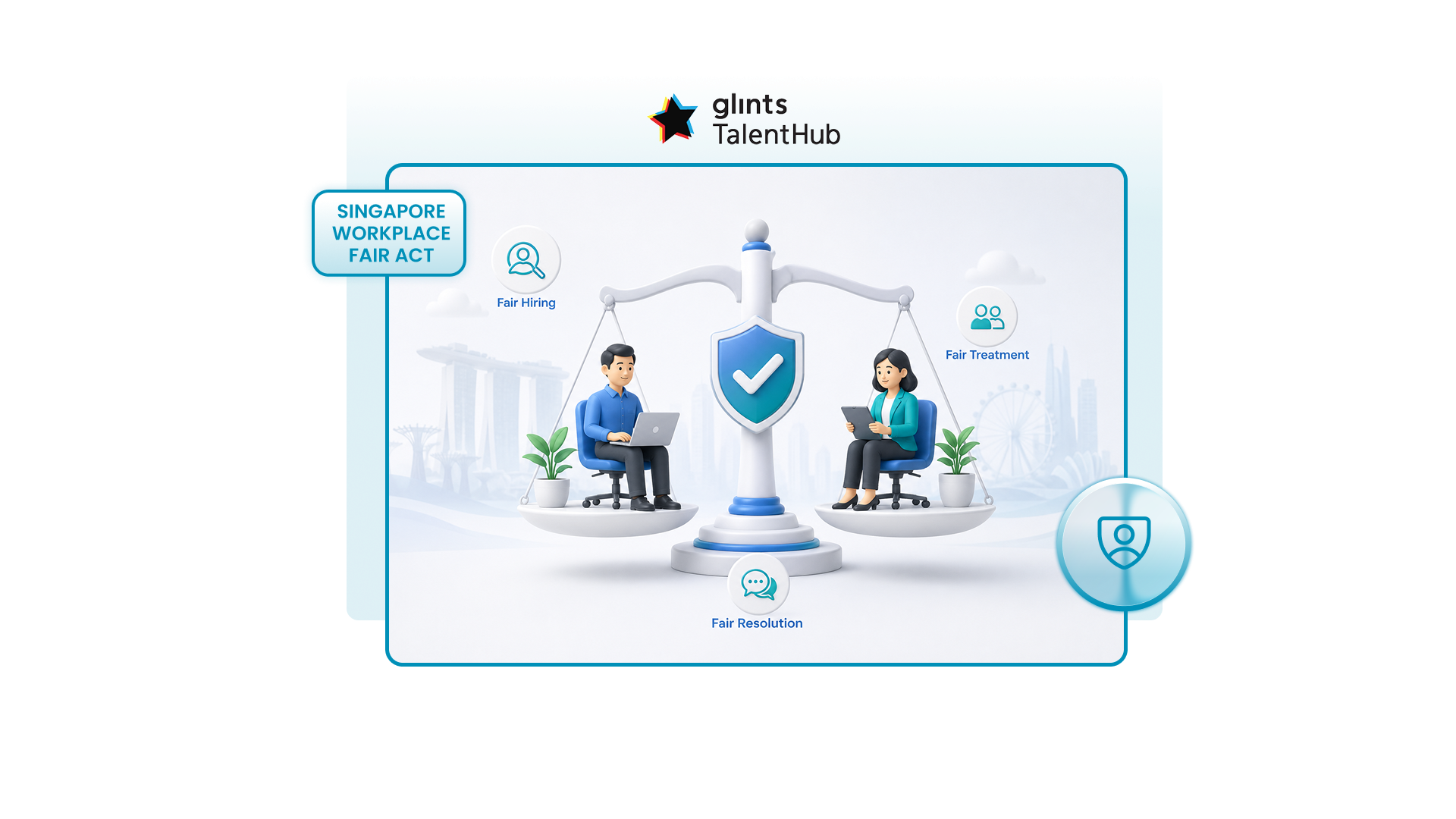
Singapore’s Workplace Fairness Act introduces legal protections against workplace discrimination and establishes clearer obligations for employers.
The Act will prohibit employers from making adverse employment decisions based on protected characteristics such as age, nationality, sex, race, religion, disability, and mental health conditions. It will also require covered employers to establish a formal process for receiving and handling workplace grievances.
Singapore Parliament passed the first Workplace Fairness Bill on 8 January 2025 and the Workplace Fairness (Dispute Resolution) Bill on 4 November 2025. Together, they form the Workplace Fairness Act.
As of July 2026, the Act is not yet in force. The Ministry of Manpower currently aims to implement it at the end of 2027, giving employers time to review their employment practices and prepare for compliance.
What is the Singapore Workplace Fairness Act?
The Workplace Fairness Act is Singapore’s legislation for protecting jobseekers and employees from specified forms of workplace discrimination.
It builds on the existing Tripartite Guidelines on Fair Employment Practices, commonly known as the TGFEP. While the guidelines establish expectations for fair employment, the Act gives certain protections and employer obligations legal force.
Under the Act, an employer must not make an adverse employment decision because of a protected characteristic.
The Act will also prohibit discriminatory job advertisements, company policies, instructions, or directions relating to employment decisions.
According to the Ministry of Manpower, the protected characteristics included in the Act account for more than 95% of the workplace discrimination complaints received by MOM and TAFEP.
What Characteristics are Protected Under the Workplace Fairness Act?
The Act covers five categories of protected characteristics.
1. Age
Employers must assess jobseekers and employees based on their ability to perform the role, rather than assumptions about their age.
An employer should not reject an older applicant simply because it assumes the person will be less adaptable or physically capable. Similarly, a younger employee should not be denied a promotion solely because of their age.
The Act will provide an exception that allows employers to favour senior workers in certain situations, supporting continued employment among older workers.
2. Nationality
Employers must not favour or disadvantage an individual based on nationality unless a permitted exception applies.
For example, a hiring manager should not shortlist only candidates of a particular foreign nationality because of a personal preference or an assumption that people from that country will fit the team better.
The Act will allow employers to make certain decisions based on whether an individual belongs to the local workforce. This supports employers that want to strengthen their Singaporean core while maintaining access to international talent.
Employers must continue complying with the Fair Consideration Framework, including applicable MyCareersFuture advertising and fair consideration requirements.
3. Sex, Marital Status, Pregnancy Status, and Caregiving Responsibilities
An employer must not make an adverse employment decision because a person:
- Is it male or female
- Is married or unmarried
- Is pregnant
- Has children or other caregiving responsibilities
For example, an employer should not reject an otherwise suitable candidate because she is pregnant or assume that a parent will be less committed to a leadership role.
Employment decisions should be supported by objective evidence related to qualifications, conduct, performance, or the requirements of the role.
4. Race, Religion, and Language Ability
Employers cannot make employment decisions based on racial or religious stereotypes.
Language proficiency requirements must also have a genuine connection to the job. An advertisement that requires Mandarin without explaining why the language is necessary could raise fairness concerns.
A language requirement may be legitimate where an employee needs that language to perform essential duties, such as interpreting documents or communicating with customers who use that language.
Religious organisations will have some flexibility when hiring for religious roles or positions connected to the management of a religious institution.
5. Disability and Mental Health Conditions
The Act will protect individuals from adverse employment decisions based on disability or mental health conditions.
An employer should not reject a candidate simply because the person has disclosed a mental health condition. The employer should consider whether the individual can perform the role based on relevant evidence.
The Act will also allow employers to favour persons with disabilities where the objective is to improve their employment opportunities.
What Counts as Workplace Discrimination?
Workplace discrimination occurs when an employer makes an adverse employment decision because of a protected characteristic.
A disappointing outcome does not automatically amount to discrimination. An employer can still reject, manage, demote, or dismiss someone for legitimate reasons such as insufficient qualifications, documented poor performance, misconduct, redundancy, or an inability to meet essential job requirements.
The important question is whether the decision was made because of a protected characteristic.
Can Employers Consider Protected Characteristics in Any Situation?
The Workplace Fairness Act recognises that employers may sometimes need to consider a protected characteristic for a genuine business reason.
Permitted situations can include:
1. Reasonable Performance of the Job
A company may require proficiency in a particular language where that ability is necessary to perform the role. An interpreter, for example, may need professional fluency in the relevant language.
2. Health and Safety
An employer may consider whether a medical condition creates a material safety risk that cannot be appropriately managed.
The assessment should be based on the actual duties and risks of the role, rather than a general assumption about people with the condition.
3. Privacy
A business may consider sex where it is necessary to protect customer privacy. For example, a spa may hire female therapists to provide certain services to female customers.
4. Legal or Regulatory Requirements
A company may apply an age or qualification requirement where legislation or industry regulations require it.
5. National Policy Objectives
Employers may take certain actions to strengthen their local workforce or improve employment opportunities for senior workers and persons with disabilities.
Employers should document why an exception is necessary and show how it relates to the position or applicable policy objective.
Which Employers Will be Covered?
The Act is expected to cover employers with at least 25 employees.
Employers with fewer than 25 employees will initially be exempt to give smaller businesses more time to develop the necessary capabilities. The Government plans to review this exemption five years after the Act comes into force.
The employee threshold will apply to each individual corporate entity rather than to an entire corporate group.
However, exemption from the Act does not give a small company permission to discriminate. The TGFEP will continue to apply to all employers, including companies with fewer than 25 employees. TAFEP and MOM may continue to address unfair employment practices through the existing framework.
What Must Employers do Under the Workplace Fairness Act?
Covered employers will have several important responsibilities.
1. Make Employment Decisions Based on Merit
Recruitment, appraisal, promotion, training, and dismissal decisions should be based on relevant and objective criteria.
Employers should be able to explain why an individual was selected or not selected using evidence connected to the role.
2. Review Job Advertisements and Company Policies
Advertisements should not state that a protected characteristic is required, preferred, advantageous, disadvantageous, or disqualifying unless a valid exception applies.
Employers should also remove discriminatory instructions from internal hiring policies, promotion frameworks, and manager guidance.
3. Establish a Written Grievance Handling Process
Employers will need a documented process through which employees can raise workplace discrimination or harassment concerns.
The employer must inquire into the grievance, review it, communicate the result, and protect the employee’s confidentiality as far as reasonably possible.
4. Protect Employees Against Retaliation
Employers must not retaliate against an employee who reports discrimination or harassment or participates in a related process.
Retaliation can include dismissal, demotion, intimidation, an unfair appraisal, exclusion from opportunities, or another adverse action prompted by the report.
5. Maintain Appropriate Employment Records
Consistent documentation can help an employer demonstrate that its decisions were based on merit.
Employers should determine suitable retention periods based on forthcoming regulations, legal requirements, and their internal data protection policies.
How Will Workplace Discrimination Disputes be Resolved?
The Workplace Fairness Act prioritises early and amicable resolution.
The expected process involves three stages.
Stage 1: Internal grievance handling
An employee should first raise the concern through the employer’s internal grievance process.
This gives both sides an opportunity to review the facts, address misunderstandings, and find a practical resolution.
Stage 2: Mediation
If the issue cannot be resolved internally, the parties must attempt third party mediation before the individual can file a claim in court.
The Tripartite Alliance for Dispute Management is expected to handle relevant claims, with other approved providers supporting higher value disputes.
Stage 3: Adjudication
Claims of up to and including S$250,000 will be heard by the Employment Claims Tribunals.
The process will be private, led by a judge, and supported by simplified procedures. Legal representation will not be allowed at the Employment Claims Tribunals, although qualifying union representation may be available.
Claims above S$250,000 will be heard by the High Court, where legal representation is permitted.
Claimants will need to request mediation within the applicable time limit. Depending on the circumstances, the limits are expected to range from one to 12 months.
What Penalties Can Employers Face?
The Government will be able to take enforcement action based on the severity of a breach.
A first or less serious breach may result in corrective action. Repeated or intentional discrimination may attract a financial penalty.
Systemic discrimination could be treated more seriously. One example would be a longstanding company practice of hiring or promoting only employees of a particular nationality despite having stronger candidates from other backgrounds.
Exact financial amounts and enforcement procedures may be provided through subsidiary legislation before implementation.
These state enforcement measures are separate from private claims that affected individuals may bring.
How Employers Can Prepare for The Workplace Fairness Act
Employers do not need to wait until 2027 to begin preparing. Reviewing practices early provides time to identify gaps, train managers, and introduce consistent processes.
1. Audit the Employment Lifecycle
Review recruitment, compensation, appraisal, promotion, training, disciplinary, and dismissal practices.
Identify where decisions depend heavily on personal discretion or lack written criteria.
2. Update Job Descriptions and Advertisements
Define the skills, experience, qualifications, and responsibilities required for each role.
Remove criteria connected to age, sex, nationality, race, religion, marital status, pregnancy, caregiving, disability, or mental health unless there is a documented and permitted reason.
3. Standardised Candidate Assessments
Use structured interview questions and assessment forms based on the requirements of the position.
Apply the same core criteria to every candidate being considered for the same role.
4. Strengthen Performance Management
Set clear expectations and provide regular feedback.
Performance ratings, promotions, training opportunities, and disciplinary decisions should be supported by documented evidence.
5. Introduce a Written Grievance Process
Make the process easy to find and understand.
Provide more than one reporting channel where possible, especially where the employee’s direct manager may be involved in the complaint.
6. Train Managers and Recruiters
Managers should understand what constitutes discrimination, what questions to avoid during interviews, how to document employment decisions, and how to respond when an employee raises a concern.
7. Review Third Party Recruitment Arrangements
When an external recruiter or staffing provider acts on an employer’s instructions, discriminatory directions can still create risks for the employer.
Recruitment partners should receive clear, written, merit based selection criteria.
8. Test The Process Before Implementation
Run sample scenarios through your recruitment and grievance procedures.
For example, consider how your company would respond if an employee alleged that pregnancy affected a promotion decision. This can reveal missing records, unclear responsibilities, or conflicts of interest before a real complaint occurs.
Does the Act replace the Tripartite Guidelines on Fair Employment Practices?
No. The TGFEP will continue to operate alongside the Workplace Fairness Act.
The Act covers the specified protected characteristics and creates legal rights, obligations, enforcement measures, and claims processes.
The TGFEP will continue addressing other forms of unfair employment practice that may fall outside the Act. This means employers should not limit their fairness policies to only the characteristics expressly protected by legislation.
Building a Fair and Compliant Workplace in Singapore
The Workplace Fairness Act changes workplace fairness from a primarily guideline based framework into one supported by legal obligations and formal avenues for redress.
For employers, preparation should go beyond updating an employee handbook. Fair employment practices need to be reflected in recruitment criteria, manager decisions, performance records, grievance handling, and everyday workplace behaviour.
Companies hiring or managing employees across multiple markets may face additional complexity because each country applies different discrimination, employment, payroll, and termination requirements.
Glints TalentHub helps companies hire, onboard, pay, and manage professionals through one unified talent operations solution. With local support across Southeast Asia, you can build compliant employment processes while giving your teams a consistent employee experience.
Talk to Glints TalentHub to simplify compliant hiring and workforce management in Singapore and across Southeast Asia.
Final Thoughts
The Singapore Workplace Fairness Act will strengthen how employers prevent discrimination, manage grievances, and make employment decisions. Although the Act is expected to take effect at the end of 2027, preparing early gives your company time to review policies, train managers, improve documentation, and address potential compliance gaps.
Fair employment practices also support stronger hiring and retention. When employees and candidates are assessed using clear and consistent criteria, your company can build greater trust while attracting talent from a wider pool.