

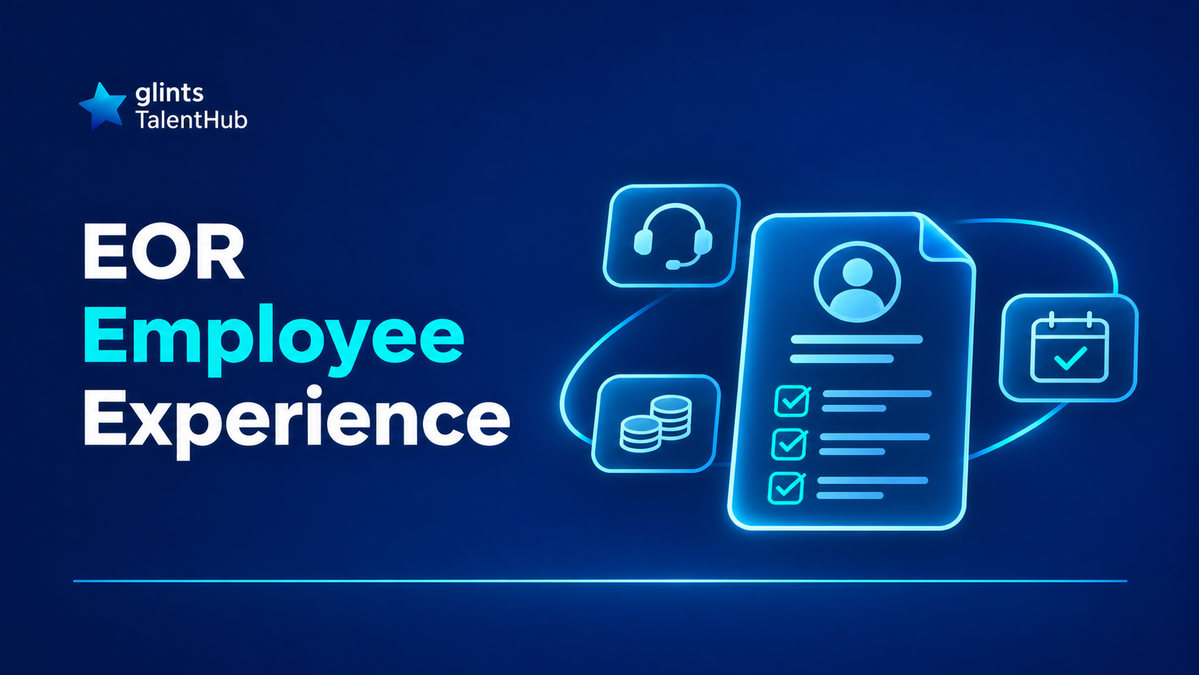
A sound EOR employee experience gives each worker a clear local contract, confirmed payroll and statutory setup before the first pay run, an understandable payslip, accessible leave and benefits, prompt expense reimbursement, named HR support and a documented exit timetable. Employers should test these outcomes after 30 days and every quarter, rather than judging the service only through a client dashboard.
An employee can have a signed contract and still face a poor start: an unexplained deduction, missing insurance details or an expense claim with no payment date. These failures affect the person before they appear in an account report. The safest approach is to define what the worker must receive, who owns each hand-off and when it is due. This guide follows that journey from offer to exit.
What Is EOR Employee Experience?
EOR employee experience is the worker’s end-to-end experience of being legally employed and supported by an employer of record while performing day-to-day work for a client company. It covers every employee-facing document, payment, benefit, request and employment conversation.
An employer of record is the legal employer. The client still sets the role, manages daily work and builds team connection. Employee experience is therefore a shared operating responsibility, not a platform feature that either party can own alone.
Employee Standards Should Cover the Whole Journey
The following targets are recommended service standards, not statutory deadlines. Local law, the employment contract and the agreed payroll calendar take priority where they require another timetable.
|
Journey stage |
What the employee should receive |
Recommended measurable standard |
|
Offer |
Salary, currency, benefits, employing entity and proposed start date |
Written summary within two business days of approval |
|
Contract |
Local agreement matching the approved offer |
Draft at least five business days before signing target |
|
Onboarding |
Document list, contacts, payroll cut-off and benefits steps |
Welcome pack within one business day of signature |
|
First payroll |
Confirmed pay date and input cut-off |
Confirmation before the employee starts |
|
Payslip |
Gross pay, additions, deductions and net pay explained |
Available by payday, subject to local rules |
|
Enrolment |
Confirmation of required statutory and benefit registrations |
Status confirmed before the first relevant deduction |
|
Leave and expenses |
Policy, workflow, approver and payment timetable |
Acknowledgement within one business day |
|
HR support |
Named channel, case owner and escalation route |
Initial response within one business day |
|
Exit |
Process, documents, final-pay components and dates |
Written timetable before the final working day |
Offers and Contracts Must Tell the Same Story
The offer should identify the employing entity and explain that the employee will work operationally with the client company. It should state compensation, currency, pay frequency, benefits, leave, probation where applicable, working arrangement and intended start date.
The local contract must then reflect the approved commercial terms while adding provisions required for that country. Changes should be highlighted before signature rather than buried in a new document. The employee should also know whether a local entity or partner will employ them and which organisation holds their employment records.
Employers can make these requirements contractual by adding employee-facing targets to the EOR service agreement. A signed contract is not enough if the worker cannot identify their legal employer or explain why the contract differs from the offer.
The First 30 Days Should Produce Evidence
A first-month check should confirm that the employee can use the employment service, not simply that onboarding tasks show as complete. Ask the employee directly and record exceptions with an owner and due date.
- Can the employee name their legal employer, client manager and EOR HR contact?
- Did the signed contract match the accepted offer?
- Does the employee know the payroll cut-off, pay date and expense deadline?
- Can they access the leave, payslip and expense workflows?
- Have required statutory and benefit enrolments been confirmed?
- Did the first salary arrive in the expected currency and amount?
- Can the employee explain every first-payslip addition and deduction?
- Have equipment or access issues been resolved?
- Does the employee know where to raise a confidential employment concern?
- Is every open issue assigned to the EOR or client with a completion date?
The broader EOR guide explains the legal-employer model. This check tests whether that model works for one person.
Pay Timing Differs Across Southeast Asia
A single regional payroll policy cannot replace local rules. Official sources show material differences in how frequently employees must be paid and when wages become due.
|
Market |
Employee-facing protection |
Official position as of November 2026 |
|
Singapore |
Monthly salary timing and itemised payslip |
MOM says salary must be paid at least monthly and within 7 days after the salary period. Payslips must accompany payment or follow within 3 working days. |
|
Peninsular Malaysia |
Maximum wage period and payment deadline |
Sections 18 and 19 of the Employment Act 1955 set a wage period not exceeding one month and generally require payment by the seventh day after it ends. |
|
Philippines |
Minimum pay frequency |
DOLE’s Labor Code states that wages must be paid at least every two weeks or twice monthly, at intervals not exceeding 16 days. |
These are statutory outer limits, not recommended service targets. A provider should follow the contractual payday and use the legal limit as a backstop. Singapore’s Ministry of Manpower is direct: “Non-payment of salary is an offence.”
The First Payslip Must Be Reconciled, Not Merely Delivered
The first payslip should show the salary period, gross salary, allowances, deductions, statutory contributions where applicable and net payment. The employee should also receive an explanation for any pro-rating, payroll cut-off adjustment or expense payment.
Consider a Singapore Citizen aged 55 or below earning S10,000** entirely in Ordinary Wages. According to the CPF Board, the rates from January 2026 are **17% employer** and **20% employee**, while the Ordinary Wage ceiling is **S8,000.
- CPF-assessable wages:
min(S$10,000, S$8,000) = S$8,000 - Employee CPF deduction:
20% × S$8,000 = S$1,600 - Employer CPF contribution:
17% × S$8,000 = S$1,360 - Net salary before other deductions:
S$10,000 − S$1,600 = S$8,400
The employee’s payslip should not show a S2,000 CPF deduction. The ceiling limits the employee share to S1,600 in this example.
Ongoing Support Must Have Named Owners
After payroll starts, workers need clear routes for benefits, leave, expenses and HR questions. The employee should know which requests go to the client manager and which go to the EOR.
The client should approve business expenses, operational leave and performance goals within agreed timelines. The EOR should administer payroll treatment, employment records, local benefits and formal HR processes. A joint issue still needs one case owner.
Set separate targets for acknowledgement and resolution. For example, acknowledge routine enquiries within one business day, resolve standard documents within three and give a written progress update when a case needs local review. Expense policies should state the submission cut-off, approver and expected reimbursement pay run. “Pending approval” is not a payment timetable.
Performance and Exit Require Coordinated Communication
The client manages goals, feedback and daily performance; the EOR manages formal employer processes. Employees should never receive conflicting messages about a warning, contract change or exit.
Before an exit conversation, both parties should agree the legal process, communication owner, final working date, handover, access changes and an itemised estimate of final payments. The employee should then receive one written timetable covering final salary, approved expenses, unused leave treatment, benefits, tax documents and equipment return.
Detailed legal steps vary by country and reason for separation. Use the dedicated guide to performance and offboarding for EOR employees rather than improvising from the service contract.
A Quarterly Audit Finds Problems Before Renewal
Run a quarterly audit from employee records and a confidential worker check, not from dashboard status alone. Review a sample from each country and include new starters, established employees and anyone who exited during the quarter.
Measure:
- Offer-to-contract accuracy and turnaround
- On-time payroll and payslip delivery
- First-payroll correction rate
- Statutory and benefit enrolment confirmation
- Leave and expense response and payment times
- HR case acknowledgement, resolution and reopen rates
- Unresolved issues older than the agreed target
- Exit payments and documents delivered against the stated timetable
- Employee confidence in who handles payroll, performance and confidential concerns
If the same failure affects two quarters, require a corrective plan with an owner, deadline and evidence of completion. If reliable employee-level data cannot be produced, treat that as a service-control gap.
What Employers Get Wrong About EOR Experience
Measuring portal availability instead of employee outcomes. A working dashboard does not prove that salaries arrived or questions were answered.
Treating legal deadlines as service targets. A statutory outer limit may still be later than the agreed payday.
Leaving shared tasks unowned. Every hand-off needs one accountable party, even where both organisations contribute.
Surveying only managers. Payroll, benefits and HR support are experienced by workers. Ask them directly.
If you have a small cross-border team, use an EOR only where the provider accepts measurable employee-facing standards. At sustained local scale, compare those outcomes and fees with operating your own entity and HR function.
FAQ About EOR Employee Experience
Who Supports an Employee Hired Through an EOR?
The EOR normally handles the local contract, payroll, statutory administration, benefits and formal employment questions. The client company manages daily work, objectives, feedback and team participation. Employees should receive named contacts for both sides and one escalation route for issues that cross the boundary.
Should an EOR Employee Receive a Payslip?
Requirements differ by country. In Singapore, employees covered by the Employment Act must receive an itemised payslip with payment or within three working days. Regardless of format, employers should ensure the employee can reconcile gross pay, additions, deductions and net payment against the amount received.
Who Approves Leave and Expenses?
The client manager usually approves operational timing and business purpose. The EOR applies the employment policy, keeps relevant records and processes any payroll reimbursement. The employee should not have to decide which organisation to chase; the workflow should identify one status owner.
How Should EOR Service Quality Be Measured?
Measure employee outcomes: contract accuracy, on-time pay, first-payroll corrections, confirmed enrolments, expense turnaround, HR response time and compliant exit delivery. Review the first 30 days for every starter and audit a country-level sample each quarter.
Give Cross-Border Employees a Testable Service
You can build a local entity and operate employment processes internally, or use an EOR with employee-facing standards written into its scope. Glints TalentHub’s EOR service supports local contracts, payroll, benefits administration, HR support and offboarding across Southeast Asia.
Ask prospective providers to demonstrate what the employee receives at each stage, not only what administrators can see.
Key Takeaway
Judge an EOR employee experience through evidence: a matching offer and contract, accurate pay, explained deductions, confirmed enrolments, accessible support and a dated exit plan. If employees cannot identify the owner or deadline for a request, the process is not yet under control.