


As your team grows, so does the work behind every employee experience. Someone needs to organise onboarding documents, update employee records, track leave requests, and make sure payroll changes reach the right people on time.
An HR administrator helps keep these activities organised. For employers, defining this role clearly is an important step towards building a more reliable HR function.
This guide explains what an HR administrator does, how the role compares with other HR positions, and what to consider when hiring one.
What is an HR Administrator?
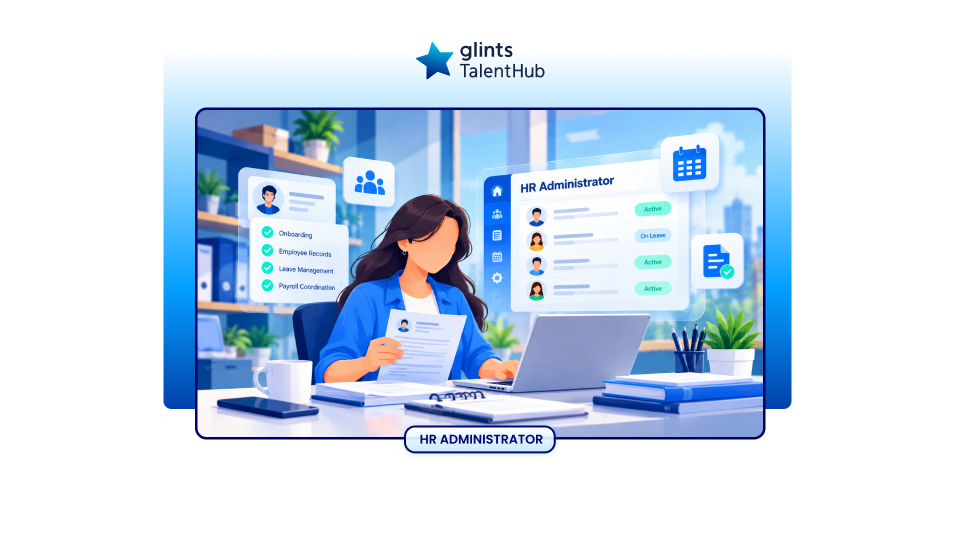
An HR administrator is a human resources professional who coordinates routine HR processes and maintains employee information. The role typically supports recruitment administration, onboarding, employee documentation, and responses to everyday HR queries.
The scope depends on your organisation. In a small business, one person may handle several administrative processes. In a larger company, the role may focus on a particular team, location, or stage of the employee lifecycle.
An HR administrator generally works within established policies and approval processes. Sensitive employee relations issues and decisions requiring specialist judgement should have a clear escalation route.
What does an HR Administrator Do?
An HR administrator turns HR procedures into practical, repeatable actions. The following responsibilities provide a useful starting point for defining the role.
1. Maintain Employee Records
A structured approach to employee data collection helps your HR administrator request relevant information and keep records up to date.
A useful process makes it clear who can access each record, who approves changes, and where the current version is stored.
2. Coordinate Recruitment Administration
An HR administrator may schedule interviews, communicate logistical details to candidates, and track progress through the hiring process.
For example, after a hiring manager selects candidates for interviews, the administrator can coordinate availability and send confirmations. Candidate assessment and hiring decisions should remain with the designated decision-makers.
3. Organise Onboarding and Offboarding
For new hires, the administrator can track required paperwork, arrange orientation sessions, and coordinate with IT and managers before the start date.
For departing employees, they can follow an approved checklist covering documentation, equipment returns, and handovers to payroll and IT.
A checklist should identify both the task owner and the deadline. This helps prevent a new employee’s first day from being delayed by an unfinished handover.
4. Prepare Payroll Inputs and Track Leave
Depending on the company’s structure, an HR administrator may consolidate approved attendance information, leave records, allowances, and changes affecting pay. Mapping your payroll processing steps makes it easier to define who prepares information, checks calculations, and approves payments.
Be specific about whether the role prepares information, processes payroll, checks calculations, or approves payments. These responsibilities require different capabilities and controls.
5. Respond to Routine Employee Questions
Employees need a reliable contact for questions about HR forms, onboarding steps, and established procedures.
Give the administrator approved guidance and an escalation process. A question involving a grievance, disputed pay, or an exception to policy may need input from an HR manager or relevant specialist.
HR Administrator vs. HR Assistant vs. HR Generalist
Job titles vary between employers, so assess the actual responsibilities before deciding which role to recruit.
| Role | Typical focus | Illustrative responsibilities |
|---|---|---|
| HR assistant | Supporting assigned HR activities | Scheduling meetings, preparing documents, and helping maintain files |
| HR administrator | Coordinating recurring HR processes | Maintaining records, tracking onboarding, and preparing HR inputs |
| HR generalist | Handling a broader range of HR matters | Recruitment, employee relations, policy implementation, and manager support |
| HR manager | Leading the HR function or a team | Setting priorities, overseeing policies, and managing complex people matters |
An experienced HR assistant may perform work another company assigns to an HR administrator. A clear job description is more useful than relying on the title alone.
What Skills Should an HR Administrator Have?
For this role, accuracy and follow-through deserve as much attention as communication skills. Look for candidates who can:
- Organise competing deadlines: Keep onboarding tasks, payroll cut-offs, and employee requests moving.
- Check details carefully: Spot missing information and inconsistencies before passing work to the next team.
- Communicate clearly: Explain a process in straightforward language and write useful follow-up messages.
- Handle confidential information responsibly: Follow access controls and share information through approved channels.
- Use workplace systems: Work confidently with spreadsheets, document tools, and an HR information system.
- Exercise sound judgement: Recognise when a request needs approval or specialist support.
These priorities align with the National Careers Service’s broader HR officer profile, which highlights administration, attention to detail, communication, sensitivity, and computer skills.[1]
Qualifications in HR or business administration can be helpful. However, set requirements around the actual work. Relevant administrative experience and a strong practical assessment can also provide evidence of suitability.
When Should You Hire an HR Administrator?
Consider the role when recurring administrative work is causing visible delays or taking substantial time away from managers and HR specialists.
Useful signs include:
- New hires regularly start with incomplete onboarding arrangements.
- Employee information is duplicated across disconnected files.
- Payroll inputs require repeated corrections or last-minute follow-ups.
- Routine employee questions have no clear owner.
- Senior HR staff spend much of their time chasing documents.
Before opening the vacancy, review the workload. Estimate the time spent on recurring tasks and identify which problems come from insufficient capacity, unclear ownership, or inefficient systems.
Hiring can add capacity, but the new employee will still need workable processes.
If payroll is taking up most of your administrator’s time, payroll outsourcing can provide specialist support for agreed activities.
Solve HR Administration Challenges with Glints Payroll Services
Even a well-organised HR administrator can spend hours chasing attendance records, checking salary changes, and resolving payroll discrepancies. As your team grows, these recurring tasks can leave less time for employee support.
Glints TalentHub’s payroll services help your business manage payroll processing and local statutory requirements, giving your HR team more room to focus on your people.