



Taiwan Employment Guide
Your essential guide to the workforce, working customs, and labor rules in Taiwan

Taipei

Taipei Standard Time GMT +8

New Taiwan Dollar (TWD)

Mandarin Chinese (Traditional), English (business)

Monthly
~ 17%
Talent Landscape
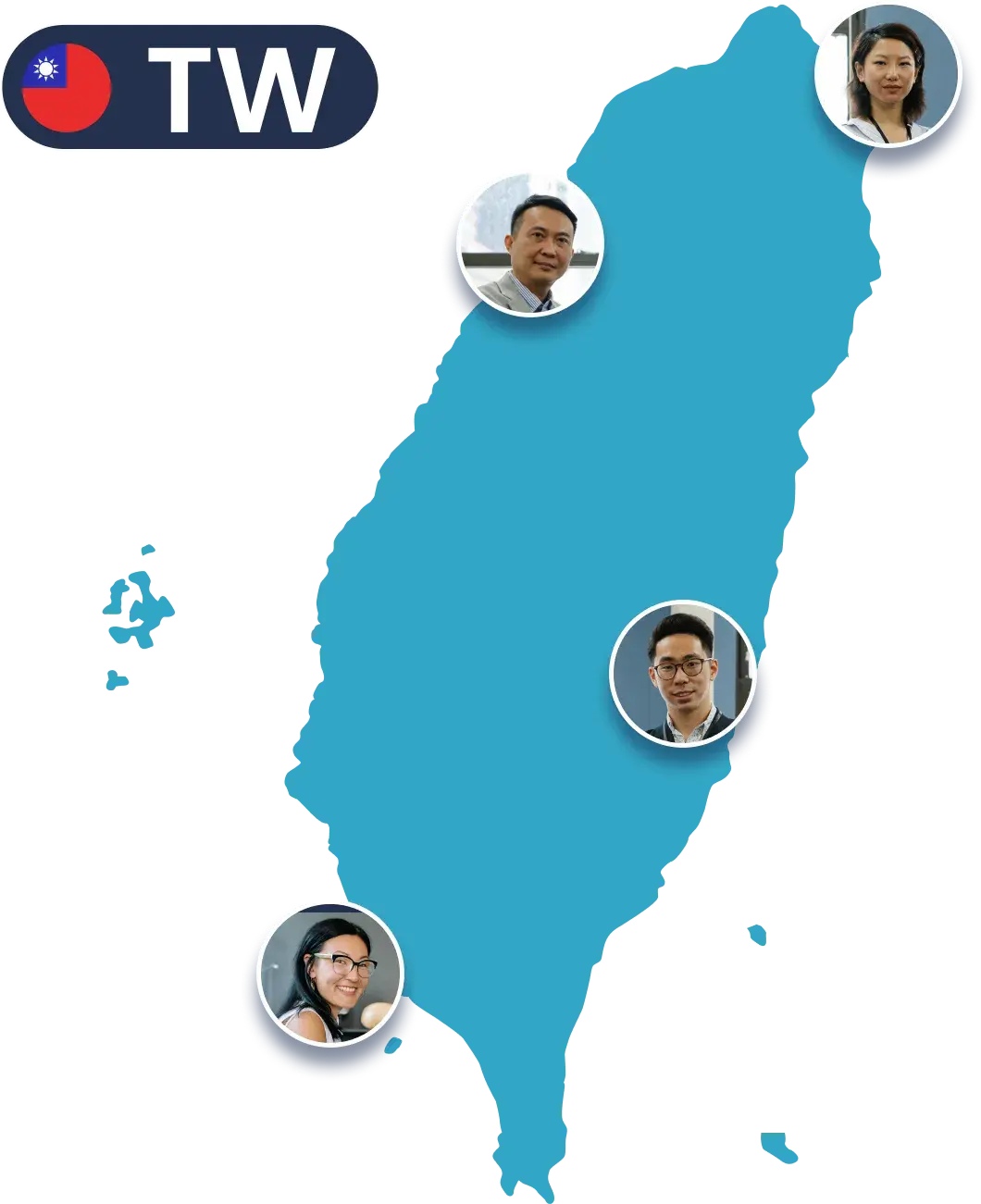
Major Economic Hubs
Skills In-Demand
Working Culture
Hierarchy with Consensus
Decision-making respects seniority but increasingly seeks team consensus, especially in younger startups and modern firms.
Engineering Excellence
A deep bench of semiconductor and hardware engineers underpins the economy. Quality, precision, and continuous improvement are highly valued.
Improving Work-Life Balance
Hours can be long in tech and manufacturing, but the workplace conversation is shifting toward flexibility and wellbeing.
Lunar New Year & Festivals
Lunar New Year is the biggest break of the year; Dragon Boat and Mid-Autumn festivals also bring multi-day holidays. Plan around them.
Average Salary
| Job Title | Avg Monthly Salary (USD) | |
|---|---|---|
| Tech & Engineering | ||
| Software Engineer | $3,200 | S$4,352 |
| Senior Software Engineer | $5,500 | S$7,480 |
| Engineering Manager | $8,000 | S$10,880 |
| Job Title | Avg Monthly Salary (USD) | |
|---|---|---|
| Semiconductors & Hardware | ||
| IC Design Engineer | $4,500 | S$6,120 |
| Hardware Engineer | $3,400 | S$4,624 |
| Job Title | Avg Monthly Salary (USD) | |
|---|---|---|
| Product & Design | ||
| Product Manager | $4,200 | S$5,712 |
| UX / UI Designer | $2,800 | S$3,808 |
| Job Title | Avg Monthly Salary (USD) | |
|---|---|---|
| Customer Operations | ||
| Customer Service Manager | $2,800 | S$3,808 |
| Operations Analyst | $2,300 | S$3,128 |
Hiring Guide in Taiwan
This guide highlights the fundamental rules employers must know to hire compliantly, covering pay structures, leave policies, termination procedures, and compliance requirements.
For details, browse the topics through the tabs below.

Payroll in Taiwan
Payroll Cycle
Paid within 10 days after salary period; commonly on the 1st.
Minimum Wage
Taiwan enforces a unified national minimum wage, covering nearly all employees.
Overtime Pay
- Standard hours: 40 hours per week; maximum 8 hours per day. - Total working time including overtime cannot exceed 12 hours per day. - Maximum overtime: 46 hours per month.
- First 2 overtime hours: Hourly Rate × 4/3 × Overtime Hours. - Additional overtime hours: Hourly Rate × 5/3 × Overtime Hours. - Rest-day work uses the statutory tiered Labor Standards Act formula.
Bonus
13th Month
Taiwan does not require a general 13th month salary. Lunar New Year and year end bonuses are common in some sectors but are mandatory only when they form part of agreed wages, work rules, a collective agreement, or an established employment condition.
No statutory 13th month formula. Any separate annual bonus follows the amount or formula in the applicable contract, collective agreement, or binding employer scheme.
Employees are eligible according to the binding terms. A payment described as guaranteed or regularly earned may be treated as wages, while a genuinely discretionary reward based on annual results may not be. Service and active employment requirements should be stated clearly.
Employees Benefits
| Types of Benefit | Details |
|---|---|
| Mandatory | |
| Labor Insurance | Mandatory insurance covering occupational accidents, injuries, sickness, disability, maternity, old age, and death. Employer contributes 70% of premium (approximately 7.15% of insured salary), employee contributes 20%, government contributes 10%. Provides comprehensive protection for workers including medical benefits, disability pensions, old-age benefits, and survivor benefits. Administered by Bureau of Labor Insurance. |
| National Health Insurance (NHI) | Universal health insurance covering all Taiwan residents including foreign workers. Provides comprehensive medical coverage including outpatient care, hospitalization, prescription drugs, dental care, and traditional Chinese medicine. Employer contributes 60% of premium (approximately 4.91% of insured salary), employee contributes 30%, government contributes 10%. Ensures affordable healthcare access with minimal co-payments. |
| Labor Pension | Mandatory retirement pension scheme requiring employers to contribute 6% of employee's monthly salary to individual pension accounts. Employees may voluntarily contribute up to an additional 6%. Funds are owned by employee and portable between employers. Provides retirement income security through personal pension accumulation. Governed by Labor Pension Act. |
| Employment Insurance | Mandatory insurance providing unemployment benefits, vocational training subsidies, and early re-employment incentives. Employer contributes 70% of premium (approximately 0.7% of insured salary), employee contributes 20%, government contributes 10%. Helps workers transition between jobs with financial support and skill development. Part of Labor Insurance system. |
| Optional | |
| Year-End Bonus / Annual Performance Bonus | Common practice for companies to offer annual performance bonuses linked to individual performance and overall financial performance of the company. During Lunar New Year, employees may also receive an additional "13th-month" or year-end bonus as a goodwill gesture. Amount varies widely from 1-6 months of salary depending on company profitability and individual contribution. Employer-discretionary but widely expected. |
| Profit Sharing / Employee Bonuses | Some companies distribute profit-sharing bonuses or year-end rewards based on company earnings. May include stock bonuses for publicly listed companies. Aligns employee interests with business success. Employer-discretionary, common in profitable enterprises. |
| Supplementary Life Insurance | Many companies provide life insurance benefits, particularly for senior employees. Coverage helps ensure that employees' families are financially protected in the event of death or disability. Employer-discretionary, often part of executive benefits or group insurance plans. |
| Supplementary Medical Insurance | Private medical insurance beyond NHI coverage. May include overseas medical treatment, private hospital rooms, advanced treatments, and dental/vision care. Provides enhanced healthcare options and shorter wait times. Employer-discretionary, increasingly common for attracting talent. |
| Meal Allowance | Daily or monthly meal allowances to support employee living expenses. May be provided as cash, meal vouchers, or subsidized cafeteria. Common benefit in Taiwanese workplaces. Employer-discretionary, varies by company size and industry. |
| Transportation Allowance | Monthly allowance for commuting expenses or company-provided transportation. May include parking subsidies, fuel allowances, or public transport passes. Employer-discretionary, helps offset commuting costs in urban areas. |
| Housing Allowance | Monthly housing or rent allowance, particularly for employees relocating for work or expatriates. Helps offset high housing costs in Taipei and other major cities. Employer-discretionary, common for senior positions or foreign workers. |
| Professional Development / Education Subsidies | Support for continuing education, professional certifications, or skill development programs. May include tuition reimbursement, training allowances, or study leave. Employer-discretionary, encourages workforce capability enhancement. |
| Employee Welfare Fund | Some companies establish employee welfare committees funded by employer contributions. Provides benefits like gift vouchers, travel subsidies, children's education subsidies, marriage/birth gifts, and emergency loans. Employer-discretionary, regulated under Labor Standards Act provisions for companies with certain employee counts. |
Taxes
Country Tax
Taiwan's country tax is known as Value-Added Tax (VAT) 5% for general industries
Individual Tax
| Tax Component | Contribution Rate (%) | Details |
|---|---|---|
| Income Tax Structure | ||
| Resident Tax Rates | 5%–40% | Progressive consolidated income tax rates. |
| Non-Resident Tax | 18.00% | Flat withholding on Taiwan-sourced income. |
| Taxable Income Adjustments | ||
| Standard Deduction | TWD 124,000 | Standard deduction available to individuals. |
| Personal Exemption | TWD 92,000 per person | Exemption for taxpayer, spouse, and dependents. |
| Taxable & Exempt Components | ||
| Bonuses | Fully taxable | All bonuses treated as taxable salary income. |
| Overtime | Fully taxable | Included in taxable employment income. |
| Allowances | Fully taxable | Cash allowances included in taxable income. |