


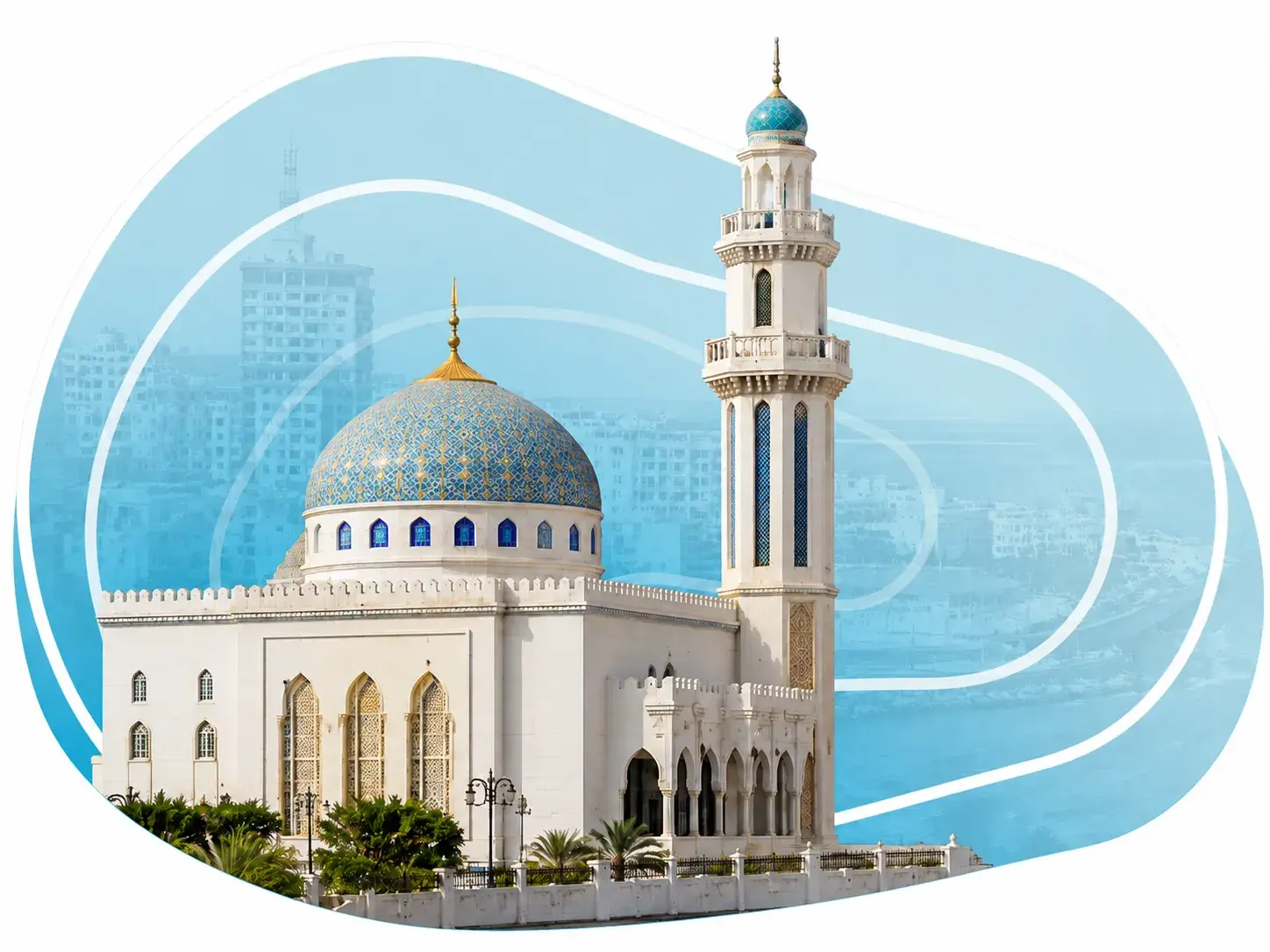
Discover & Hire Top Talents in Djibouti
Everything you need to know about the country's employment laws, culture, and workforce insights.

Djibouti UTC+3

Djibouti City

Djiboutian Franc (DJF)

Arabic, French, Somali, Afar

monthly

15.70%
Talent Landscape in Djibouti
Djibouti has an estimated labor force of about 268,000 (2025), with talent demand concentrated in ports and logistics, military support services, telecommunications, construction and public services. International employers are most likely to find relevant candidate pools for Logistics, Port Operations, and Telecommunications. The market is compact, so targeted hiring and regional talent mobility are important for scarce specialist roles.
Major Economic Hubs
Djibouti City
Skills In-Demand
Logistics
Working Culture
Formal Courtesy in a Port Economy
Djiboutian business settings often begin with respectful greetings and attention to titles, particularly in government, logistics and large enterprises. A calm professional manner supports credibility before commercial issues are discussed.
Relationship Led Decision Making
Personal trust and established networks often influence whether business moves forward. Repeated meetings and patient follow up may be necessary before a formal answer.
Islamic Rhythm and Port Operations
Prayer, Ramadan and religious holidays shape schedules, while port and logistics sectors may operate around continuous shifts. Managers should balance local observance with operational coverage.
Average Salary
| Job Title | Avg Monthly Salary (DJF) | |
|---|---|---|
| Accounting & Finance | ||
| Administrative Executive, Junior (1-3 years) | 126,000 DJF | S$171,360 |
| Administrative Executive, Mid (3-5 years) | 168,000 DJF | S$228,480 |
| Book Keeper, Junior (1-3 years) | 113,000 DJF | S$153,680 |
| Book Keeper, Mid (3-5 years) | 154,000 DJF | S$209,440 |
| Finance Executive, Junior (1-3 years) | 146,000 DJF | S$198,560 |
| Finance Executive, Mid (3-5 years) | 191,000 DJF | S$259,760 |
| Creatives | ||
| Graphic Designer, Junior (1-3 years) | 146,000 DJF | S$198,560 |
| Graphic Designer, Mid (3-5 years) | 211,000 DJF | S$286,960 |
| UI/UX Designer, Junior (1-3 years) | 154,000 DJF | S$209,440 |
| UI/UX Designer, Mid (3-5 years) | 267,000 DJF | S$363,120 |
| Data Analytics | ||
| Data Analyst, Junior (1-3 years) | 211,000 DJF | S$286,960 |
| Data Analyst, Mid (3-5 years) | 275,000 DJF | S$374,000 |
| Data Engineering | ||
| Data Engineer, Junior (1-3 years) | 211,000 DJF | S$286,960 |
| Data Engineer, Mid (3-5 years) | 340,000 DJF | S$462,400 |
| AI & Machine Learning | ||
| Data Scientist, Junior (1-3 years) | 211,000 DJF | S$286,960 |
| Data Scientist, Mid (3-5 years) | 284,000 DJF | S$386,240 |
| Machine Learning Engineer, Junior (1-3 years) | 178,000 DJF | S$242,080 |
| Machine Learning Engineer, Mid (3-5 years) | 267,000 DJF | S$363,120 |
| Digital Marketing | ||
| Content Marketing, Junior (1-3 years) | 170,000 DJF | S$231,200 |
| Content Marketing, Mid (3-5 years) | 251,000 DJF | S$341,360 |
| Digital Marketing, Junior (1-3 years) | 170,000 DJF | S$231,200 |
| Digital Marketing, Mid (3-5 years) | 251,000 DJF | S$341,360 |
| Growth Marketing, Junior (1-3 years) | 178,000 DJF | S$242,080 |
| Growth Marketing, Mid (3-5 years) | 267,000 DJF | S$363,120 |
| Software Development | ||
| Backend Developer, Junior (1-3 years) | 219,000 DJF | S$297,840 |
| Backend Developer, Mid (3-5 years) | 324,000 DJF | S$440,640 |
| Job Title | Avg Monthly Salary (DJF) | |
|---|---|---|
| DevOps | ||
| DevOps Engineer, Junior (1-3 years) | 211,000 DJF | S$286,960 |
| DevOps Engineer, Mid (3-5 years) | 284,000 DJF | S$386,240 |
| Site Reliability Engineer, Junior (1-3 years) | 211,000 DJF | S$286,960 |
| Site Reliability Engineer, Mid (3-5 years) | 300,000 DJF | S$408,000 |
| Customer Support | ||
| Customer Service Officer, Junior (1-3 years) | 105,000 DJF | S$142,800 |
| Customer Service Officer, Mid (3-5 years) | 138,000 DJF | S$187,680 |
| Customer Experience | ||
| Customer Success Manager, Junior (1-3 years) | 154,000 DJF | S$209,440 |
| Customer Success Manager, Mid (3-5 years) | 219,000 DJF | S$297,840 |
| HR Operations | ||
| HR Executive, Junior (1-3 years) | 138,000 DJF | S$187,680 |
| HR Executive, Mid (3-5 years) | 186,000 DJF | S$252,960 |
| FinTech | ||
| Blockchain Developer, Junior (1-3 years) | 170,000 DJF | S$231,200 |
| Blockchain Developer, Mid (3-5 years) | 251,000 DJF | S$341,360 |
| Payments Engineer, Junior (1-3 years) | 170,000 DJF | S$231,200 |
| Payments Engineer, Mid (3-5 years) | 227,000 DJF | S$308,720 |
| Cloud Computing | ||
| Cloud Engineer, Junior (1-3 years) | 194,000 DJF | S$263,840 |
| Cloud Engineer, Mid (3-5 years) | 284,000 DJF | S$386,240 |
Hiring Guide in Djibouti
This guide highlights the fundamental rules employers must know to hire compliantly, covering pay structures, leave policies, termination procedures, and compliance requirements.
For details, browse the topics through the tabs below.
Payroll in Djibouti
Payroll Cycle
Salary is generally paid monthly on the contractual pay date.
Minimum Wage
Minimum wages may vary by occupation or employment category rather than through one universal rate.
Overtime Pay
- Generally 48 hours per week. - Confirm the applicable sector agreement and current ministerial rules.
- Djibouti: Overtime Pay = Ordinary Hourly Rate × the specific rate required by the governing labour law, wage order or collective agreement × Overtime Hours.
Bonus
13th Month
Djibouti does not impose a general statutory 13th month salary on private sector employers. Private sector employees therefore have no automatic entitlement to an additional annual salary unless a binding employment contract, collective agreement, wage order, employer rule, or special sector law provides one.
No statutory private sector calculation applies. Where a binding instrument grants an annual bonus or 13th salary, the amount must be calculated under that instrument; there is no legal default that it equals 1 month of salary.
No private sector employee in Djibouti qualifies automatically under the general labour law. Eligibility is limited to employees expressly covered by the applicable contract, collective agreement, wage order, employer rule, or special sector provision. The general law does not prescribe a universal minimum service period, prorating method, payment deadline, or entitlement after resignation or dismissal for a 13th salary. Those points must be determined from the specific binding instrument. Statutory leave pay, severance, end of service benefits, profit sharing, and public sector payments are separate benefits and should not be recorded as private sector 13th month salary unless the local rule expressly treats them that way.
Employees Benefits
| Types of Benefit | Details |
|---|---|
| Mandatory | |
| National Social Security Fund (CNSS) contributions | The core employer obligation in Djibouti is registration and payroll remittance under National Social Security Fund (CNSS) contributions. This is not a general allowance: it is the named statutory arrangement for the pension, retirement, unemployment, medical or related branches stated in the programme title. Coverage must be checked against establishment size, employee status, nationality and earnings limits, and contributions must be paid to the relevant authority by its filing deadline. |
| Work injury protection under National Social Security Fund (CNSS) contributions | In Djibouti, occupational injury protection is tied to National Social Security Fund (CNSS) contributions. The employer must complete the applicable registration or insurance arrangement before exposure begins, report workplace accidents within the legal deadline, and fund the employer portion. Benefits generally cover treatment, temporary incapacity, permanent disability and survivor payments, but the responsible institution and assessable wage follow the local scheme. |
| Statutory termination or end of service entitlement in Djibouti | Termination payments in Djibouti depend on the Labour Code, the dismissal ground and the employee’s service. Employers must settle notice or pay in lieu, earned salary, unused leave and any statutory severance, gratuity or indemnity that the local rules attach to redundancy, employer initiated dismissal or contract expiry. A resignation does not automatically produce the same entitlement. |
| Public healthcare or mandatory medical coverage in Djibouti | Health protection in Djibouti is delivered through the medical or sickness branch of National Social Security Fund (CNSS) contributions. Employers must register employees who meet the scheme’s coverage tests and remit the required payroll contribution on the prescribed wage base. The programme commonly provides medical treatment and cash sickness or maternity benefits, while eligibility for dependants, expatriates and higher earners follows the local institution’s rules. |
| Optional | |
| Supplementary private medical insurance in Djibouti | Private medical insurance in Djibouti should be designed around the gaps left by National Social Security Fund (CNSS) contributions. Employers commonly add faster outpatient access, private hospital treatment, dental, optical, mental health and dependant cover. The policy remains optional unless a visa, emirate, collective agreement or sector rule makes insurance compulsory, and any taxable benefit treatment should be processed through payroll. |
| Housing, relocation and remote work support in Djibouti | Housing, relocation and remote work support in Djibouti is normally contractual rather than statutory. The policy should identify covered costs, taxable benefit treatment, repayment conditions for early departure and whether the support is temporary or continues throughout the assignment. |
| Meal, commuting and business travel support in Djibouti | Meal, commuting and business travel support in Djibouti should be split between fixed cash allowances and reimbursements supported by receipts. That distinction determines whether the amount is taxable salary, exempt expense repayment or part of the contribution wage. The policy should state limits, eligible journeys and the treatment of remote work. |
| Performance or profit sharing bonus in Djibouti | A performance or profit sharing bonus in Djibouti is optional unless promised by contract, collective agreement or an established plan. The rules should specify the performance period, measurable targets, proration for joiners and leavers, and treatment during protected leave. Payroll must apply local income tax and social contribution rules to the payment. |
Taxes
Country Tax
Djibouti's country tax is known as Value-Added Tax (VAT) 10%
Individual Tax
| Tax Component | Contribution Rate (%) | Details |
|---|---|---|
| Income Tax Structure | ||
| Resident Tax Rates | 2% to 30% | Djibouti applies 2% to 30% to taxable employment income. The employee’s final liability depends on taxable pay, permitted deductions or credits, and any local surtaxes stated in the cited source. |
| Non-Resident Employment Income | See local nonresident rules | Nonresident individuals are generally taxed only on local source employment income. The applicable rate can differ from resident rates and depends on source, presence, payroll withholding, and treaty relief. Confirm the cited country summary before payroll implementation. |
| Taxable Income Adjustments | ||
| Main Deductions and Allowances | Country specific | Country specific deductions, allowances and employee contribution rules may reduce taxable income. The applicable items, eligibility conditions and caps must be confirmed against the cited local source for the relevant tax year. |
| Taxable & Exempt Components | ||
| Bonuses and Cash Allowances | Generally taxable at marginal employment rate | In Djibouti, cash salary, commissions, performance bonuses, and recurring cash allowances are generally taxable employment income and subject to payroll withholding at the applicable marginal rate unless a specific statutory exemption applies. |
| Benefits in Kind | Taxable value at marginal rate where applicable | In Djibouti, employer provided housing, vehicles, meals, insurance, equity, and other noncash benefits may be taxable under local valuation rules. Business reimbursements and de minimis exemptions require local support. |
Explore hiring in other countries
































































Explore Djibouti's Employment Essentials
Glints specializes in Southeast Asia, making us the ideal partner for your expansion. Let's work together to simplify hiring and ensure compliance in Djibouti.