


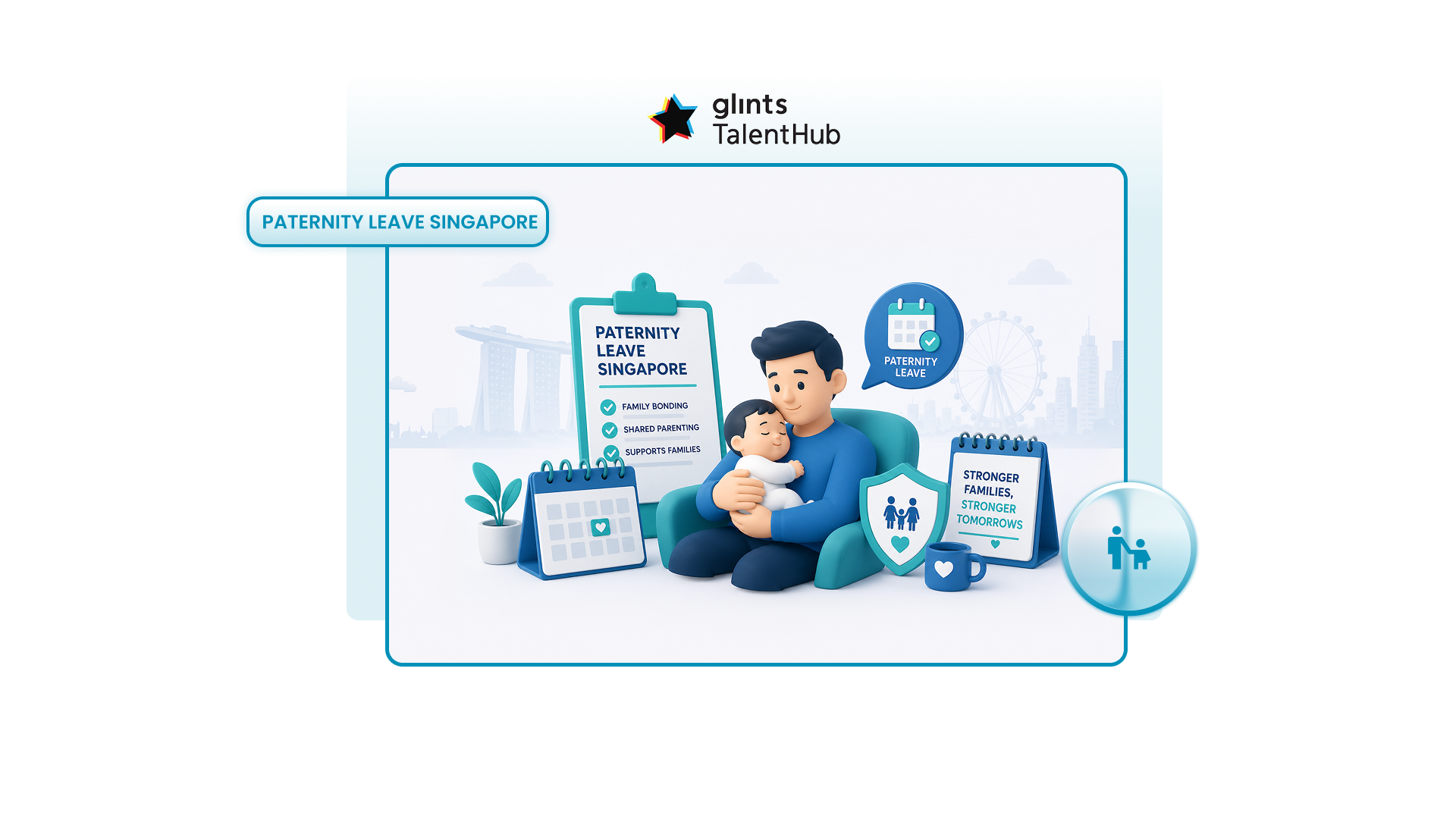
Paternity leave in Singapore gives eligible working fathers paid time off to care for their newborn child and support their family after birth. As of 2026, eligible working fathers can receive up to 4 weeks of Government Paid Paternity Leave if their child is a Singapore citizen and they meet the required employment and family criteria.
For employers, paternity leave is not just a payroll item. It affects workforce planning, leave scheduling, salary payment, government claims, and employee experience. This guide explains who qualifies, how much leave fathers are entitled to, how paternity leave should be taken, and what employers need to prepare.
What is Paternity Leave in Singapore?
Paternity leave is paid leave given to eligible working fathers when they have a newborn child. In Singapore, this is known as Government Paid Paternity Leave, or GPPL.
The scheme is designed to support fathers in taking an active role in caregiving during the child’s first year. Eligible fathers, including employees and self employed fathers, can receive up to 4 weeks of paid paternity leave.
How Many Days of Paternity Leave are Fathers Entitled to in Singapore?
Eligible working fathers are entitled to 4 weeks of Government Paid Paternity Leave if the child’s date of birth, estimated delivery date, or formal intent to adopt date is on or after 1 April 2025.
The actual number of leave days depends on the employee’s work week.
For example, if an employee works 5 days a week, 4 weeks of paternity leave usually equals 20 working days.
If an employee works 6 days a week, 4 weeks of paternity leave equals 24 working days. MOM states that the entitlement is calculated as 4 weeks multiplied by the number of working days in a week, capped at 6 working days per week.
Who is Eligible for Paternity Leave in Singapore?
A working father is generally eligible for Government Paid Paternity Leave if all of the following conditions are met:
- The child is a Singaporean citizen.
- The father is or had been lawfully married to the child’s mother between conception and birth, or within 12 months from the child’s date of birth.
- For employees, the father has served the employer for a continuous period of at least 3 months before the birth of the child.
- For self employed fathers, the father has been engaged in work for a continuous period of at least 3 months before the child’s birth and has lost income during the paternity leave period.
Adoptive fathers may also qualify if the adopted child is a Singapore citizen and the father meets the required employment conditions before the date of formal intent to adopt.
Are Foreigners and Permanent Residents Eligible for Paternity Leave?
Yes, foreigners and permanent residents working in Singapore may qualify for Government Paid Paternity Leave, as long as the child is a Singapore citizen and the father meets the other eligibility requirements.
If the child is not a Singapore citizen, the father is not eligible for Government Paid Paternity Leave. In that situation, employers can still choose to provide company paid paternity leave as part of their internal benefits policy.
When Can Paternity Leave be Taken?
For children born on or after 1 April 2025, the default arrangement is for the father to take 4 continuous weeks within 16 weeks after the child’s birth.
With mutual agreement between employer and employee, the leave can be taken more flexibly. The employee may take 4 continuous weeks any time within 12 months after the child’s birth, or split the 4 weeks into working days and take them in any combination within the same 12 month period.
This flexibility helps employers manage business continuity while giving fathers more practical support during the child’s first year.
How Much Notice Must Employees Give Before Taking Paternity Leave?
From 1 April 2025, employees are required to give their employer 4 weeks of notice before going on Government Paid Paternity Leave, unless the employer agrees to a shorter notice period.
For employers, it is useful to include this notice requirement in the employee handbook or leave policy. This gives managers enough time to adjust rosters, redistribute work, and plan coverage before the leave starts.
Who Pays for Paternity Leave in Singapore?
The employer pays the employee during the paternity leave period. The employer can then claim government reimbursement for eligible Government Paid Paternity Leave.
For children born on or after 1 April 2025, employers can claim reimbursement for all 4 weeks of Government Paid Paternity Leave, capped at SGD 2,500 per week, or SGD 10,000 in total.
This means employers need to pay the employee first, then submit the claim through the Government Paid Leave Portal.
Can Unused Paternity Leave be Encashed?
No. Government Paid Paternity Leave cannot be encashed because it is meant to allow fathers to spend time with their family.
Employers should make this clear in the leave policy so employees understand that unused paternity leave does not become extra pay.
Can Employers Dismiss an Employee During Paternity Leave?
From 1 April 2025, it is an offence for an employer to dismiss an employee while he is on Government Paid Paternity Leave.
This makes it important for employers to manage performance, restructuring, and termination decisions carefully when an employee is applying for or taking paternity leave. Documentation, timing, and legal review matter, especially where there may be any risk of the dismissal being seen as connected to the employee’s leave.
How Does Paternity Leave Work for Part Time Employees?
Part time employees can be entitled to paternity leave benefits if they meet the eligibility criteria. MOM states that payment is based on the number of days the employee is contracted to work, at the employee’s gross rate of pay.
For employers, the key is to calculate entitlement based on the employee’s agreed work schedule rather than applying a full time leave balance automatically.
How Does Paternity Leave Relate to Shared Parental Leave?
Paternity leave is separate from shared parental leave.
In addition to Government Paid Paternity Leave, eligible working parents may also receive shared parental leave. For children born from 1 April 2025 to 31 March 2026, eligible parents are entitled to 6 weeks of shared parental leave. For children born from 1 April 2026 onwards, eligible parents are entitled to 10 weeks of shared parental leave, to be shared between both parents.
This means employers should not look at paternity leave in isolation. From a workforce planning perspective, an employee may be eligible for paternity leave, shared parental leave, childcare leave, and unpaid infant care leave depending on the situation.
Employer Checklist for Managing Paternity Leave
Here’s a full checklist for employers to manage paternity leave in Singapore:
1. Confirm Eligibility Early
Before approving Government Paid Paternity Leave, confirm the child’s Singapore citizenship, the employee’s length of service, and the relevant date of birth or estimated delivery date.
2. Ask for Leave Plans in Advance
Employees are required to provide 4 weeks of notice before taking Government Paid Paternity Leave, unless a shorter notice period is mutually agreed. Employers should encourage early planning so teams can prepare coverage.
3. Decide Whether Flexible Leave is Practical
The default is for paternity leave to be taken in one continuous block. If the employee requests flexible leave, assess whether the arrangement works for the role, team, and business needs.
4. Pay Salary During the Leave Period
Employers should continue paying the employee during approved Government Paid Paternity Leave. The reimbursement claim comes after the employer has paid the employee.
5. Track the Leave Balance Properly
If the employee takes paternity leave flexibly, record each leave day accurately. This helps avoid payroll errors and supports a cleaner reimbursement process.
6. Submit Reimbursement Claims on Time
Employers should submit claims through the Government Paid Leave Portal. According to the Government Paid Leave Portal, claims for Government Paid Paternity Leave should be submitted no later than 3 months after the last date of paternity leave.
7. Update Internal Policies
Since paternity leave entitlement increased to 4 weeks for eligible fathers from 1 April 2025, employers should update employee handbooks, HR systems, manager guides, onboarding documents, and payroll workflows.
Common Mistakes Employers Should Avoid
One common mistake is assuming that every father working in Singapore automatically qualifies. Eligibility depends on several conditions, including the child’s citizenship and the employee’s length of service.
Another mistake is treating paternity leave as unpaid leave first and correcting payroll later. For eligible Government Paid Paternity Leave, the employer should pay the employee during the leave period and claim reimbursement afterwards.
A third mistake is not planning for shared parental leave. From 2026, eligible parents may have up to 10 weeks of shared parental leave in addition to other parental leave entitlements, which can affect staffing plans across the employee’s first year of parenthood.
How Employers Can Create a Better Paternity Leave Policy
A clear paternity leave policy should answer these questions:
- Who is eligible for paternity leave?
- How many weeks or days can the employee take?
- When must the employee inform the company?
- Can the leave be taken flexibly?
- What documents are required?
- How will salary be paid during leave?
- What happens if the child is not a Singapore citizen?
- How does paternity leave work with shared parental leave?
- Who approves the leave request?
By answering these questions upfront, employers can reduce confusion for employees and managers. It also helps payroll and HR teams process leave consistently.
Managing Paternity Leave for Regional Teams
For companies hiring across Singapore and other markets, parental leave can quickly become more complex. Each country has different rules for eligibility, salary payment, reimbursement, employee protection, and statutory leave.
This is where a unified employment and payroll setup can make a difference. Glints TalentHub helps companies manage employment, payroll, compliance, onboarding, and HR administration across markets, so your team can support employees with more clarity while reducing manual compliance work.
Whether you are hiring in Singapore or expanding across Southeast Asia, having one partner to manage employment operations helps you stay focused on building the right team.
FAQs about Paternity Leave in Singapore
How many weeks of paternity leave do fathers get in Singapore?
Eligible working fathers can receive up to 4 weeks of Government Paid Paternity Leave if the child’s date of birth, estimated delivery date, or formal intent to adopt date is on or after 1 April 2025.
Is paternity leave paid by the employer or government?
The employer pays the employee during the paternity leave period. The employer can then claim government reimbursement for eligible Government Paid Paternity Leave, subject to the reimbursement cap.
Can paternity leave be taken flexibly?
Yes, but flexible paternity leave requires mutual agreement between the employer and employee. With agreement, the employee can take the leave within 12 months after the child’s birth, either as a continuous block or split into working days.
Can unused paternity leave be converted to cash?
No. Government Paid Paternity Leave cannot be encashed.
Are foreigners eligible for paternity leave in Singapore?
Foreigners and permanent residents may be eligible if their child is a Singapore citizen and they meet the other eligibility criteria. If the child is not a Singapore citizen, they should check whether their employer provides company paid paternity leave.
Do part time employees qualify for paternity leave?
Part time employees may qualify if they meet the eligibility criteria. Payment is based on the number of days they are contracted to work, at their gross rate of pay.
Conclusion
Paternity leave in Singapore has become more supportive for working fathers, with eligible fathers now entitled to up to 4 weeks of Government Paid Paternity Leave for children born on or after 1 April 2025. For employers, the main priorities are to confirm eligibility, pay salary correctly, plan team coverage, track flexible leave accurately, and submit reimbursement claims on time.
A well managed paternity leave policy helps employees feel supported during an important life stage. It also helps employers stay compliant, reduce payroll errors, and build a more family friendly workplace.