


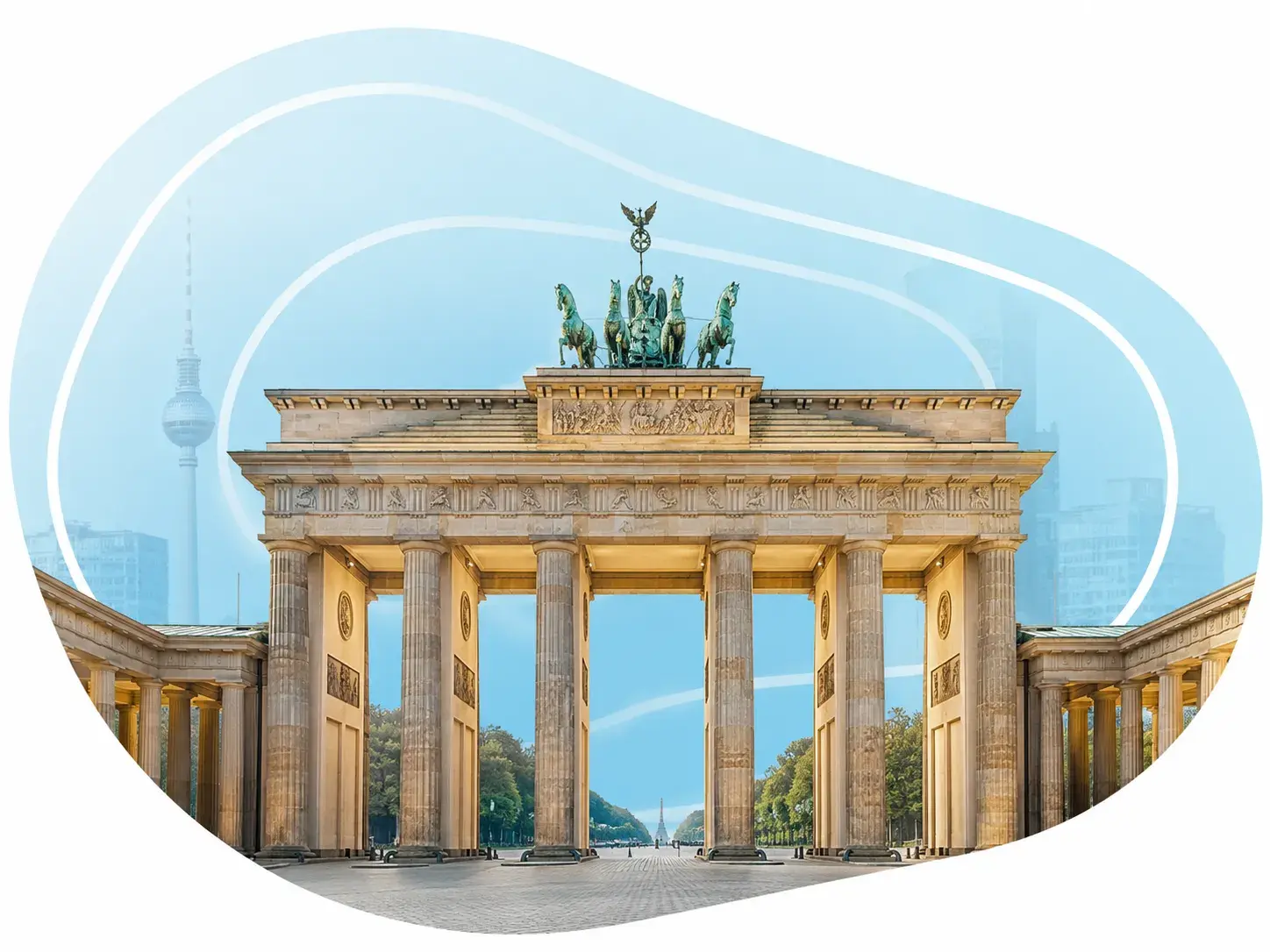
在 德国 发现并雇用顶尖人才
关于该国雇佣法律、文化与人才洞察,您需要了解的一切。

Berlin UTC+1 to UTC+2

Berlin, Munich, Frankfurt, Hamburg

Euro (EUR)

German, English

monthly

21.20% + variable
德国人才格局
Germany has an estimated labor force of about 43.2 million (2025), with talent demand concentrated in automotive, industrial engineering, software, healthcare and green energy. International employers are most likely to find relevant candidate pools for Engineering, Software & AI, and Healthcare. The market can support multi function teams, with the deepest specialist pools usually concentrated in established commercial and technical centers. Competition for experienced professionals is typically strongest in technology intensive and regulated functions.
主要经济中心
Berlin, Munich, Frankfurt, Hamburg
热门技能
Engineering
职场文化
Planning, Precision and Role Clarity
German workplaces often value thorough preparation, defined responsibilities and dependable processes. Last minute changes or vague ownership can reduce confidence.
Direct Feedback and Evidence Based Debate
Communication is usually explicit and task focused. Employees may challenge proposals with detailed questions, which is often a sign of serious engagement.
Punctuality and Protected Private Time
Meetings and deadlines are taken seriously, while personal time and annual leave are respected. Urgent contact outside normal hours should be limited.
平均薪资
| 职位名称 | 平均月薪(EUR) | |
|---|---|---|
| Accounting & Finance | ||
| Administrative Executive, Junior (1-3 years) | 3,750 EUR | S$5,100 |
| Administrative Executive, Mid (3-5 years) | 5,000 EUR | S$6,800 |
| Book Keeper, Junior (1-3 years) | 3,350 EUR | S$4,556 |
| Book Keeper, Mid (3-5 years) | 4,550 EUR | S$6,188 |
| Finance Executive, Junior (1-3 years) | 4,300 EUR | S$5,848 |
| Finance Executive, Mid (3-5 years) | 5,650 EUR | S$7,684 |
| Creatives | ||
| Graphic Designer, Junior (1-3 years) | 4,300 EUR | S$5,848 |
| Graphic Designer, Mid (3-5 years) | 6,200 EUR | S$8,432 |
| UI/UX Designer, Junior (1-3 years) | 4,550 EUR | S$6,188 |
| UI/UX Designer, Mid (3-5 years) | 7,900 EUR | S$10,744 |
| Data Analytics | ||
| Data Analyst, Junior (1-3 years) | 6,200 EUR | S$8,432 |
| Data Analyst, Mid (3-5 years) | 8,150 EUR | S$11,084 |
| Data Engineering | ||
| Data Engineer, Junior (1-3 years) | 6,200 EUR | S$8,432 |
| Data Engineer, Mid (3-5 years) | 10,050 EUR | S$13,668 |
| AI & Machine Learning | ||
| Data Scientist, Junior (1-3 years) | 6,200 EUR | S$8,432 |
| Data Scientist, Mid (3-5 years) | 8,350 EUR | S$11,356 |
| Machine Learning Engineer, Junior (1-3 years) | 5,250 EUR | S$7,140 |
| Machine Learning Engineer, Mid (3-5 years) | 7,900 EUR | S$10,744 |
| Digital Marketing | ||
| Content Marketing, Junior (1-3 years) | 5,000 EUR | S$6,800 |
| Content Marketing, Mid (3-5 years) | 7,400 EUR | S$10,064 |
| Digital Marketing, Junior (1-3 years) | 5,000 EUR | S$6,800 |
| Digital Marketing, Mid (3-5 years) | 7,400 EUR | S$10,064 |
| Growth Marketing, Junior (1-3 years) | 5,250 EUR | S$7,140 |
| Growth Marketing, Mid (3-5 years) | 7,900 EUR | S$10,744 |
| Software Development | ||
| Backend Developer, Junior (1-3 years) | 6,450 EUR | S$8,772 |
| Backend Developer, Mid (3-5 years) | 9,550 EUR | S$12,988 |
| 职位名称 | 平均月薪(EUR) | |
|---|---|---|
| DevOps | ||
| DevOps Engineer, Junior (1-3 years) | 6,200 EUR | S$8,432 |
| DevOps Engineer, Mid (3-5 years) | 8,350 EUR | S$11,356 |
| Site Reliability Engineer, Junior (1-3 years) | 6,200 EUR | S$8,432 |
| Site Reliability Engineer, Mid (3-5 years) | 8,850 EUR | S$12,036 |
| Customer Support | ||
| Customer Service Officer, Junior (1-3 years) | 3,100 EUR | S$4,216 |
| Customer Service Officer, Mid (3-5 years) | 4,050 EUR | S$5,508 |
| Customer Experience | ||
| Customer Success Manager, Junior (1-3 years) | 4,550 EUR | S$6,188 |
| Customer Success Manager, Mid (3-5 years) | 6,450 EUR | S$8,772 |
| HR Operations | ||
| HR Executive, Junior (1-3 years) | 4,050 EUR | S$5,508 |
| HR Executive, Mid (3-5 years) | 5,500 EUR | S$7,480 |
| FinTech | ||
| Blockchain Developer, Junior (1-3 years) | 5,000 EUR | S$6,800 |
| Blockchain Developer, Mid (3-5 years) | 7,400 EUR | S$10,064 |
| Payments Engineer, Junior (1-3 years) | 5,000 EUR | S$6,800 |
| Payments Engineer, Mid (3-5 years) | 6,700 EUR | S$9,112 |
| Cloud Computing | ||
| Cloud Engineer, Junior (1-3 years) | 5,750 EUR | S$7,820 |
| Cloud Engineer, Mid (3-5 years) | 8,350 EUR | S$11,356 |
德国招聘指南
本指南介绍雇主合规招聘必须了解的基本规则,涵盖薪酬结构、休假政策、解雇流程与合规要求。
更多细节,请通过下方的标签浏览各个主题。
德国的薪酬发放
发薪周期
Salary is typically paid on the last working day of the month or the contractual date.
最低工资
A statutory national hourly minimum wage applies, with limited exemptions.
加班费
- Generally 8 hours per working day, which can be extended to 10 if the average returns to 8 over the reference period. This equates to up to 48 hours over a 6-day week. - Working time must comply with the Working Time Act and rest requirements.
- Overtime Pay = Contractual or Collective-Agreement Rate × Overtime Hours, or agreed compensatory time.
奖金
第 13 个月薪资
Germany does not require a universal 13th month salary. Christmas bonus, holiday bonus, or a 13th salary may be required by a collective agreement, works agreement, employment contract, equal treatment principle, or established company practice.
No statutory 13th month formula. Any separate annual bonus follows the amount or formula in the applicable contract, collective agreement, or binding employer scheme.
Eligibility and repayment conditions depend on the legal basis and purpose of the payment. A payment rewarding past work may need to be prorated or paid to leavers, while a loyalty payment may lawfully contain limited retention conditions.
员工福利
| 福利类型 | 详情 |
|---|---|
| 法定 | |
| Statutory termination or end of service entitlement in Germany | German law does not award severance automatically in every termination. It may arise through a social plan, settlement, collective agreement or a redundancy dismissal offer under the Protection Against Dismissal Act, often using half a monthly salary per year of service as a negotiation benchmark. |
| Work injury protection under Statutory pension, health, unemployment, long-term care and accident insurance | Germany requires employers to protect employees against accidents and occupational disease through the work injury component of Statutory pension, health, unemployment, long-term care and accident insurance or a legally approved policy. The obligation includes premium or levy payment, accident reporting and cooperation with medical or disability assessments. Coverage is not replaced by a private medical plan. |
| Statutory pension, health, unemployment, long-term care and accident insurance | Employers in Germany must apply the contribution and registration rules for Statutory pension, health, unemployment, long-term care and accident insurance. Payroll should separately identify the employer funded amount and any employee deduction, use the statutory contribution wage or ceiling, and retain evidence of enrolment. The exact branches covered are those listed in the scheme, which can include retirement, health, unemployment or employment injury protection. |
| Public healthcare or mandatory medical coverage in Germany | Most employees must be enrolled in statutory health insurance unless their earnings exceed the annual threshold and they choose private cover. The contribution is shared broadly equally between employer and employee, including the insurer specific supplementary rate. |
| 可选 | |
| Supplementary private medical insurance in Germany | Private medical insurance in Germany should be designed around the gaps left by Statutory pension, health, unemployment, long-term care and accident insurance. Employers commonly add faster outpatient access, private hospital treatment, dental, optical, mental health and dependant cover. The policy remains optional unless a visa, emirate, collective agreement or sector rule makes insurance compulsory, and any taxable benefit treatment should be processed through payroll. |
| Performance or profit sharing bonus in Germany | A performance bonus should use objective targets and respect equal treatment and works council co determination where applicable. A repeatedly paid voluntary bonus can create an entitlement unless the reservation wording is valid. |
| Meal, commuting and business travel support in Germany | Meal, commuting and business travel support in Germany should be split between fixed cash allowances and reimbursements supported by receipts. That distinction determines whether the amount is taxable salary, exempt expense repayment or part of the contribution wage. The policy should state limits, eligible journeys and the treatment of remote work. |
| Housing, relocation and remote work support in Germany | Housing, relocation and remote work support in Germany is normally contractual rather than statutory. The policy should identify covered costs, taxable benefit treatment, repayment conditions for early departure and whether the support is temporary or continues throughout the assignment. |
税务
国家税收
德国的国家税收名为 Value-Added Tax (VAT) 19%
个人所得税
| 税项 | 缴纳比例 (%) | 详情 |
|---|---|---|
| Income Tax Structure | ||
| Resident Tax Rates | Up to 45% plus solidarity surcharge where applicable | Germany applies Up to 45% plus solidarity surcharge where applicable to taxable employment income. The employee’s final liability depends on taxable pay, permitted deductions or credits, and any local surtaxes stated in the cited source. |
| Non-Resident Employment Income | See local nonresident rules | Nonresident individuals are generally taxed only on local source employment income. The applicable rate can differ from resident rates and depends on source, presence, payroll withholding, and treaty relief. Confirm the cited country summary before payroll implementation. |
| Taxable Income Adjustments | ||
| Basic Tax Free Allowance | EUR 12,096 single; EUR 24,192 joint for 2025 | A basic tax free allowance of EUR 12,096 applies to a single individual and EUR 24,192 to a married couple filing jointly for 2025. Other employment related and personal deductions may also apply. |
| Taxable & Exempt Components | ||
| Benefits in Kind | Taxable value at marginal rate where applicable | In Germany, employer provided housing, vehicles, meals, insurance, equity, and other noncash benefits may be taxable under local valuation rules. Business reimbursements and de minimis exemptions require local support. |
| Bonuses and Cash Allowances | Generally taxable at marginal employment rate | In Germany, cash salary, commissions, performance bonuses, and recurring cash allowances are generally taxable employment income and subject to payroll withholding at the applicable marginal rate unless a specific statutory exemption applies. |
了解在其他国家和地区招聘








































































































了解 德国 的雇佣要点
Glints 深耕东南亚,是您拓展业务的理想伙伴。让我们携手简化招聘流程,确保在德国的用工合规。