


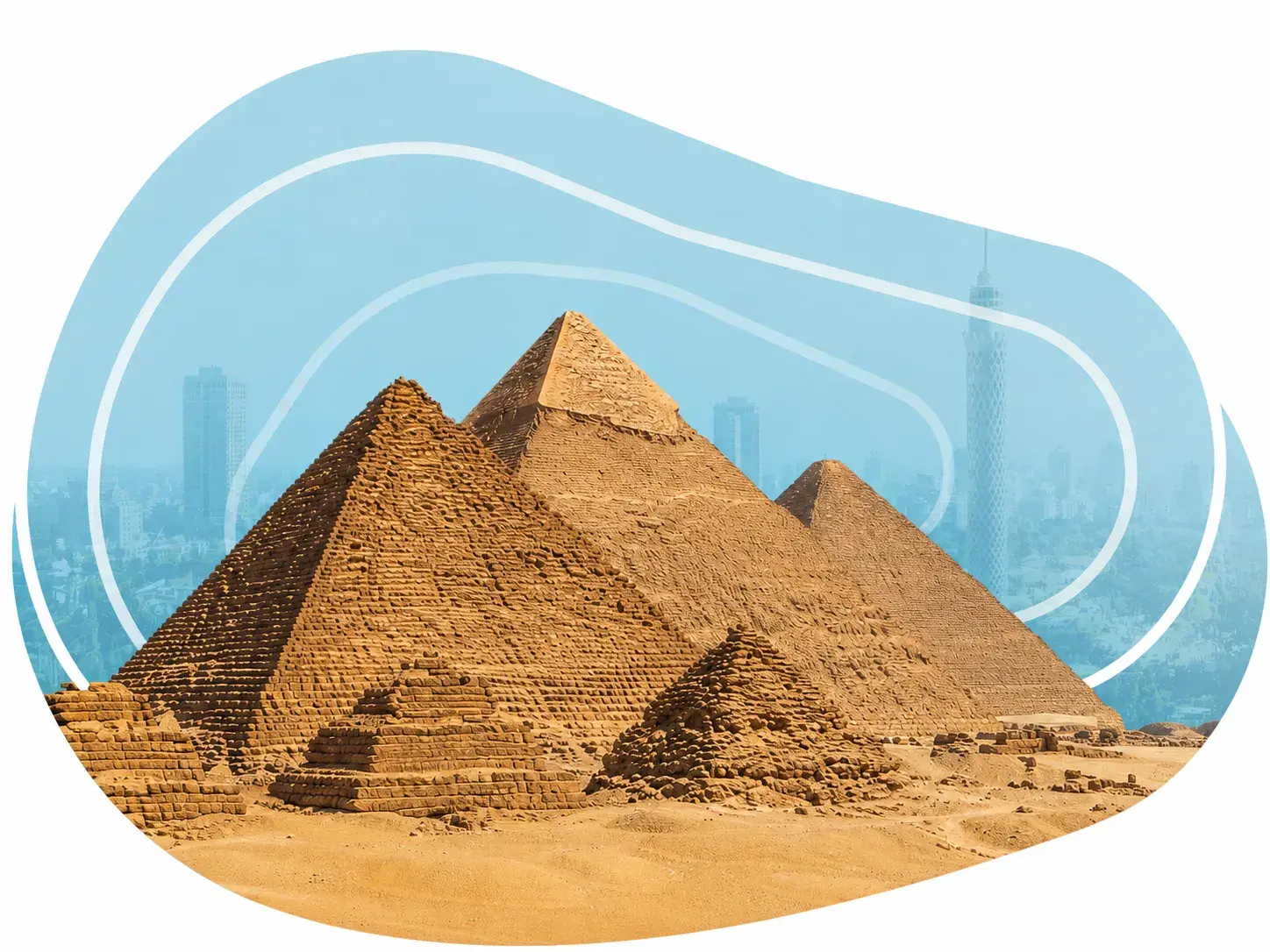
在 埃及 发现并雇用顶尖人才
关于该国雇佣法律、文化与人才洞察,您需要了解的一切。

Cairo UTC+2 to UTC+3

Cairo, Alexandria

Egyptian Pound (EGP)

Arabic, English

monthly, semi monthly, or biweekly

18.75%
埃及人才格局
Egypt has an estimated labor force of about 36.1 million (2025), with talent demand concentrated in construction, manufacturing, information technology, financial services and tourism. International employers are most likely to find relevant candidate pools for Software & IT, Construction Engineering, and Accounting & Finance. The market can support multi function teams, with the deepest specialist pools usually concentrated in established commercial and technical centers.
主要经济中心
Cairo, Alexandria
热门技能
Software & IT
职场文化
Relationship First and Expressive Discussion
Egyptian business conversations can be warm, energetic and relationship focused. Allow time for personal exchange, and do not mistake animated debate for hostility.
Respect for Senior Authority
Organisational hierarchy is often clear, with final decisions concentrated among senior leaders. Junior participants may provide information without having authority to commit.
Ramadan, Traffic and Scheduling
Working hours can shift during Ramadan, and urban traffic can affect punctuality. Confirm appointments, allow practical travel buffers and plan key deadlines around major holidays.
平均薪资
| 职位名称 | 平均月薪(EGP) | |
|---|---|---|
| Accounting & Finance | ||
| Administrative Executive, Junior (1-3 years) | 11,750 EGP | S$15,980 |
| Administrative Executive, Mid (3-5 years) | 15,650 EGP | S$21,284 |
| Book Keeper, Junior (1-3 years) | 10,500 EGP | S$14,280 |
| Book Keeper, Mid (3-5 years) | 14,300 EGP | S$19,448 |
| Finance Executive, Junior (1-3 years) | 13,550 EGP | S$18,428 |
| Finance Executive, Mid (3-5 years) | 17,750 EGP | S$24,140 |
| Creatives | ||
| Graphic Designer, Junior (1-3 years) | 13,550 EGP | S$18,428 |
| Graphic Designer, Mid (3-5 years) | 19,550 EGP | S$26,588 |
| UI/UX Designer, Junior (1-3 years) | 14,300 EGP | S$19,448 |
| UI/UX Designer, Mid (3-5 years) | 24,800 EGP | S$33,728 |
| Data Analytics | ||
| Data Analyst, Junior (1-3 years) | 19,550 EGP | S$26,588 |
| Data Analyst, Mid (3-5 years) | 25,550 EGP | S$34,748 |
| Data Engineering | ||
| Data Engineer, Junior (1-3 years) | 19,550 EGP | S$26,588 |
| Data Engineer, Mid (3-5 years) | 31,550 EGP | S$42,908 |
| AI & Machine Learning | ||
| Data Scientist, Junior (1-3 years) | 19,550 EGP | S$26,588 |
| Data Scientist, Mid (3-5 years) | 26,300 EGP | S$35,768 |
| Machine Learning Engineer, Junior (1-3 years) | 16,550 EGP | S$22,508 |
| Machine Learning Engineer, Mid (3-5 years) | 24,800 EGP | S$33,728 |
| Digital Marketing | ||
| Content Marketing, Junior (1-3 years) | 15,800 EGP | S$21,488 |
| Content Marketing, Mid (3-5 years) | 23,300 EGP | S$31,688 |
| Digital Marketing, Junior (1-3 years) | 15,800 EGP | S$21,488 |
| Digital Marketing, Mid (3-5 years) | 23,300 EGP | S$31,688 |
| Growth Marketing, Junior (1-3 years) | 16,550 EGP | S$22,508 |
| Growth Marketing, Mid (3-5 years) | 24,800 EGP | S$33,728 |
| Software Development | ||
| Backend Developer, Junior (1-3 years) | 20,300 EGP | S$27,608 |
| Backend Developer, Mid (3-5 years) | 30,050 EGP | S$40,868 |
| 职位名称 | 平均月薪(EGP) | |
|---|---|---|
| DevOps | ||
| DevOps Engineer, Junior (1-3 years) | 19,550 EGP | S$26,588 |
| DevOps Engineer, Mid (3-5 years) | 26,300 EGP | S$35,768 |
| Site Reliability Engineer, Junior (1-3 years) | 19,550 EGP | S$26,588 |
| Site Reliability Engineer, Mid (3-5 years) | 27,800 EGP | S$37,808 |
| Customer Support | ||
| Customer Service Officer, Junior (1-3 years) | 9,750 EGP | S$13,260 |
| Customer Service Officer, Mid (3-5 years) | 12,800 EGP | S$17,408 |
| Customer Experience | ||
| Customer Success Manager, Junior (1-3 years) | 14,300 EGP | S$19,448 |
| Customer Success Manager, Mid (3-5 years) | 20,300 EGP | S$27,608 |
| HR Operations | ||
| HR Executive, Junior (1-3 years) | 12,800 EGP | S$17,408 |
| HR Executive, Mid (3-5 years) | 17,300 EGP | S$23,528 |
| FinTech | ||
| Blockchain Developer, Junior (1-3 years) | 15,800 EGP | S$21,488 |
| Blockchain Developer, Mid (3-5 years) | 23,300 EGP | S$31,688 |
| Payments Engineer, Junior (1-3 years) | 15,800 EGP | S$21,488 |
| Payments Engineer, Mid (3-5 years) | 21,050 EGP | S$28,628 |
| Cloud Computing | ||
| Cloud Engineer, Junior (1-3 years) | 18,050 EGP | S$24,548 |
| Cloud Engineer, Mid (3-5 years) | 26,300 EGP | S$35,768 |
埃及招聘指南
本指南介绍雇主合规招聘必须了解的基本规则,涵盖薪酬结构、休假政策、解雇流程与合规要求。
更多细节,请通过下方的标签浏览各个主题。
埃及的薪酬发放
发薪周期
Employees must be paid at least monthly. Payment is generally made within five days after the end of the pay period.
最低工资
A statutory minimum wage applies to the private sector. Public sector and other category specific rules may differ.
加班费
- Generally 8 hours per day and 48 hours per week, excluding breaks. - Total working time is generally capped and daily rest requirements apply.
- Egypt: Overtime Pay = Ordinary Hourly Rate plus the applicable statutory premium for every overtime hour. - Premiums stated for this country: 35, 70%.
奖金
第 13 个月薪资
Egypt does not impose a general statutory 13th month salary on private sector employers. Private sector employees therefore have no automatic entitlement to an additional annual salary unless a binding employment contract, collective agreement, wage order, employer rule, or special sector law provides one.
No statutory private sector calculation applies. Where a binding instrument grants an annual bonus or 13th salary, the amount must be calculated under that instrument; there is no legal default that it equals 1 month of salary.
No private sector employee in Egypt qualifies automatically under the general labour law. Eligibility is limited to employees expressly covered by the applicable contract, collective agreement, wage order, employer rule, or special sector provision. The general law does not prescribe a universal minimum service period, prorating method, payment deadline, or entitlement after resignation or dismissal for a 13th salary. Those points must be determined from the specific binding instrument. Statutory leave pay, severance, end of service benefits, profit sharing, and public sector payments are separate benefits and should not be recorded as private sector 13th month salary unless the local rule expressly treats them that way.
员工福利
| 福利类型 | 详情 |
|---|---|
| 法定 | |
| National Social Insurance Authority contributions | The core employer obligation in Egypt is registration and payroll remittance under National Social Insurance Authority contributions. This is not a general allowance: it is the named statutory arrangement for the pension, retirement, unemployment, medical or related branches stated in the programme title. Coverage must be checked against establishment size, employee status, nationality and earnings limits, and contributions must be paid to the relevant authority by its filing deadline. |
| Work injury protection under National Social Insurance Authority contributions | In Egypt, occupational injury protection is tied to National Social Insurance Authority contributions. The employer must complete the applicable registration or insurance arrangement before exposure begins, report workplace accidents within the legal deadline, and fund the employer portion. Benefits generally cover treatment, temporary incapacity, permanent disability and survivor payments, but the responsible institution and assessable wage follow the local scheme. |
| Statutory termination or end of service entitlement in Egypt | Termination payments in Egypt depend on the Labour Code, the dismissal ground and the employee’s service. Employers must settle notice or pay in lieu, earned salary, unused leave and any statutory severance, gratuity or indemnity that the local rules attach to redundancy, employer initiated dismissal or contract expiry. A resignation does not automatically produce the same entitlement. |
| Public healthcare or mandatory medical coverage in Egypt | Health protection in Egypt is delivered through the medical or sickness branch of National Social Insurance Authority contributions. Employers must register employees who meet the scheme’s coverage tests and remit the required payroll contribution on the prescribed wage base. The programme commonly provides medical treatment and cash sickness or maternity benefits, while eligibility for dependants, expatriates and higher earners follows the local institution’s rules. |
| 可选 | |
| Supplementary private medical insurance in Egypt | Private medical insurance in Egypt should be designed around the gaps left by National Social Insurance Authority contributions. Employers commonly add faster outpatient access, private hospital treatment, dental, optical, mental health and dependant cover. The policy remains optional unless a visa, emirate, collective agreement or sector rule makes insurance compulsory, and any taxable benefit treatment should be processed through payroll. |
| Performance or profit sharing bonus in Egypt | A performance or profit sharing bonus in Egypt is optional unless promised by contract, collective agreement or an established plan. The rules should specify the performance period, measurable targets, proration for joiners and leavers, and treatment during protected leave. Payroll must apply local income tax and social contribution rules to the payment. |
| Meal, commuting and business travel support in Egypt | Meal, commuting and business travel support in Egypt should be split between fixed cash allowances and reimbursements supported by receipts. That distinction determines whether the amount is taxable salary, exempt expense repayment or part of the contribution wage. The policy should state limits, eligible journeys and the treatment of remote work. |
| Housing, relocation and remote work support in Egypt | Housing, relocation and remote work support in Egypt is normally contractual rather than statutory. The policy should identify covered costs, taxable benefit treatment, repayment conditions for early departure and whether the support is temporary or continues throughout the assignment. |
税务
国家税收
埃及的国家税收名为 Value-Added Tax (VAT) 14%
个人所得税
| 税项 | 缴纳比例 (%) | 详情 |
|---|---|---|
| Income Tax Structure | ||
| Resident Tax Rates | Up to 27.5% | Egypt applies Up to 27.5% to taxable employment income. The employee’s final liability depends on taxable pay, permitted deductions or credits, and any local surtaxes stated in the cited source. |
| Non-Resident Employment Income | See local nonresident rules | Nonresident individuals are generally taxed only on local source employment income. The applicable rate can differ from resident rates and depends on source, presence, payroll withholding, and treaty relief. Confirm the cited country summary before payroll implementation. |
| Taxable Income Adjustments | ||
| Main Deductions and Allowances | See details | Premiums paid for life and health insurance for the benefit of the individual or the individual’s spouse or minor children, and insurance premiums paid with respect to pensions 380 E gy p t The total deduction for the last two items mentioned above may not exceed 15% of the net annual income or EGP10,000, whichever is lower. For purposes of computing taxable commercial and industrial income, all costs generally are deductible. |
| Taxable & Exempt Components | ||
| Bonuses and Cash Allowances | Generally taxable at marginal employment rate | In Egypt, cash salary, commissions, performance bonuses, and recurring cash allowances are generally taxable employment income and subject to payroll withholding at the applicable marginal rate unless a specific statutory exemption applies. |
| Benefits in Kind | Taxable value at marginal rate where applicable | In Egypt, employer provided housing, vehicles, meals, insurance, equity, and other noncash benefits may be taxable under local valuation rules. Business reimbursements and de minimis exemptions require local support. |
了解在其他国家和地区招聘




























































































































了解 埃及 的雇佣要点
Glints 深耕东南亚,是您拓展业务的理想伙伴。让我们携手简化招聘流程,确保在埃及的用工合规。